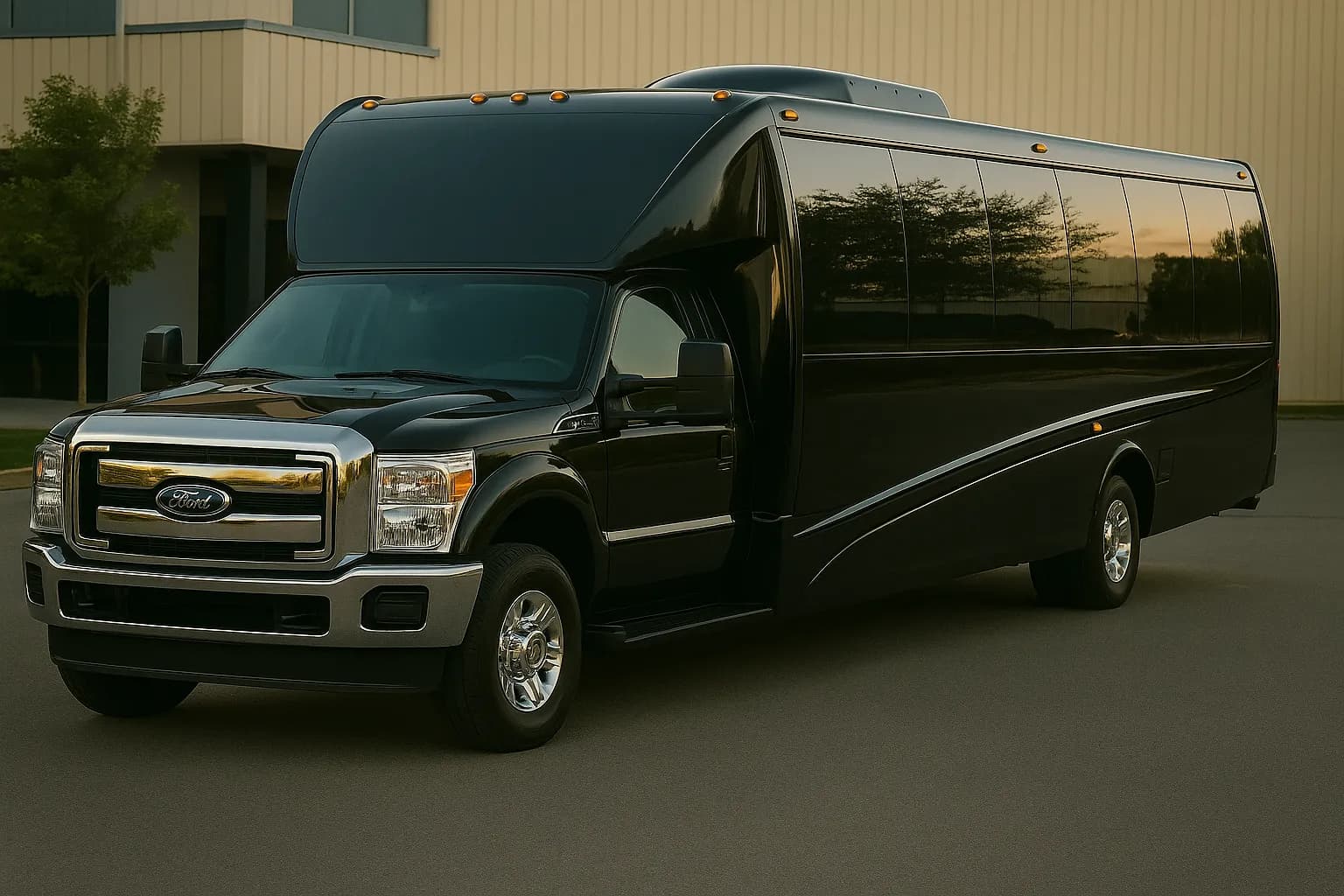
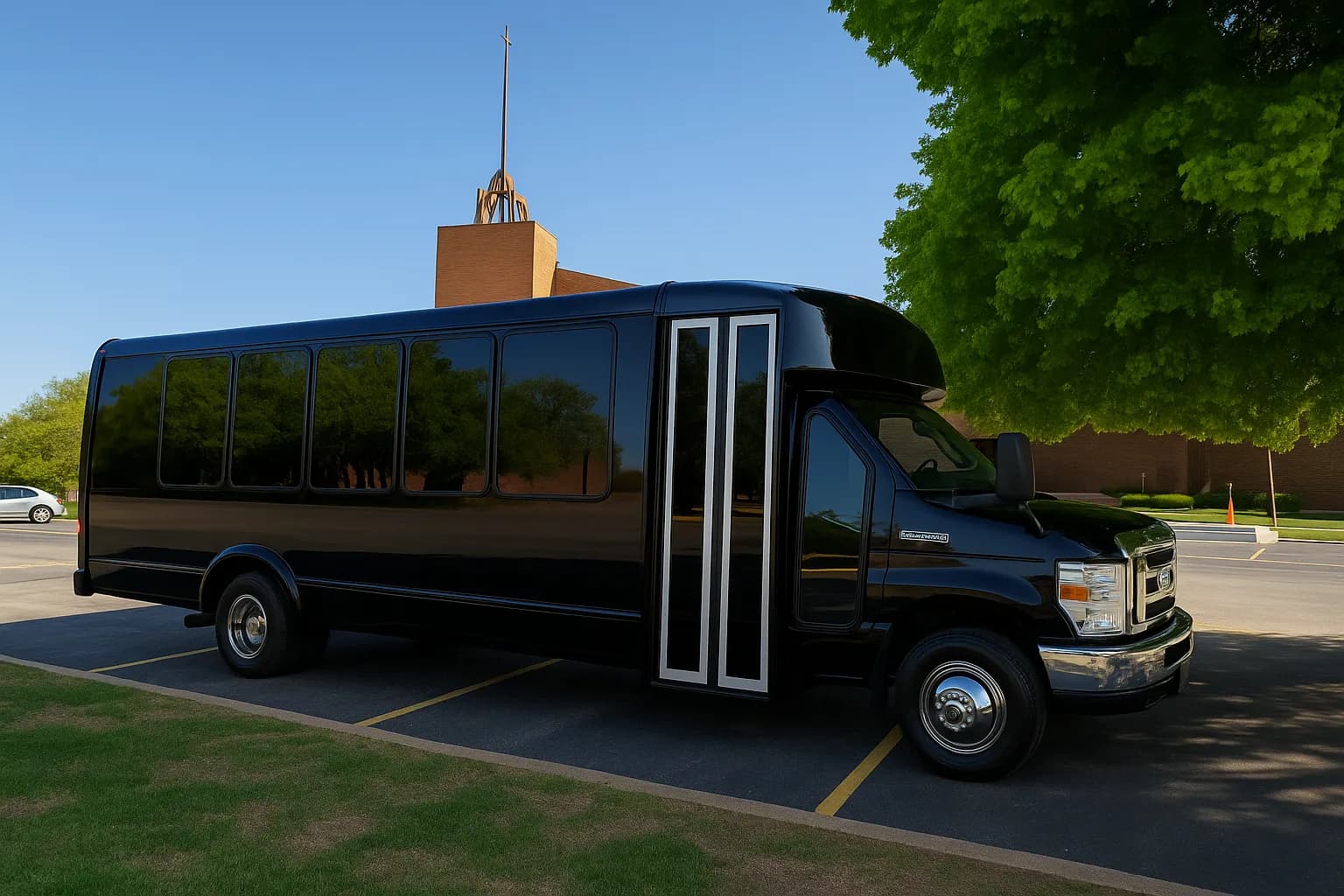
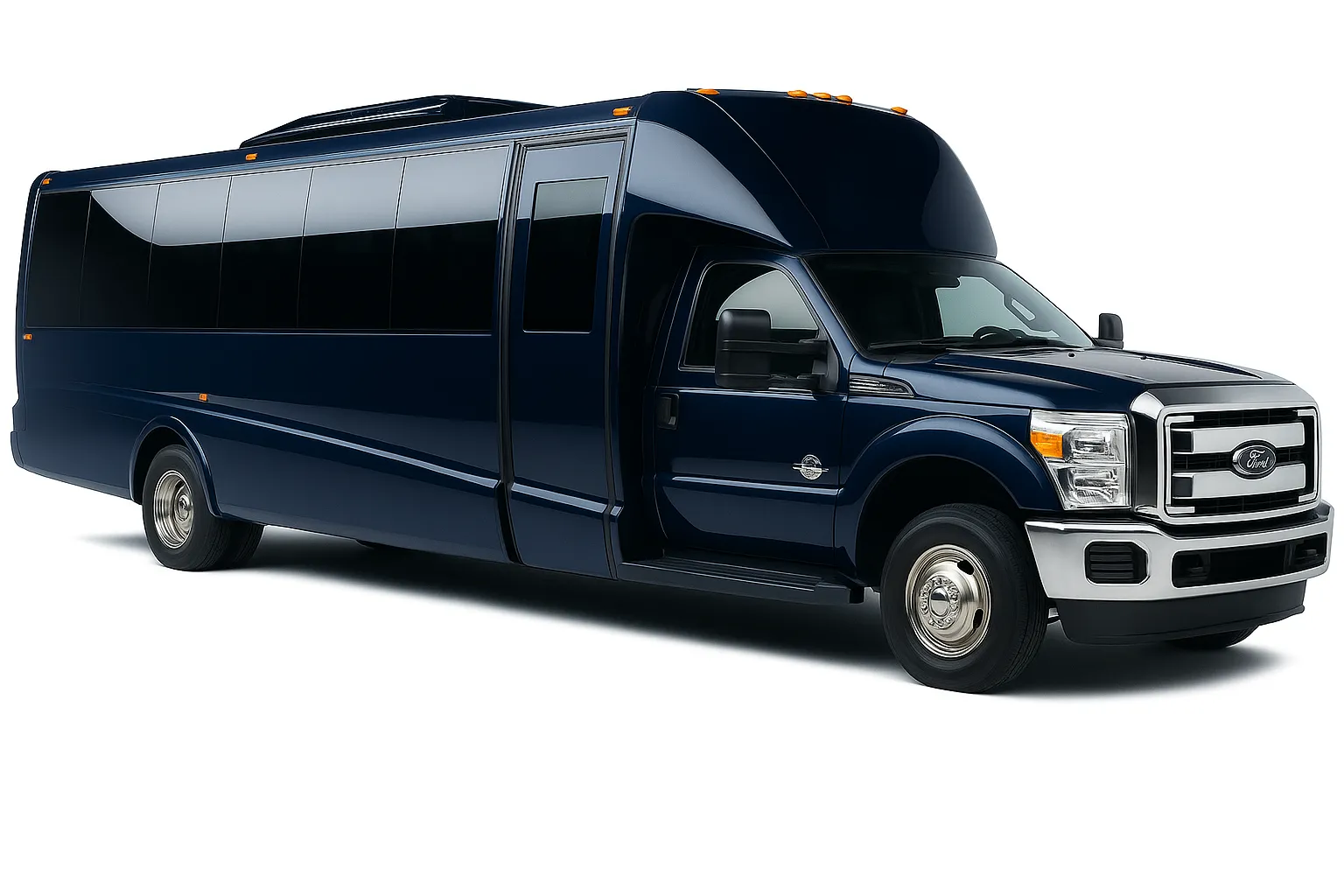
representative
Editorial synthesis
The article organizes planning considerations and does not claim independent vehicle or trip testing.
Tips · 9 min read
Four hours is the usual starting block, but a Naperville pickup, a third bar stop, or a Soldier Field exit can quietly turn it into five or six. Here is how to size the block before you sign.
Pickup ZIP, date, headcount, and hours get you one written total with the driver, fuel, taxes, and gratuity included.
Answer summary
When four hours works, when a suburban pickup or third stop pushes it to five, and why game days need six. Size your Chicago party bus block with stop math.
See how this information is created, checked, and corrected in our editorial standards.
Evidence ledger
Reviewed July 31, 2026 · Policy 1.1
representative
The article organizes planning considerations and does not claim independent vehicle or trip testing.
verify before booking
Verify prices, schedules, venue procedures, and availability with the responsible primary source.
verify before booking
Rely on the accepted written quote for the assigned provider, vehicle, price, and contract terms.
No page-specific primary source is asserted here. Changing facts remain verification items.
9 min read read
In This Article
Chicago Party Bus Fun Team
September 2, 2026 · 9 min read
Book four hours if your group has one or two pickup points and a single destination cluster. Book five if you have three or more stops or a suburban pickup. Book six or more for a game day, a wedding with a photo stop, a concert in the suburbs, or any night that is supposed to end after midnight. Those three rules cover most Chicago trips, and the rest of this guide explains the reasoning so you can adjust them for yours.
The reason the hours decision matters more than it seems is that extending on the night is not something you can count on. A weekend vehicle usually has another group waiting, so the block you sign for is the block you get. A buffer hour booked up front is cheap insurance; an hour you hoped to add at ten o'clock outside a Fulton Market bar may not be available at any price.
Most operators set a minimum number of hours, and the minimum depends on the date and time. The industry pattern is a longer minimum on Friday and Saturday evenings, a shorter one on Sunday through Thursday and for daytime trips that end before the evening rush, and a longer minimum with prom pricing on spring Saturdays. The exact rule for your date is on the written quote, and it is worth asking about before you build a timeline around a block that is not offered.
Short blocks do exist and suit specific trips: a daytime kids' party or sweet sixteen on a Sunday, a holiday light tour on a December weeknight, or a straight transfer from a rehearsal dinner back to a hotel block. If your plan is one pickup and one destination inside the city, ask whether a three-hour block is available for your date rather than assuming you need four.
Party bus events across Chicagoland
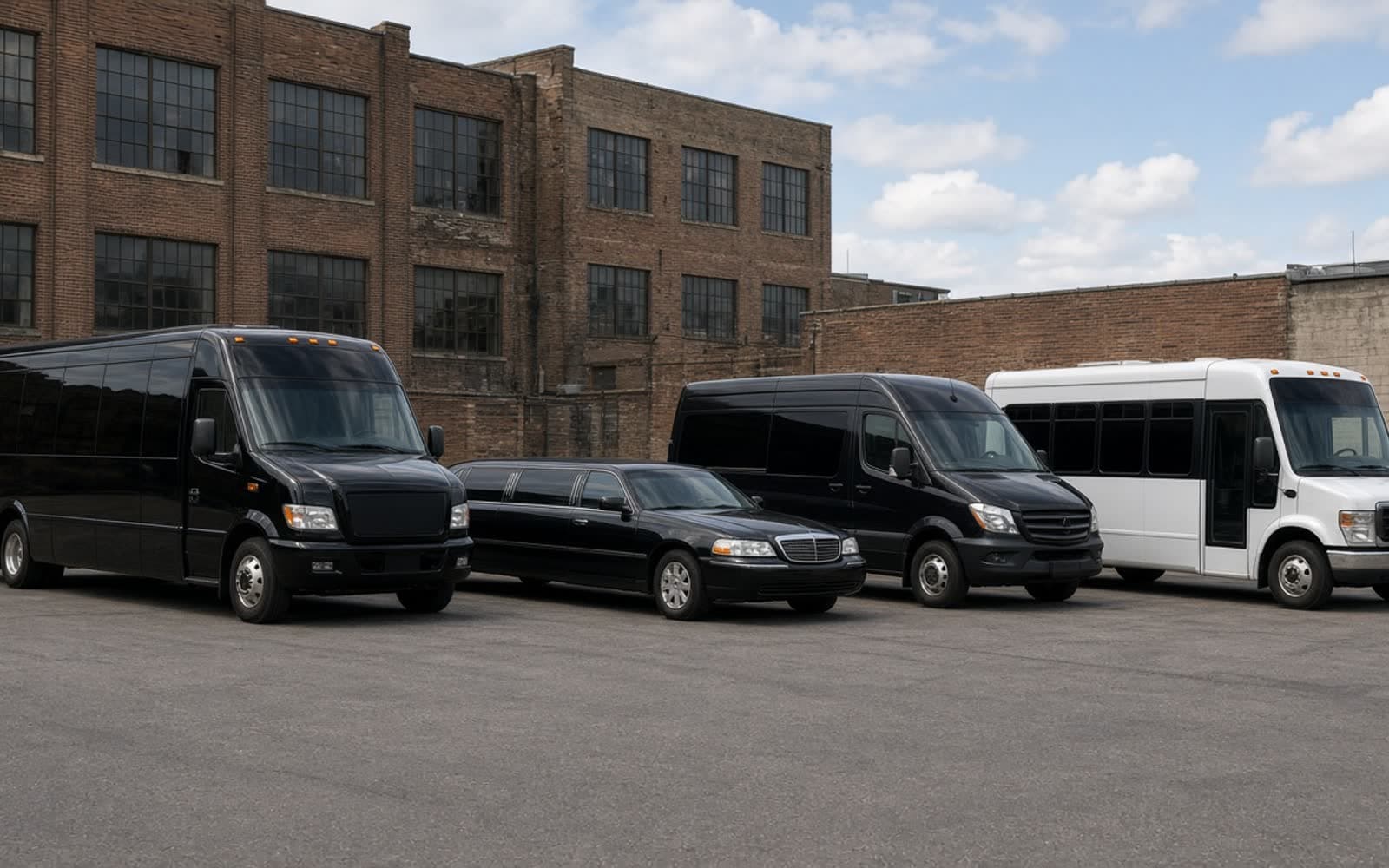
Hourly rates generally step up by vehicle size tier, and the per-hour cost of a longer block usually comes down, because the fixed costs of getting the vehicle and driver out for the night are spread over more time. A six-hour trip is typically well under fifty percent more than a four-hour trip on the same vehicle. That is why the buffer hour is affordable relative to what it protects.
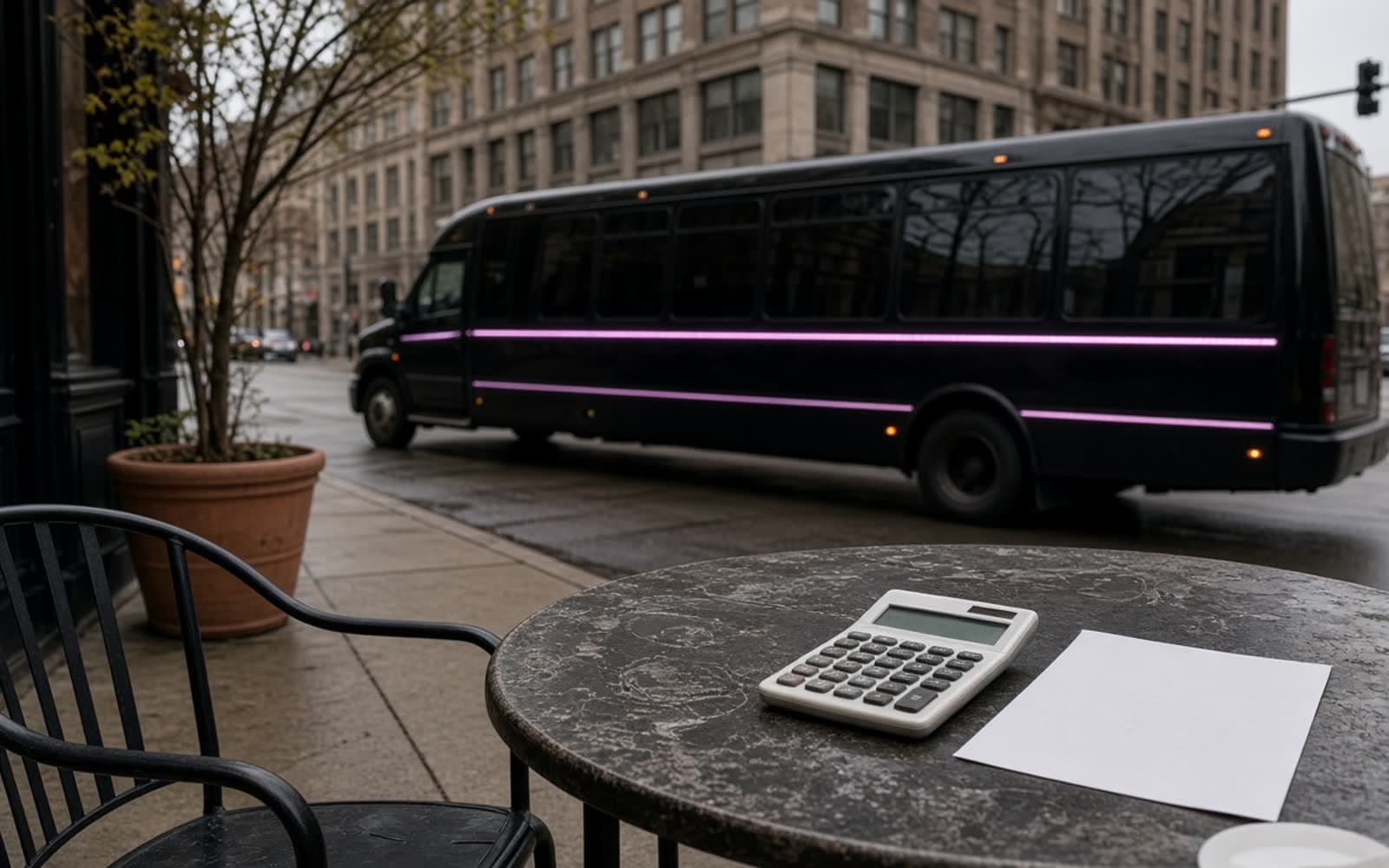
Rather than guessing, ask for the four-, five-, and six-hour versions of your trip priced in writing on the same vehicle for the same date. Then run the budget calculator with your headcount to see what the extra hour costs per rider. For a group of twenty, the fifth hour is often less per person than one round of drinks, which is the comparison that usually settles the argument.
If your quote shows a package total rather than an hourly rate, the overtime rate is usually that total divided by the hours reserved, billed after a short grace period and only if the vehicle is free. Your quote states the grace period and the rate.
Tell us your date, group size, and pickup city. We'll handle the rest.
Three situations push a four-hour block into five more often than anything else.
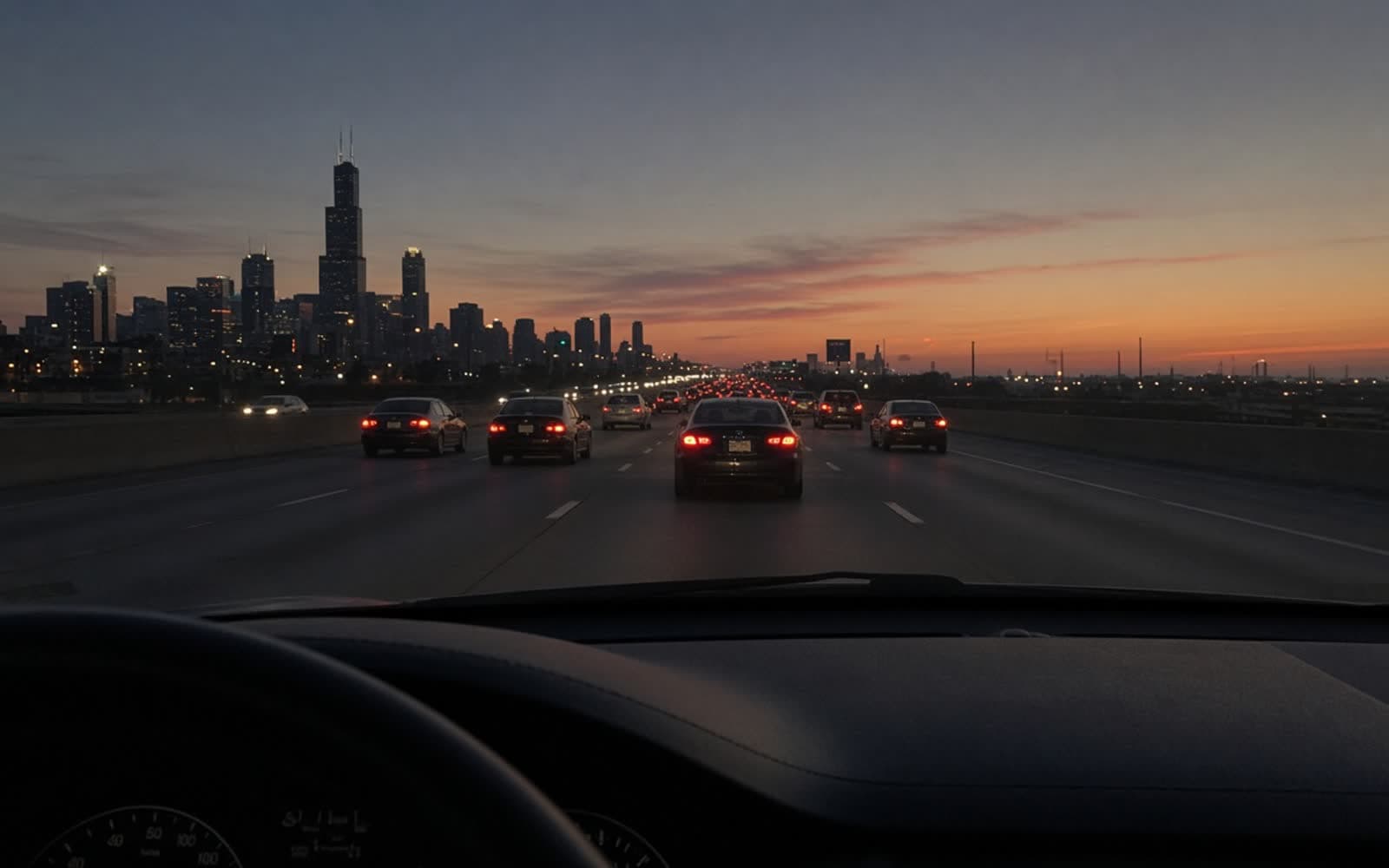
Suburban pickups. A weekend-evening round trip between DuPage or Will County and downtown can eat two hours of a four-hour block before the first stop. Most groups from Naperville, Downers Grove, or Schaumburg ride into the city rather than staying local, so five hours is the realistic starting point for a River North or West Loop night. Use the route time estimator with your actual addresses and a Saturday-evening start time; the I-290 and I-90 inbound on a Friday at six is not the same road as at two in the afternoon.
Multiple home pickups. Picking up from three or more homes is fine as long as the whole route fits the reserved hours, and it is the leading cause of overtime when it does not. Every extra pickup is ten to twenty minutes of driving plus the five minutes someone is still finding their shoes. Cluster the pickups, name a firm time at each, and add an hour if there are three or more.
A late finish. A six o'clock pickup on a four-hour block returns the group by ten. If the plan is a true late night, either start at eight or book five or six hours. Do not build a timeline that depends on the driver being free to stay.
The network inquiry data makes one thing clear about game days and concerts: they do not fall on the nights the rest of the industry is busy, and they run long for their own reasons.
Helpful Resources
Work backward from the final drop-off, not forward from the first pickup. Give each stop a realistic dwell time: seventy-five to ninety minutes for a sit-down dinner with twenty people, forty-five to sixty minutes for a bar, fifteen for a photo stop. Add fifteen to twenty-five minutes of driving between neighborhoods on a weekend night, more if the route crosses the river during a bridge lift or passes Wrigleyville on a game night. Put a twenty-minute cushion before the last leg.
If the total runs over the block, cut the stop that is farthest from the others rather than shaving five minutes off everything. Three stops in one neighborhood beat five across the city; River North, Fulton Market, West Loop, Wrigleyville, Logan Square, and Wicker Park each have enough within walking distance that the bus barely needs to move. The trip duration estimator and the event timeline planner do this arithmetic and produce a schedule you can hand to the driver.
Making memories across Chicago
Say the group is eighteen people, two pickup addresses in Evanston, dinner in Wrigleyville, then two bars on Clark Street, on a Saturday in August. Here is how the block adds up:
That is five hours and fifteen minutes, and it assumed nobody was late and no one wanted a third bar. Booked at four hours, the group is choosing between skipping the second bar and paying overtime they may not be able to buy. Booked at six, the night ends when the group wants it to. The difference between the five- and six-hour quotes, split eighteen ways, is the number to put in front of the group before anyone votes.
Sometimes, and do not plan on it. Mid-trip extensions depend entirely on whether the vehicle is scheduled for another group afterward. On a weekend it usually is; on a Sunday or weeknight it often is not. If the night is clearly running long, have the point person ask the driver early, ideally at the second-to-last stop, whether the vehicle can stay. If yes, the time is billed at the rate on your quote. If no, decide as a group which stop to skip and head for the final drop-off on time.
Splitting the group for drop-off or running a second pickup loop is fine within the reserved time. If the second loop is long, book the extra hour rather than counting on extending.
Is three hours ever enough? For a daytime or weekday trip with one pickup and one destination inside the city, yes, where the operator offers it. Weekend evenings usually carry a longer minimum; your quote states the rule for your date.
What happens if we run ten minutes late? Most operators allow a short grace period before overtime applies. After that, overtime is billed at the rate on your quote and only if the vehicle is free. Confirm both on the written quote.
Do longer trips cost more per hour? Usually less. The per-hour cost of a six- or eight-hour block tends to be lower than a four-hour block on the same vehicle, which is why a buffer hour is comparatively cheap.
Should the buffer go at the start or the end? Put it where the uncertainty is. If the risk is a slow post-game exit or a long last drive home, it belongs at the end. If the risk is people not being ready, set a firm pickup time instead of starting early.
Ask for your trip quoted at four, five, and six hours on the same vehicle so the buffer's cost is visible before you decide. Start your Chicago quote here, and if you still have questions the FAQ page covers minimums, overtime, and stops in more detail.
The hours you reserve depend on how many pickups you have and how far apart the stops are, and the national booking-network data behind Chicago Party Bus Fun says a lot about who is making that decision. Across 65,687 quote requests with 2024–2025 event dates, 49% of usable passenger counts fell in the 11–20 band and 17% in the 21–30 band. A group of 15 to 20 people almost never leaves from one address; it is three or four households, which is exactly the multi-pickup pattern that pushes a short block into a longer one.
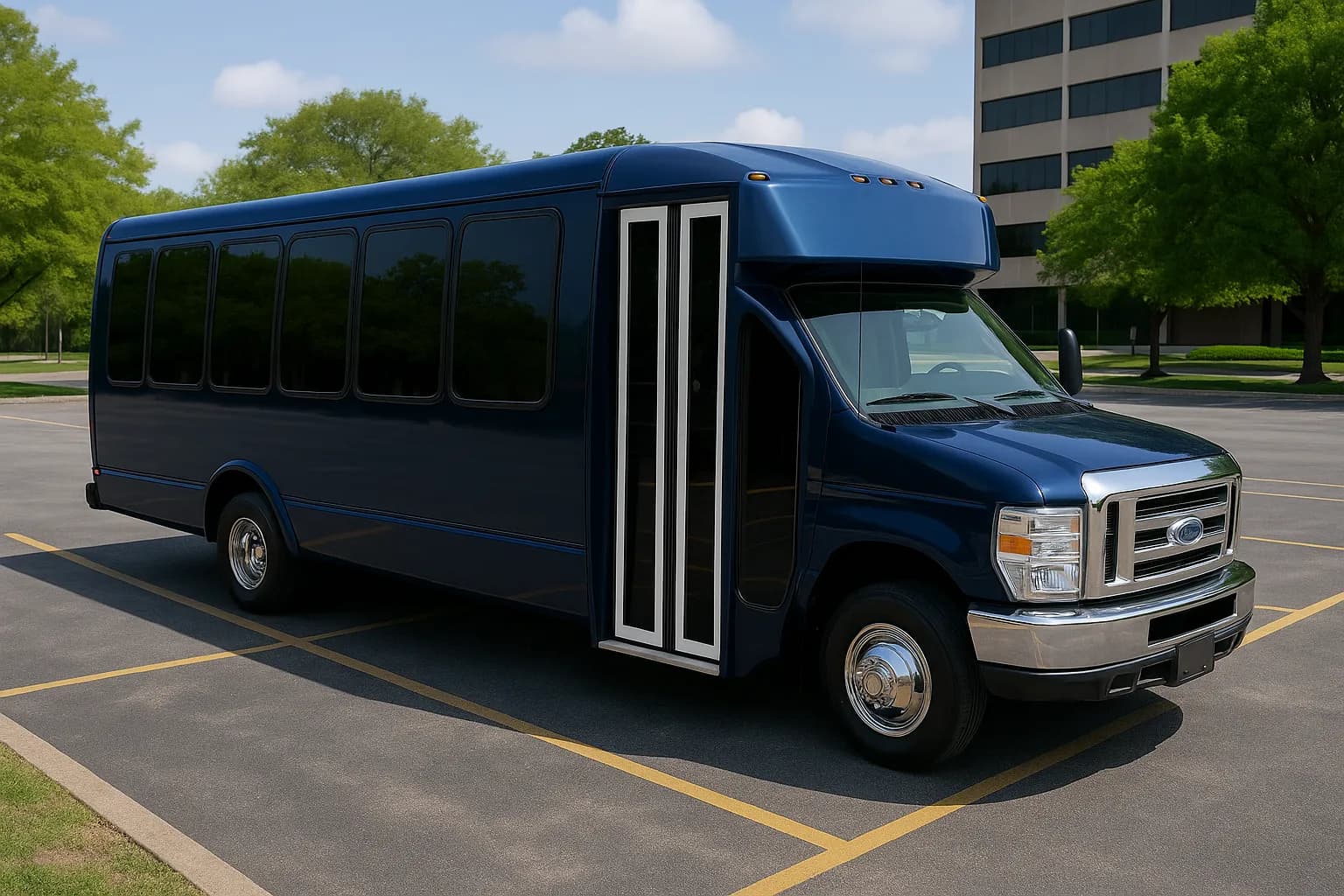
Among inquiries for 11–20 passengers, 85% of quoted vehicle capacities were also in the 11–20 range, so these groups are sizing correctly but often not budgeting the pickup loop. A 20-passenger party bus collecting riders from three neighborhoods before heading to Fulton Market is a five-hour plan, not a four-hour one. Run the stops through the trip duration estimator and the route time estimator before you settle on a block.
Timing pressure is concentrated. Across the network, 81% of requested event dates fell on a Friday or Saturday, and 23% of inquiries arrived only 14–29 days before the event. That combination is why the vehicle after yours is usually spoken for on a weekend and why mid-trip extensions are unreliable. On a Sunday or weekday, when only 2% to 3% of requested dates fall on a Monday or Tuesday, the vehicle is far more likely to be free afterward.
Large groups plan differently: among inquiries for 41–55 passengers, 29% arrived 90 days or more ahead, and only 12% came inside two weeks. Those groups, often wedding guest loops in a 44-passenger shuttle bus, reserve long blocks early. If your event is a Cubs game or a concert, read those guides for typical timelines, check how other planners voted on block length in the polls, and see the methodology page for how the inquiry data was compiled.
Whether you're planning a bachelor party, birthday celebration, or corporate outing — we've got the perfect vehicle for your group.
More expert tips and guides for your Chicago event
Our booking-network data
Planning patterns from quote requests across our booking network that relate to this topic.
10%
2%
3%
23%
Source: 65,687 group-transportation inquiry records with 2024–2025 event dates, collected across the national booking network that Chicago Party Bus Fun is part of. These are quote requests — not completed trips, unique customers, or Chicago-only figures. How we measure this
Size the group, pick the vehicle, set the hours, and split the cost before you ask for a quote.
Minimum Hours polls
Vote to see how other groups answered. One vote per poll, no sign-up, and nothing personal is stored.
No votes yet — be first
No votes yet — be first
No votes yet — be first
Straight answers for planning a group trip in Chicago
Tell us about your event and ask for a written quote. If your reservation is serviced by an affiliate or sister company, confirm vehicle, operator, base rate, minimum hours, and included charges with that provider before paying a deposit.