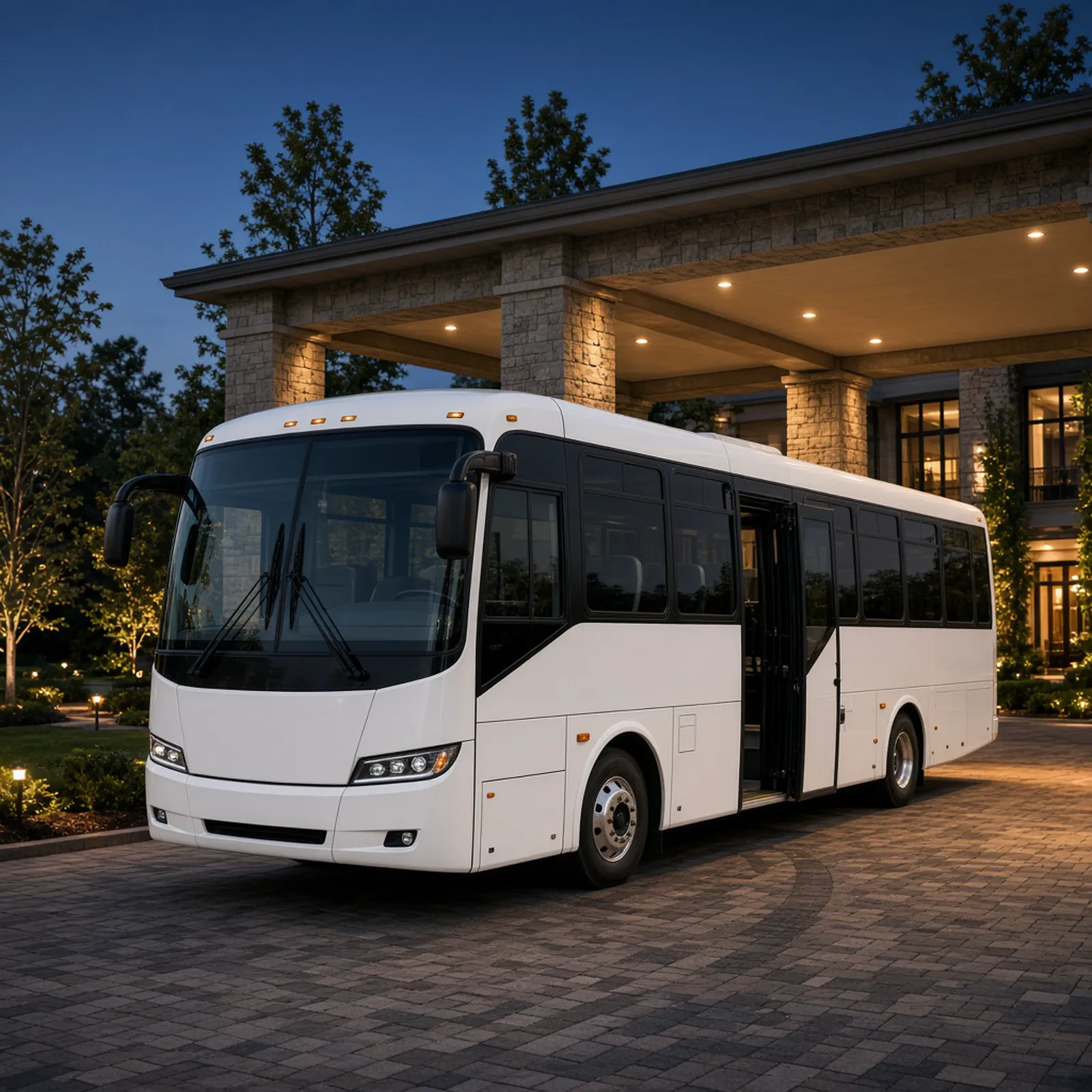

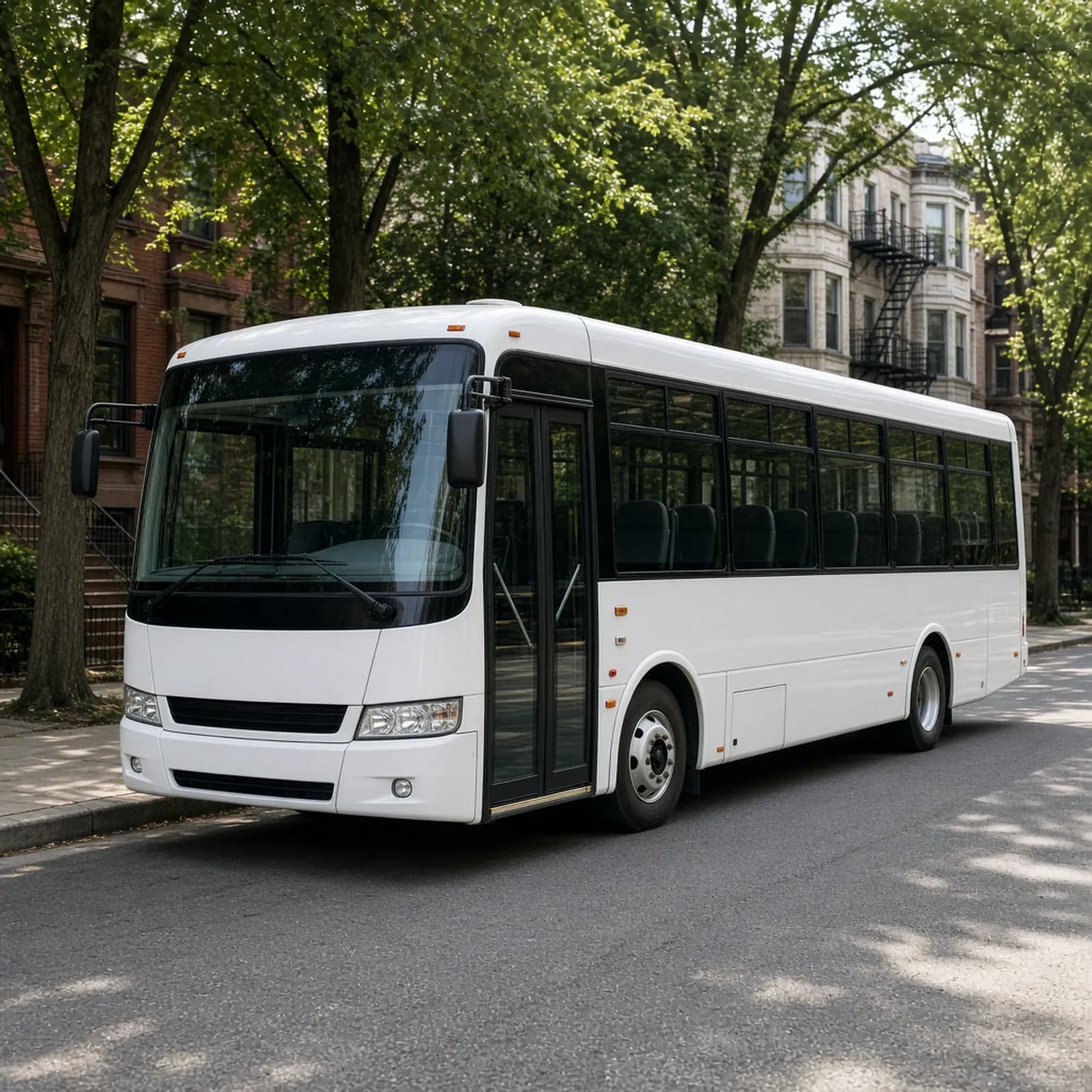
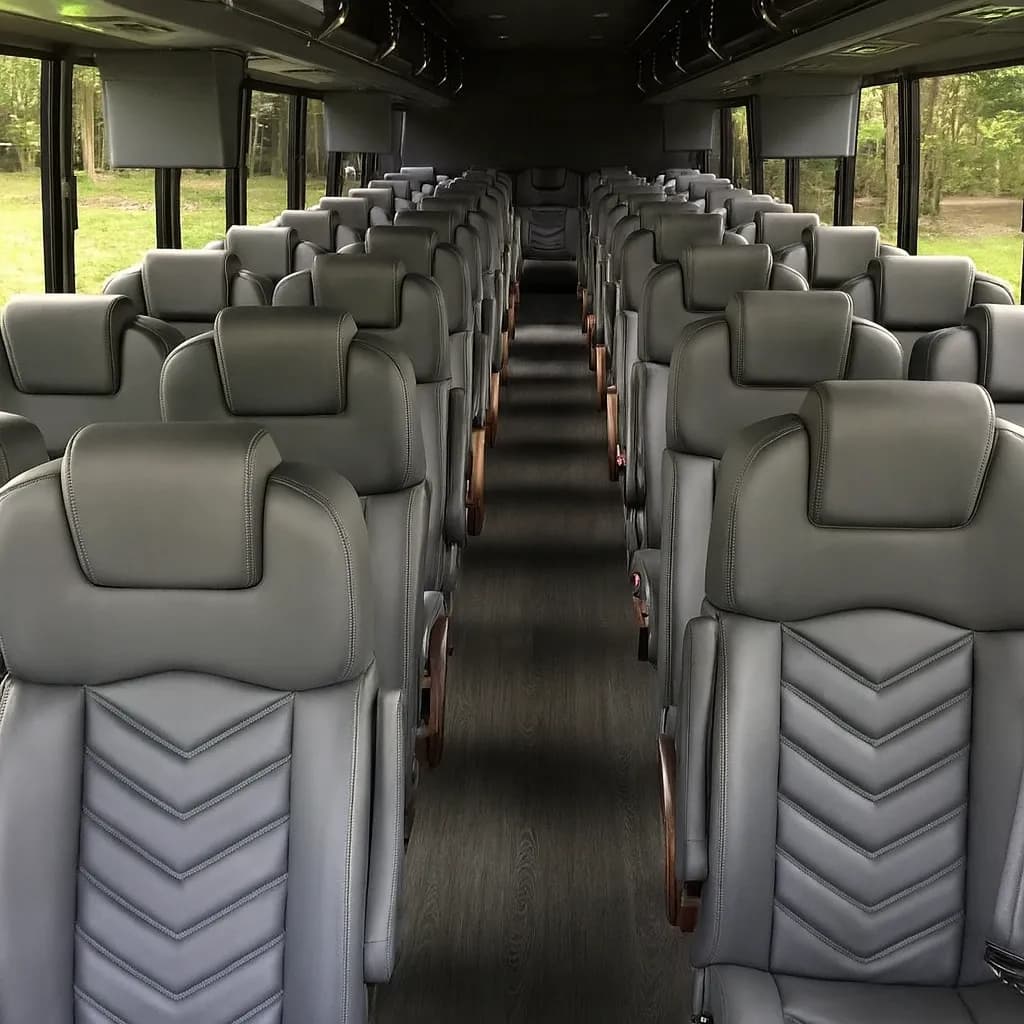
42 Passenger Shuttle Bus
Capacity: 42 passengers
“A 42 passenger shuttle bus works for a team of 25 to 35 players, coaches, and staff who travel with gear, because the…”
View Details →Seats up to 44 · shuttle bus
Route a 44 passenger shuttle bus across two or three Chicago hotels: pickup order, per-lobby manifests, dwell time, and when to split into two vehicles.
Pickup ZIP, date, headcount, and hours get you one written total with the driver, fuel, taxes, and gratuity included.
Quick answer
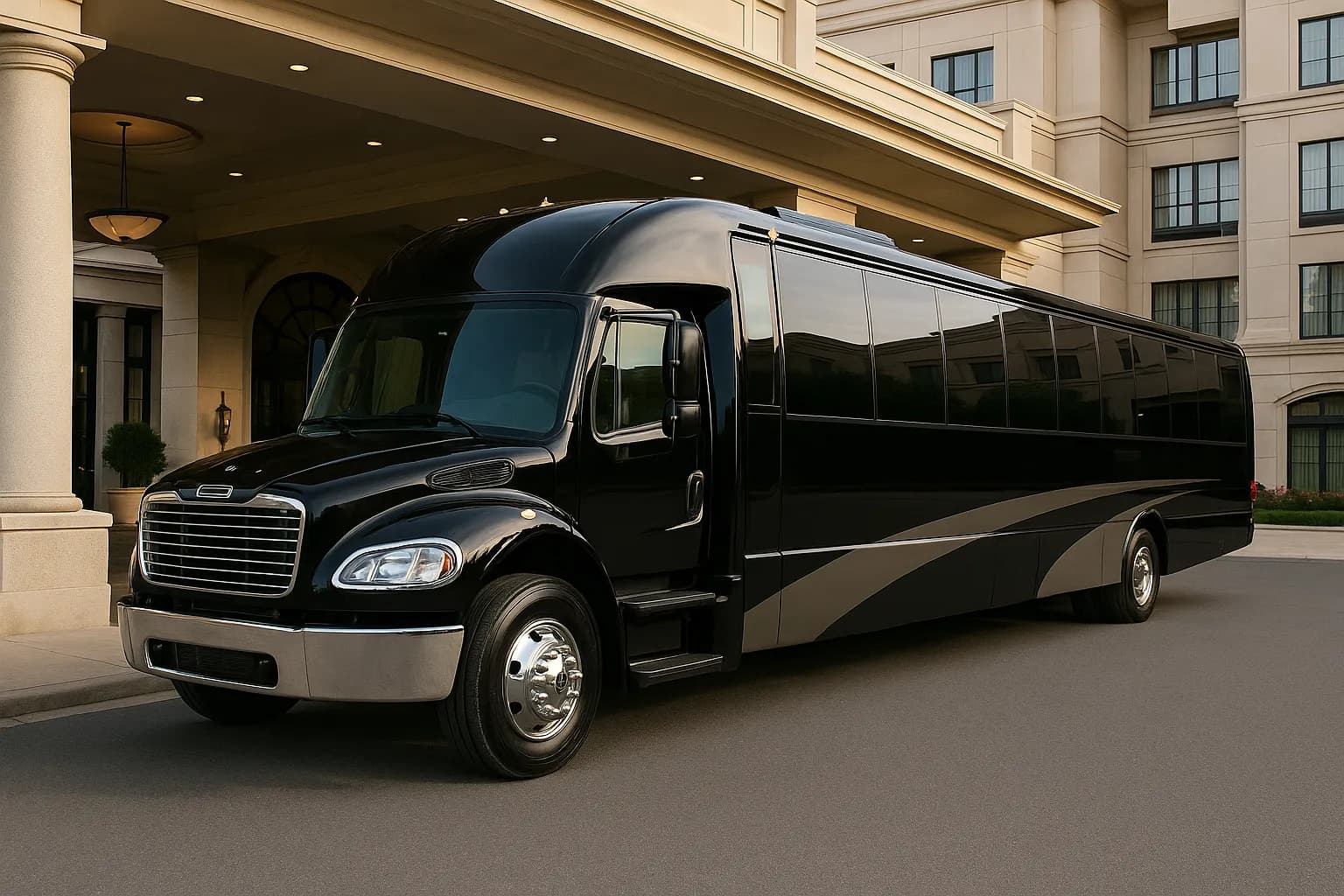
The 44 passenger shuttle bus is a good match for 36 to 42 guests spread across two or three hotels who all need to reach the same event. One bus, several pickups, one arrival. The detail to check is total route time: every extra hotel adds 10 to 15 minutes, and the first guests aboard feel all of it.
Guests rarely stay where you want them to. A wedding block sells out and a second hotel is added; a corporate group is split between a property downtown and one by the airport; cousins book a rental in a different suburb. The 44 passenger shuttle bus is often chosen because it is large enough to sweep up all of those pockets in a single circuit and deliver everyone to the door together.
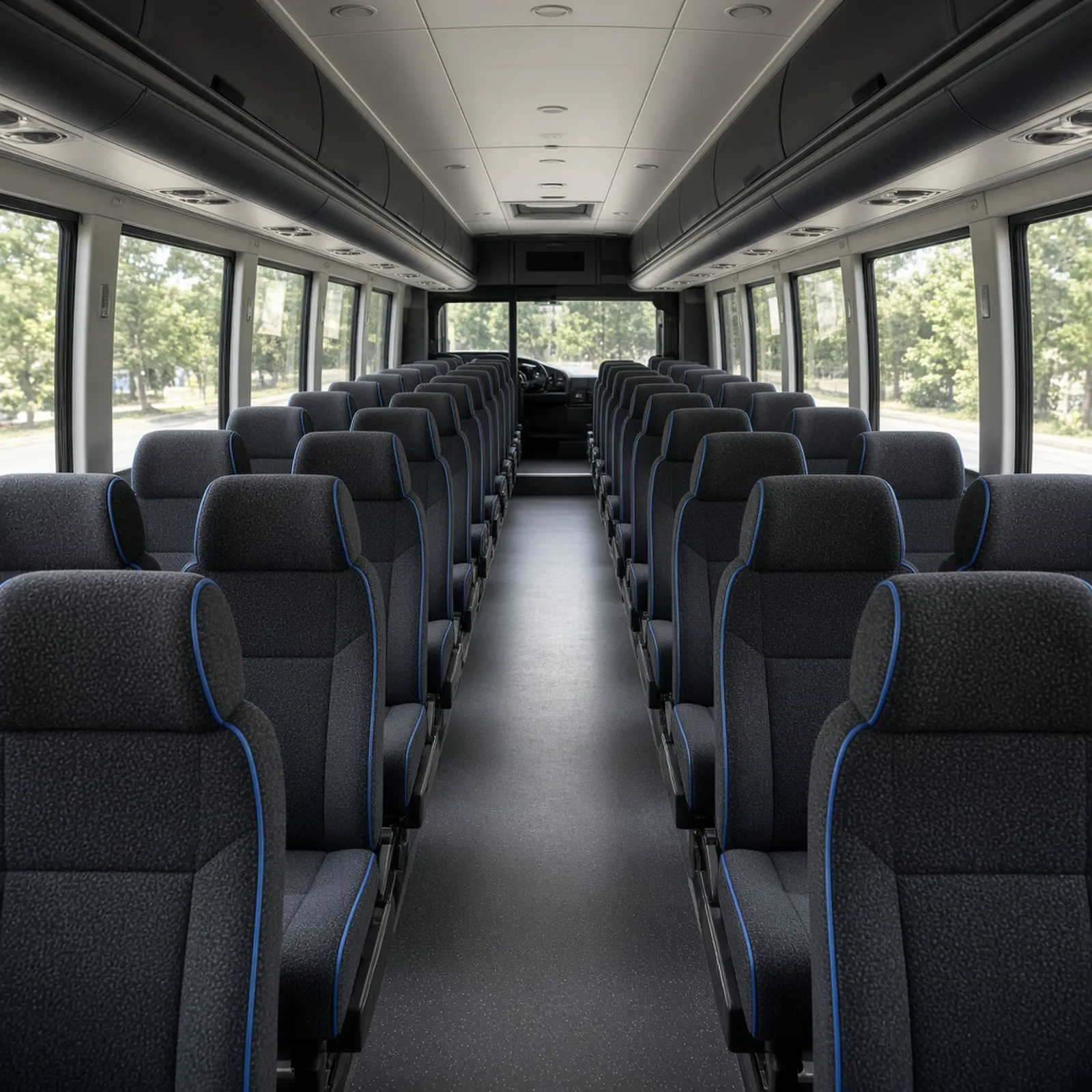
What you get is a long, forward-facing cabin with around eleven rows, a central aisle, and a single front entrance. It rides steadily on the expressway and gives passengers big windows and proper seat backs, which people appreciate when they are aboard for 40 minutes while the bus works through its stops. It is not a lounge: nobody faces each other and there is no bar or dance floor.
The step down is the 42 passenger shuttle bus, and the step up is the 46 passenger shuttle bus, the last stop before a full-size coach. With multi-hotel pickups the more useful question is often not which size, but whether one large bus making three stops beats two smaller buses making one or two each. This page is mostly about answering that. Features such as luggage space and power outlets vary, so the written quote lists what the assigned vehicle includes.
The standard rule is farthest first. Start at the hotel most distant from the venue and work inward, so the bus is always moving toward the destination and nobody rides backward past their own lobby. If two hotels are about the same distance out, begin with the one holding fewer guests, so fewer people sit through the later stops.
Then test the rule against the map. Downtown Chicago is full of one-way streets, bridges, and turn restrictions, and a hotel that is two blocks away can take ten minutes to reach by bus if it faces the wrong direction. In River North and Streeterville, plan the approach to each hotel from the side its loading zone is on. A bus cannot make a U-turn on Ontario.
Each stop costs more than the drive to it. Allow five minutes to pull in and open the doors, five to ten for guests to board, and a couple more for the person who has gone back upstairs for a phone charger. Three hotels at 12 minutes each, plus 10 minutes of driving between them, is nearly an hour before the bus has even turned toward the venue. When the total ride for the first guests passes about 45 minutes, split the route between two vehicles. The route time estimator helps with the drive segments; add the dwell time yourself.
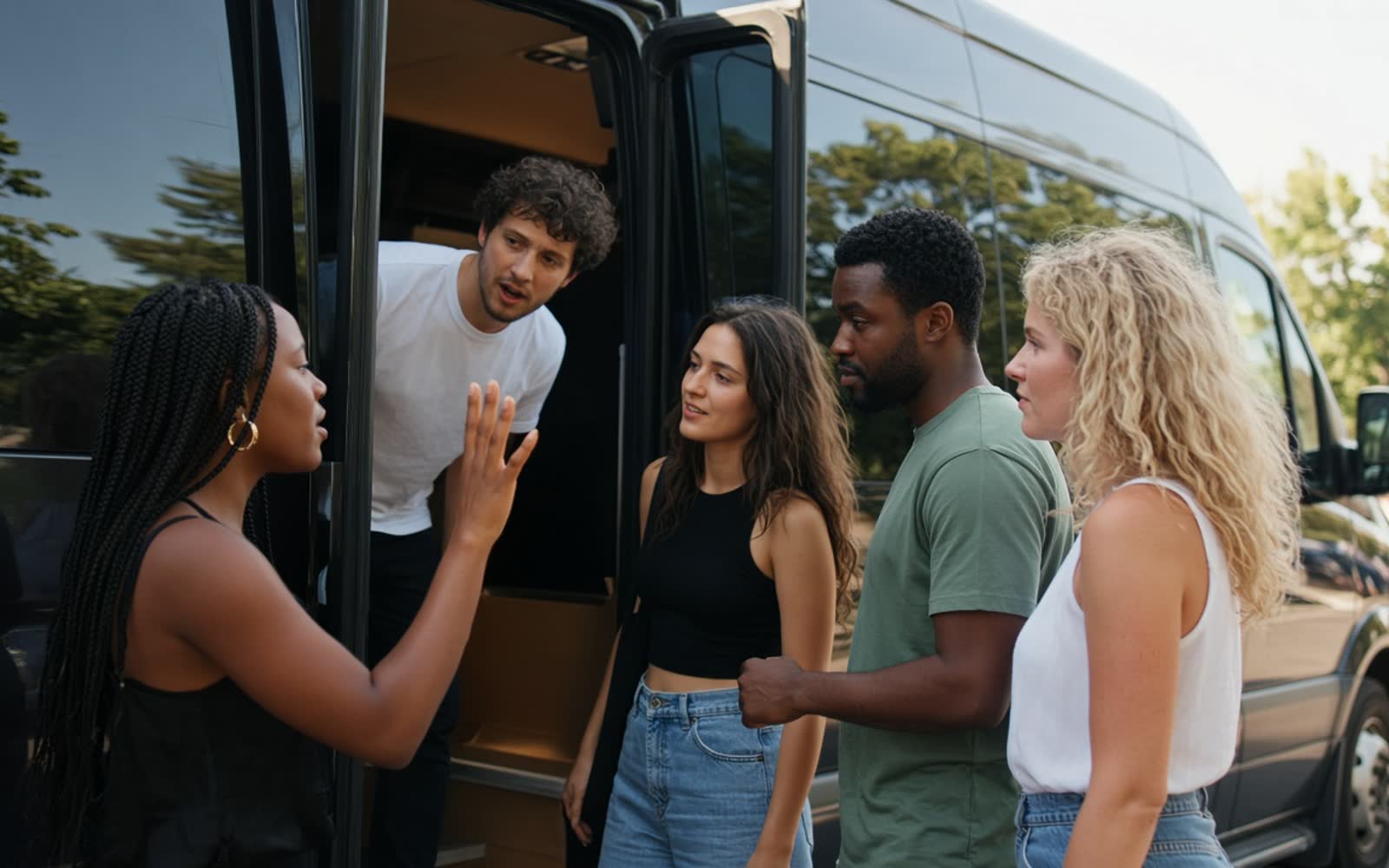
Multi-stop shuttles go wrong in a predictable way: the bus reaches the last hotel and there are nine people waiting for six seats, because guests from the first hotel brought friends. A simple manifest prevents it. List the riders expected at each hotel, give the list to one named person per lobby, and give the driver the totals. If hotel one should produce 14 riders and produces 17, you know at that point, with time to call ahead.
Keep a buffer on the bus. For a 44-seat vehicle, assign no more than 40 to 42 seats across all hotels. The spare seats absorb the unplanned plus-one without leaving someone on the curb at the final stop, which is the worst possible place to run out of room.
Communicate times per hotel, not a single departure. Guests at the third hotel do not need to be in the lobby at the first hotel's pickup time, and they will resent standing about for 35 minutes. Put each hotel's time on the wedding website or the event app, state that the bus cannot wait, and include a mobile number for a coordinator who is not the bride, groom, or host. Our wedding transportation planner has a worksheet for this.
On the return, reverse the logic: the closest hotel to the venue is dropped first.
Once a group passes 40, its character changes. In our booking network, a third of quote requests for 41 to 55 passengers, 33%, were labeled as weddings, against 12% of inquiries overall. Nothing else comes close at this size. Wedding dates cluster too: 17% of wedding inquiries asked for a September date, nearly double September's 9% share of the full dataset.
That concentration has a consequence. On September and October Saturdays, many couples are looking for the same limited number of large shuttles in the same afternoon window. People planning for this size appear to understand the problem: 29% of inquiries for 41 to 55 passengers arrived 90 days or more before the event, compared with 18% of inquiries in general.
If your event is a fall Saturday wedding with guests in several hotels, make the transportation request once your room blocks are contracted, even though the guest split between hotels will still shift. The vehicle and the hours are what need holding; the stop order and the per-lobby times can be settled a fortnight out. For a corporate group or a Friday or Sunday event, the pressure is lower but the logic is the same. The Chicago wedding transportation guide goes through the wider planning sequence.
A single 44 passenger shuttle bus is the economical answer when the hotels are close together, such as three properties within a mile of each other in the Loop, or a cluster along the same stretch of I-88 near Oak Brook and Downers Grove. One driver, one hourly minimum, one vehicle to track, and the added stops cost you 20 to 30 minutes in total.
It stops being the right answer when the hotels are in different directions. Guests in Evanston and guests in the South Loop heading to a West Loop venue should not share a bus; the route would be a tour of the city. The same applies when one hotel holds most of the guests. If 34 people are at the main hotel and six are elsewhere, consider a large shuttle for the main block and a 14 passenger executive Sprinter van for the outlier, which also gives you a vehicle that can run errands during the reception.
Returns sharpen the question. At midnight, a three-hotel drop-off means the last guests get to bed 40 minutes after the first. With two vehicles, everyone is back within 20. Cost per guest is the fair way to compare, and the budget calculator will do that division. Ask us to quote both layouts; the difference is sometimes smaller than couples expect, and sometimes it settles the matter.
Our booking-network data
Numbers from quote requests across our booking network that involve large groups and shuttle bus requests. They are a useful reality check on timing and group size before you lock in a 44-passenger vehicle.
29%
vs 18% across all inquiries
33%
vs 12% across all inquiries
26%
81%
Source: 65,687 group-transportation inquiry records with 2024–2025 event dates, collected across the national booking network that Chicago Party Bus Fun is part of. These are quote requests — not completed trips, unique customers, or Chicago-only figures. How we measure this
Forty-one guests are collected from hotels on Ohio, Kinzie, and Wacker in that order, 14, 12, and 15 riders, then carried south to a ceremony near Printers Row with a coordinator ticking names at each lobby.
Read the planning guide →A company picks up 18 staff at a hotel near O'Hare and 22 more in the Loop on the way to an offsite in the South Loop, saving a second vehicle because the hotels lie along the same route in.
Read the planning guide →Thirty-nine guests split between hotels in Northbrook and Highland Park ride to a lakeside ceremony, with the farther hotel loaded first and the drop-off order reversed at the end of the night.
Read the planning guide →Forty relatives staying at two properties in Lisle and Naperville ride together to a 50th anniversary dinner, then home in the opposite order so the grandparents' hotel is the first stop.
Read the planning guide →Size the group, pick the vehicle, set the hours, and split the cost before you ask for a quote.
One size up gives you elbow room; one size down trims the hourly cost. The closest matches to the 44 Passenger Shuttle Bus:
Capacity: 42 passengers
“A 42 passenger shuttle bus works for a team of 25 to 35 players, coaches, and staff who travel with gear, because the…”
View Details →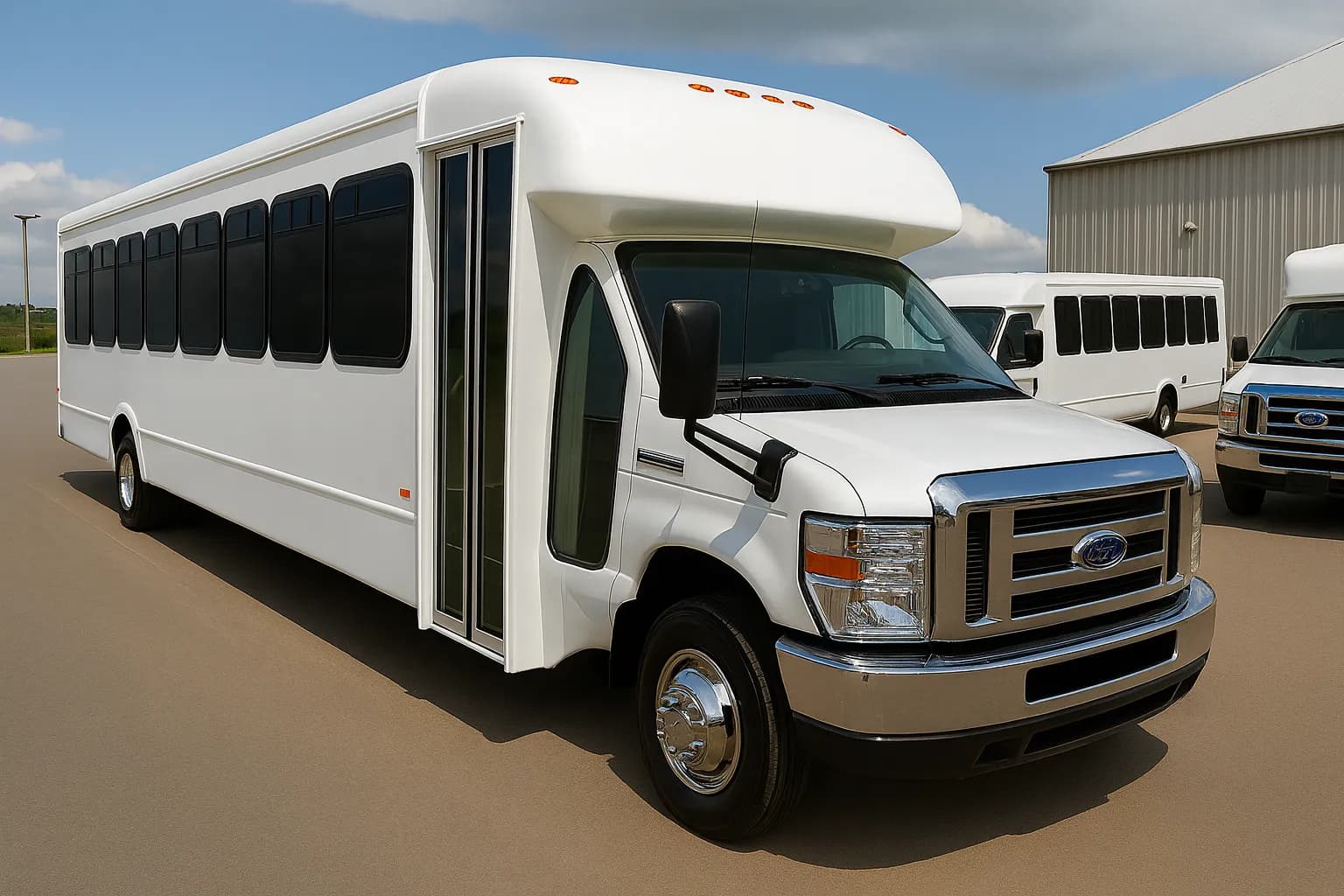
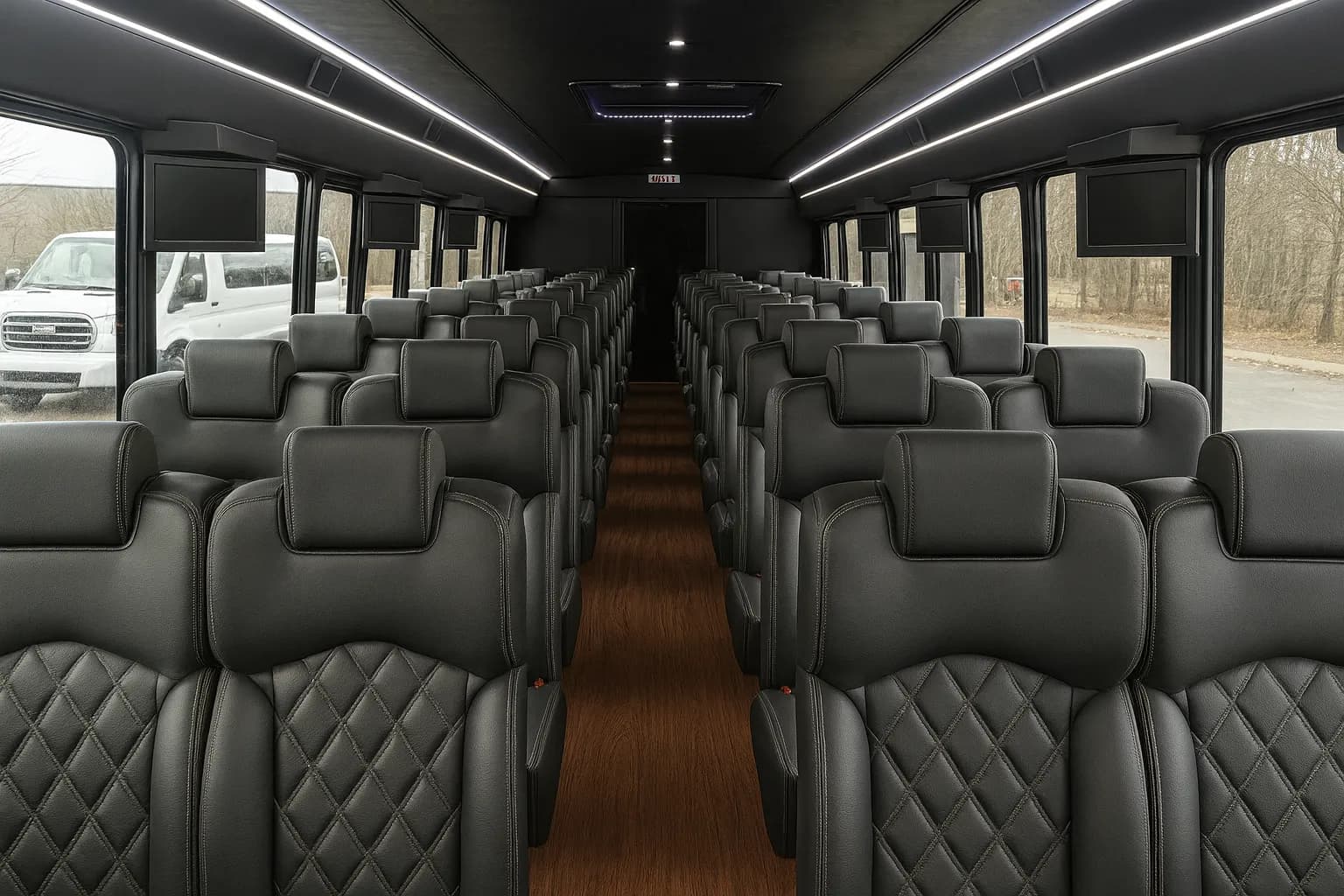
Capacity: 46 passengers
“The 46 passenger shuttle bus is the largest shuttle before a full motorcoach, best for 38 to 44 people on local trips…”
View Details →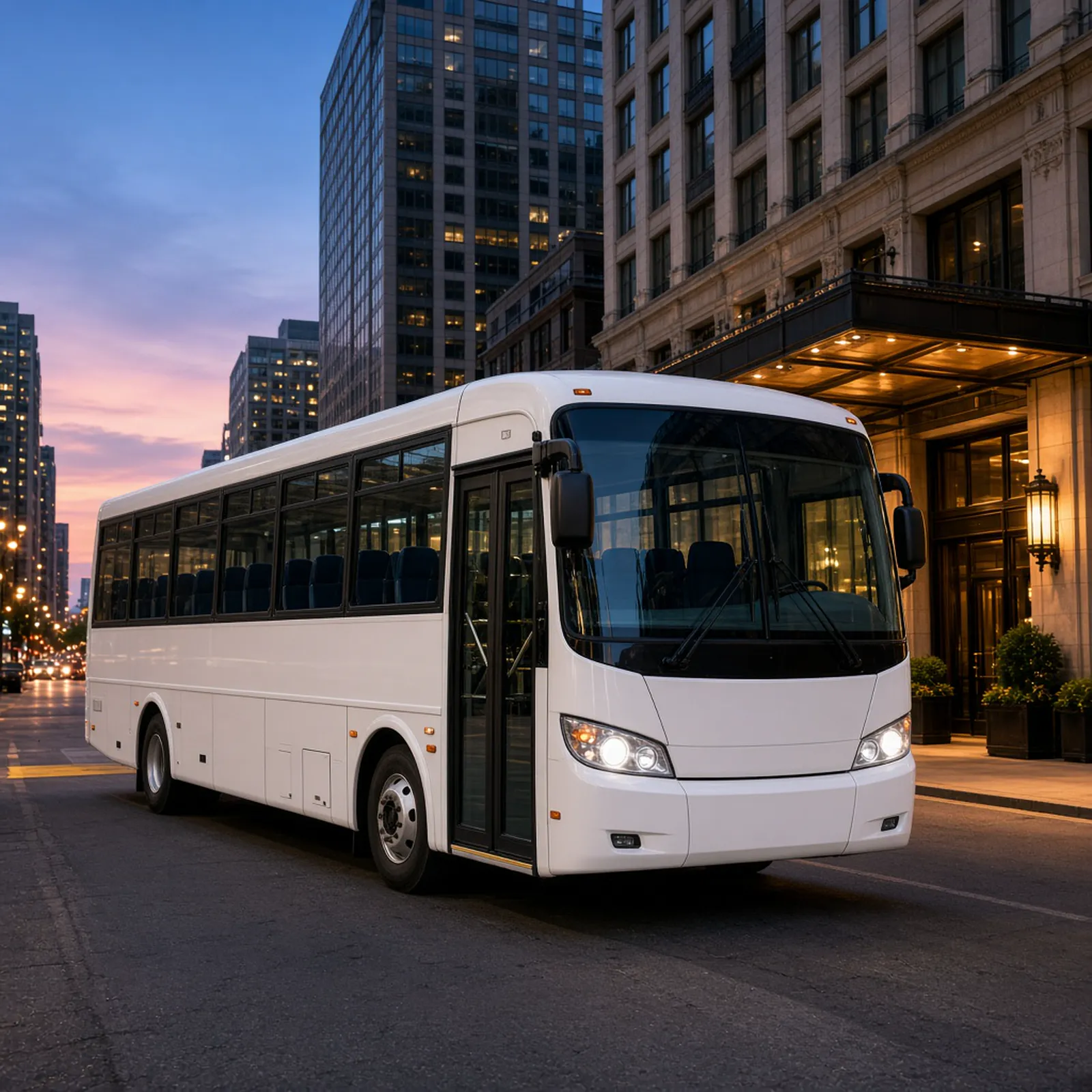
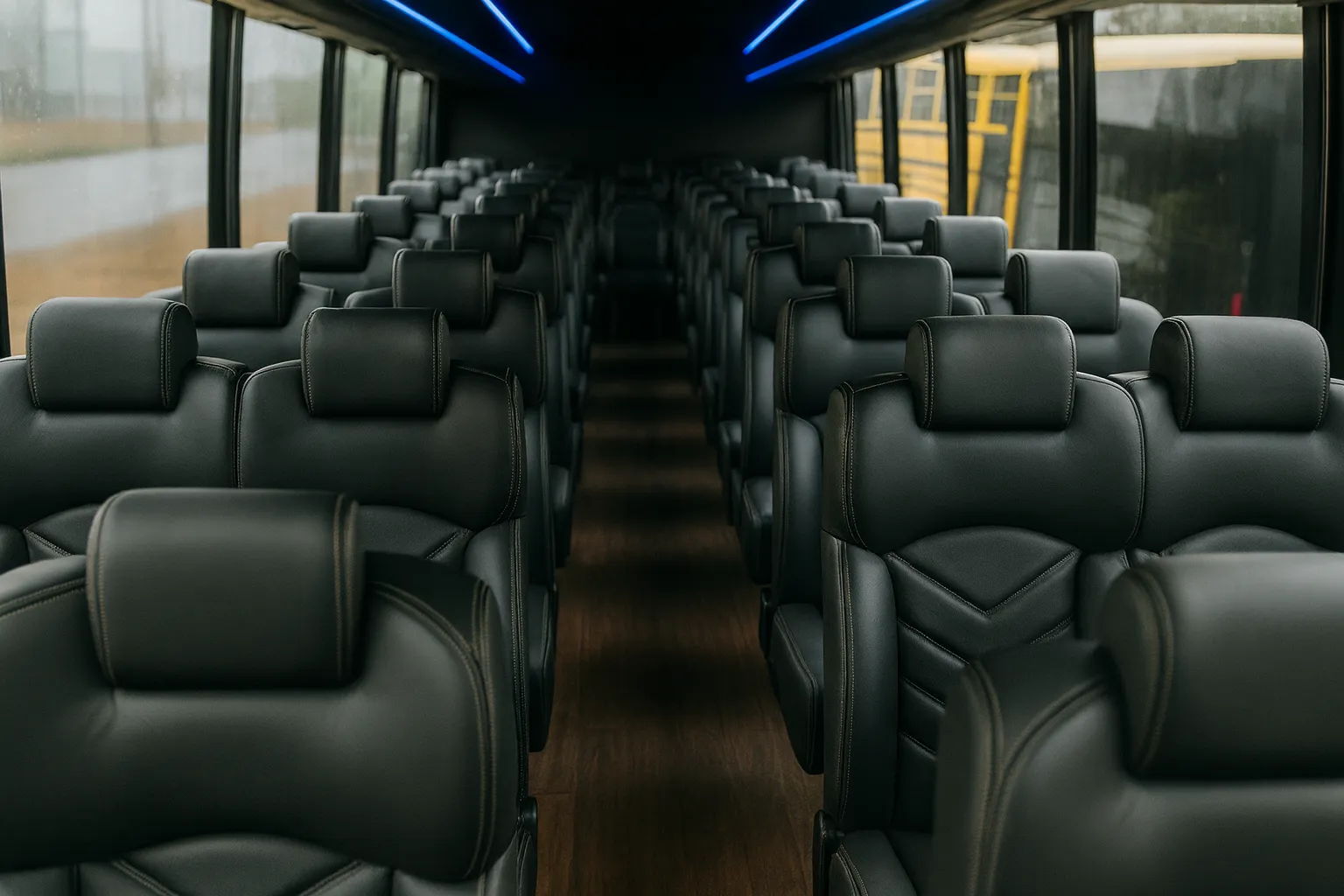
Capacity: 40 passengers
“Choose the 40 passenger shuttle bus when 34 to 38 people need to leave from one place, arrive together, and hear the…”
View Details →Shuttle Buses polls
Vote to see how other groups answered. One vote per poll, no sign-up, and nothing personal is stored.
No votes yet — be first
No votes yet — be first
No votes yet — be first
Straight answers from the Chicago booking desk
Tell us about your event and ask for a written quote. If your reservation is serviced by an affiliate or sister company, confirm vehicle, operator, base rate, minimum hours, and included charges with that provider before paying a deposit.