

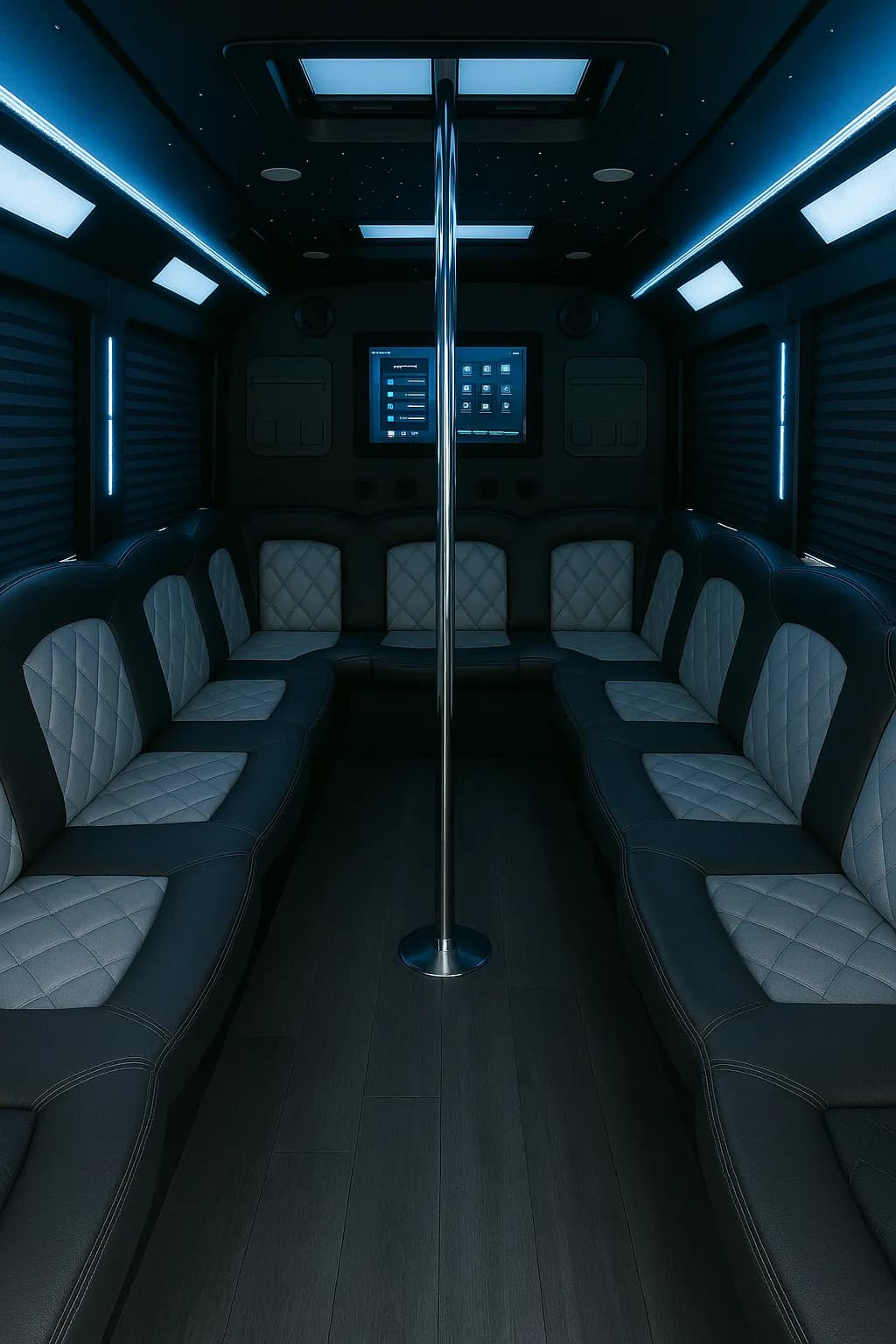
22 Passenger Party Bus
Capacity: 22 passengers
“Choose the 22 passenger party bus when your group has crossed twenty and you would rather not fill a smaller bus to the…”
View Details →Seats up to 24 · party bus
A 24 passenger party bus fits a wedding party of 19 with gowns, bouquets, and a photographer. Day-of timelines, venue access tips, and Chicago lead times.
Pickup ZIP, date, headcount, and hours get you one written total with the driver, fuel, taxes, and gratuity included.
Quick answer
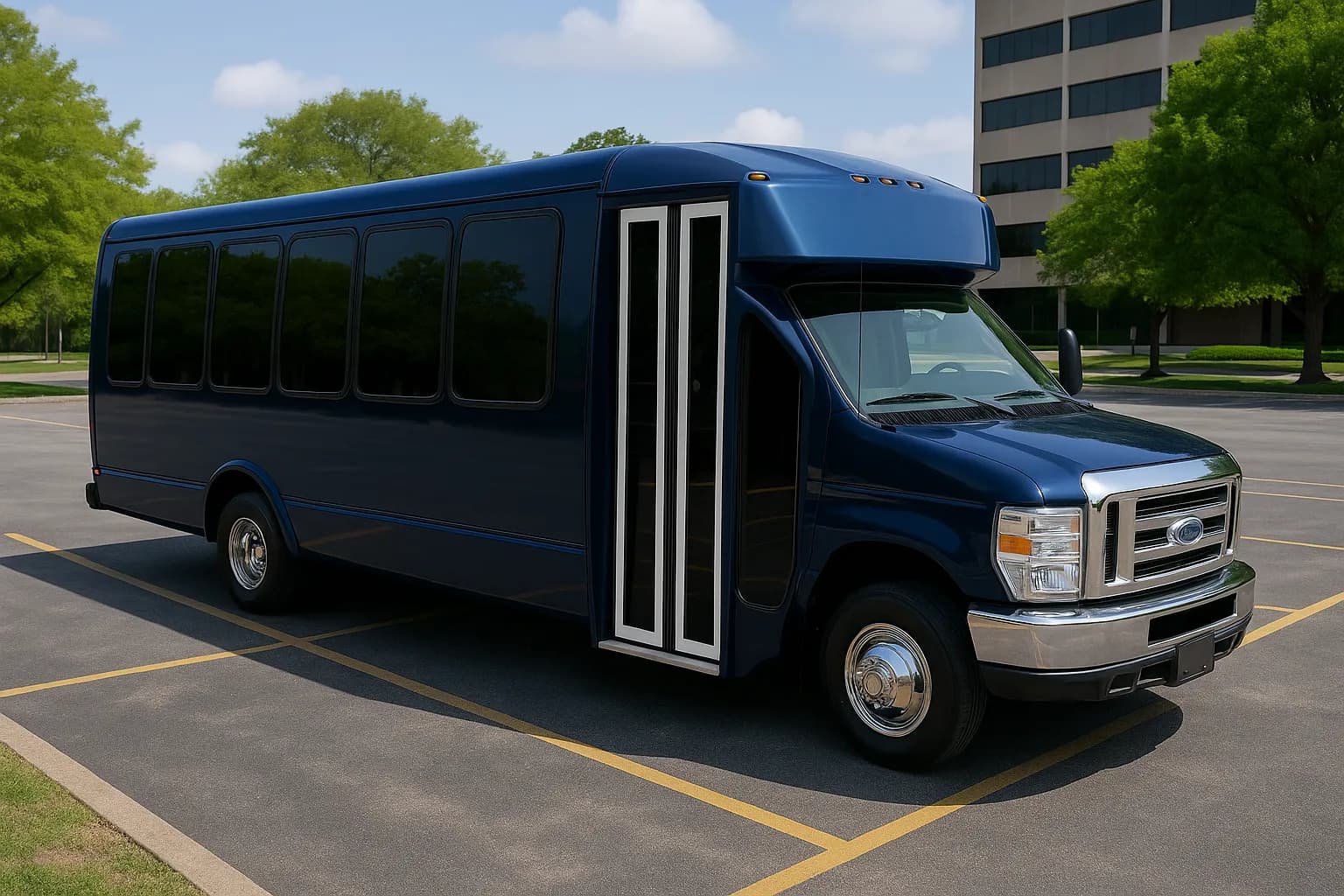
The 24 passenger party bus is the wedding-party bus: room for 18 to 20 adults in gowns and suits, plus the bouquets, garment bags, and photographer who always ends up riding along. It also suits large bachelorette groups and wine tours. Check the day-of timeline, because weddings run on fixed times.
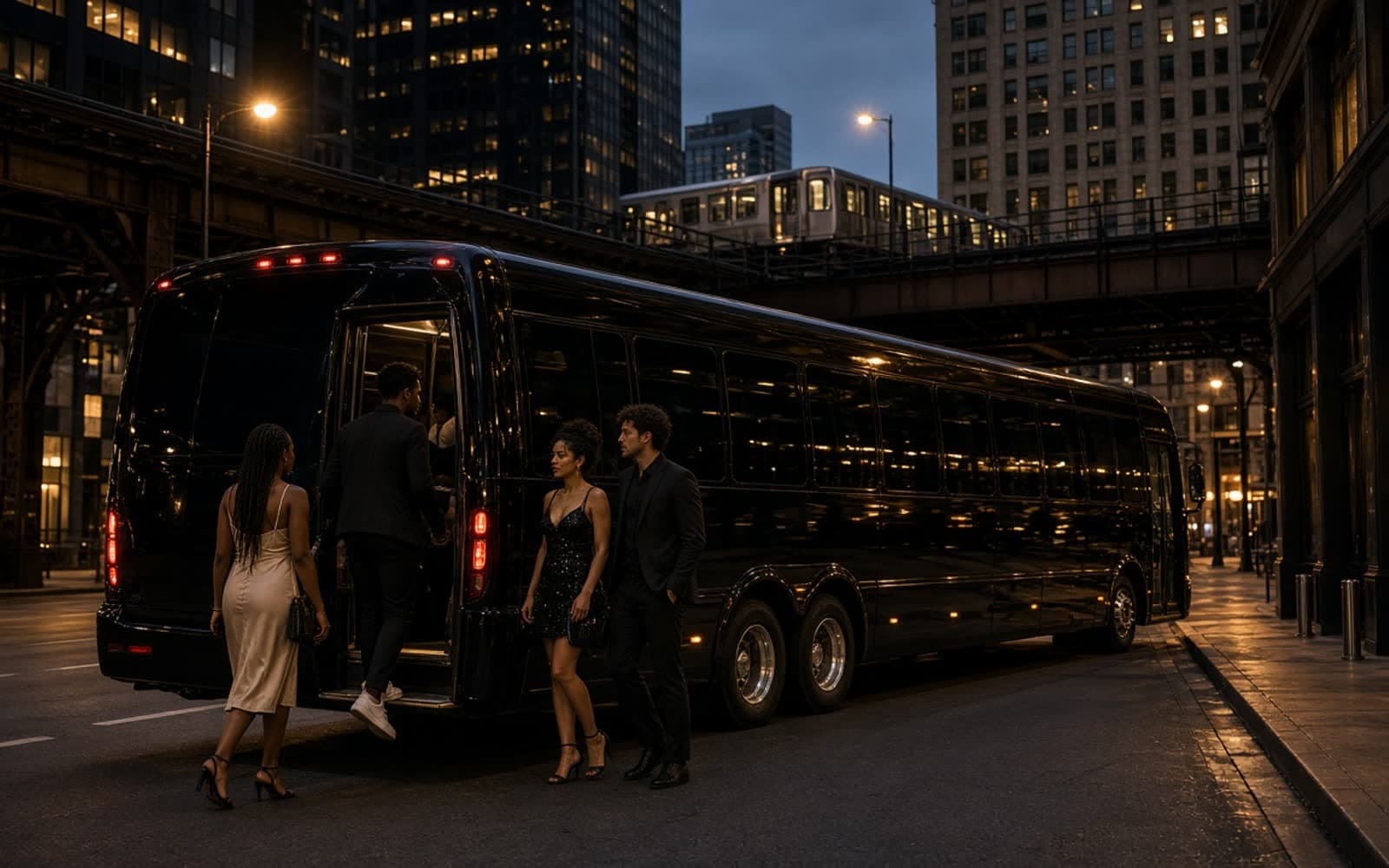
Ask who books a 24 passenger party bus in Chicago and the answer, more often than not, is someone planning a wedding. A full wedding party of eight bridesmaids, eight groomsmen, and the couple is eighteen before you count a flower girl's parent, a photographer, a videographer, or a planner with a clipboard. Those people need to ride together between the ceremony, the photo locations, and the reception, in clothing that does not fold. This is the bus sized for that job.
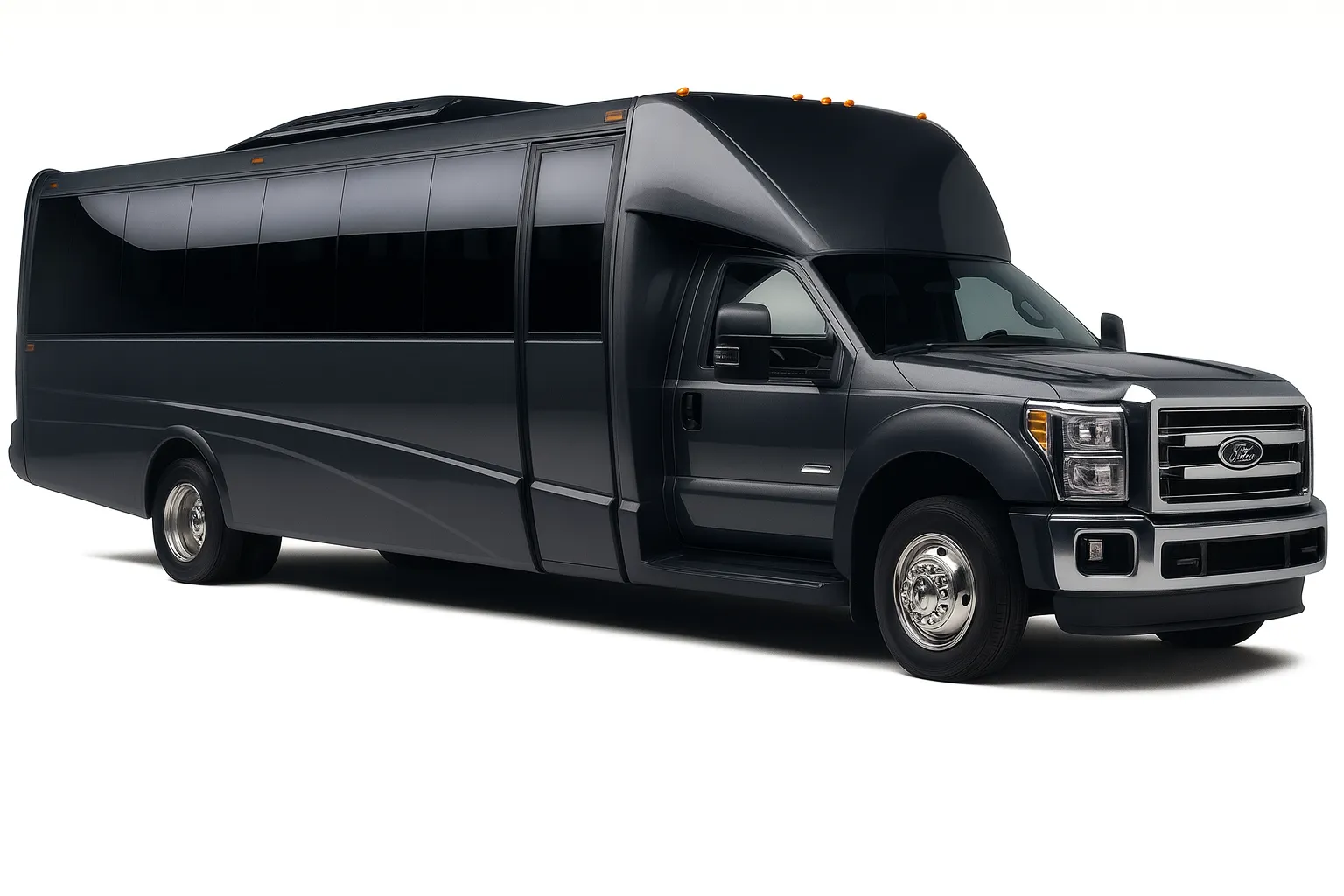
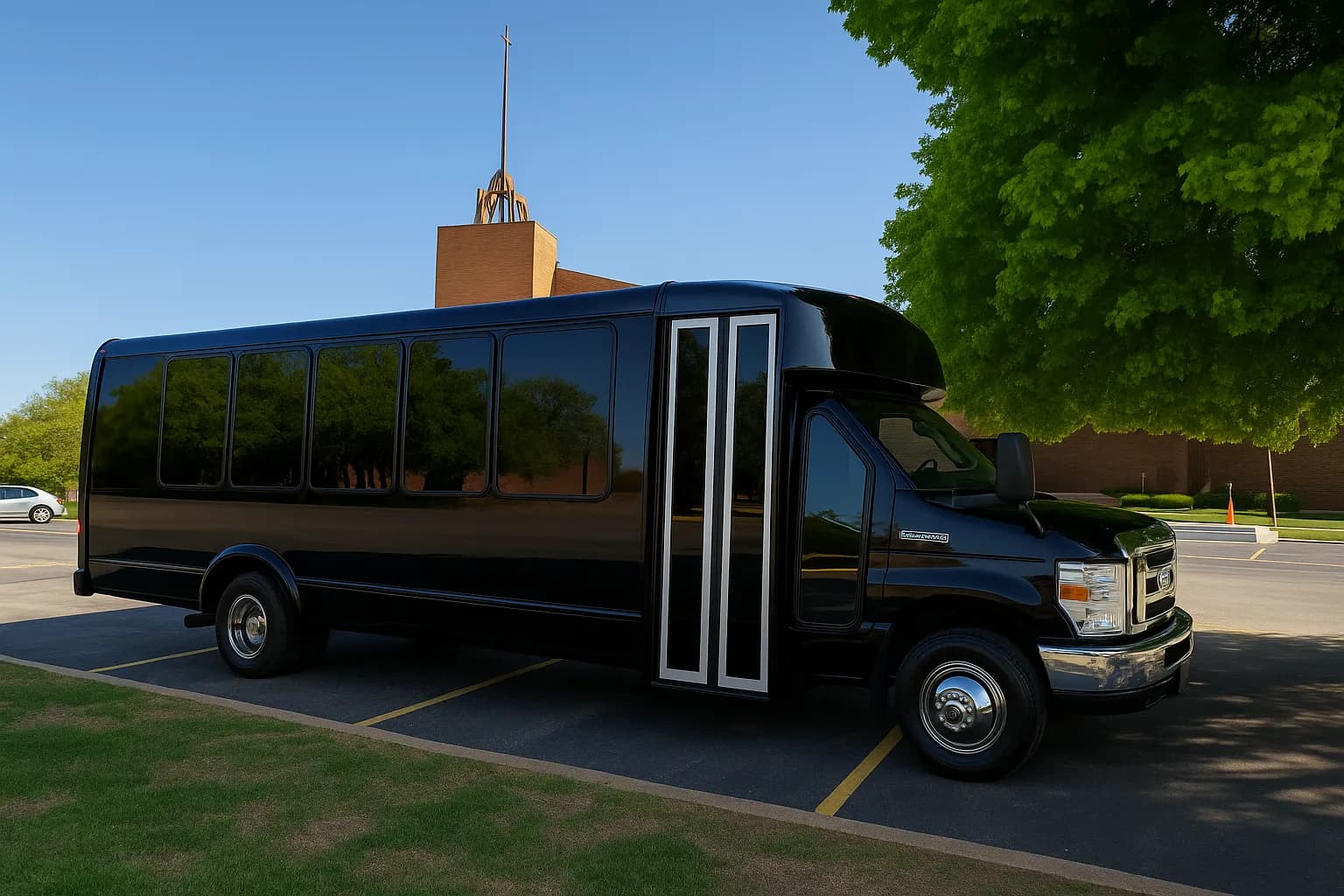
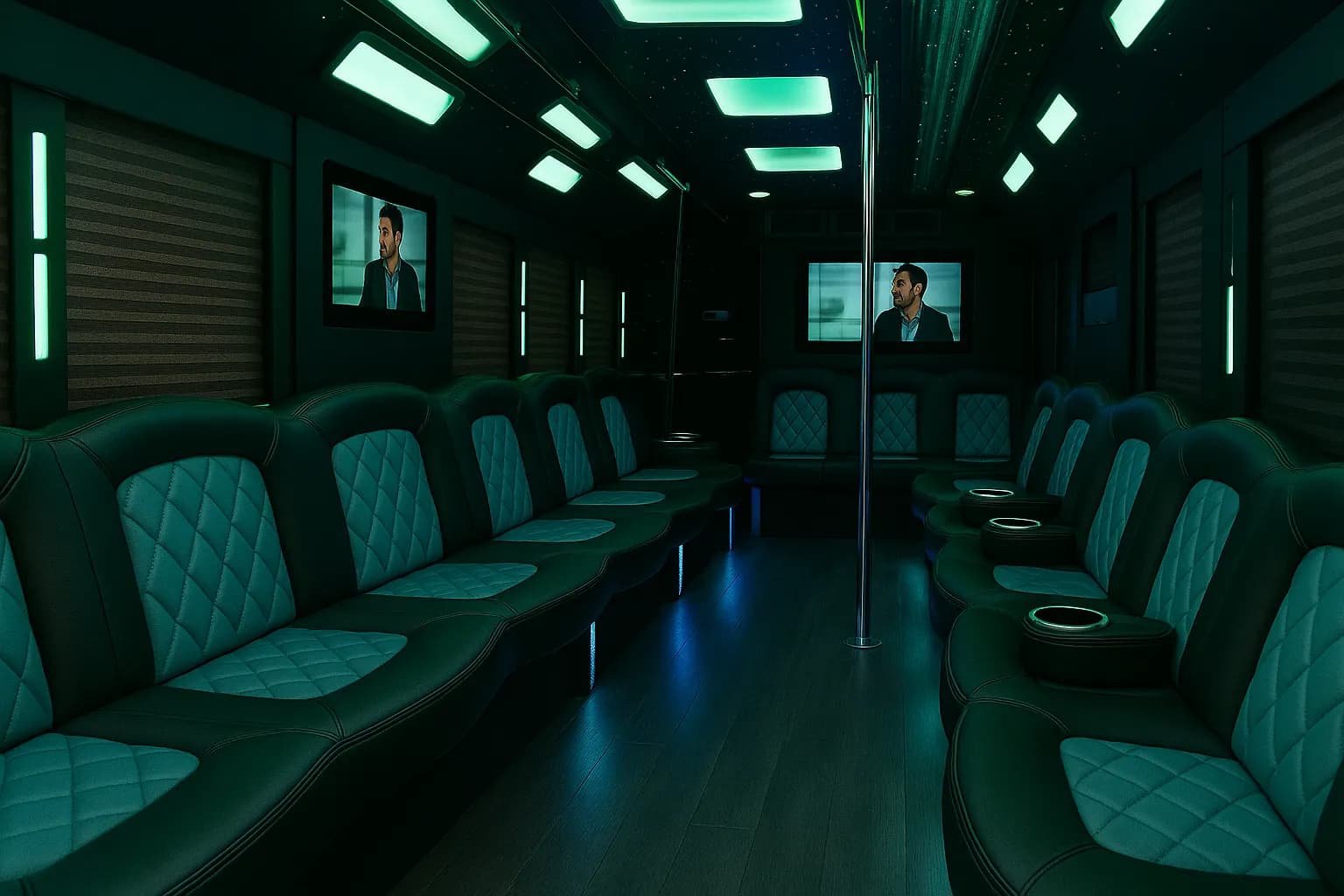
The extra length shows in the cabin. There is more bench on both sides, often a larger bar or counter surface, and an aisle wide enough for a full skirt to pass through without sweeping every knee on the way. It is still a party bus, with standing height, club-style lighting you can turn down, and a sound system for the playlist. It can play it quiet on the way to the church and loud on the way to the reception. Equipment differs by bus, and the written quote lists what yours includes.
The 22-passenger party bus is enough for a smaller wedding party in cocktail attire. The 26-passenger party bus earns its keep when the party is ten-and-ten or the families are riding too. For most weddings, 24 is the middle of the target.
Formalwear changes capacity more than anything else. A bridesmaid in a floor-length gown needs about a seat and a quarter. A bride in a full ball gown with a train needs two seats and sometimes three, plus a clear path to the door. Groomsmen are easier, but jackets come off and need somewhere to go.
A quick way to count for a wedding:
An eight-and-eight wedding party plus the couple and a photographer comes to 19 people and about 23 seats. That is why this size keeps getting chosen. In our booking network's national data, 26% of wedding inquiries listed 21 to 30 passengers, well above the 17% share for that band across all quote requests. Weddings skew larger than other occasions.
If you are at ten attendants a side, go to the 26 or the 28-passenger party bus. The wedding transportation planner will help you count everyone who needs a seat, including the people you forgot.
A wedding is the least forgiving kind of reservation, because the ceremony starts whether the bus has arrived or not. Build the transportation schedule backward from the fixed times.
A typical Saturday might run like this. Pick up the groomsmen at the hotel and take them to the ceremony venue. Return for the bridesmaids and the bride. After the ceremony, the whole party boards for photos at one or two locations, then rides to cocktail hour. The bus can be released there, or kept for a late-night hotel run.
Three lessons from the days that go well:
Share the final run sheet with dispatch a week ahead. The wedding transportation page and our Chicago wedding shuttle timeline article walk through sample schedules, and the wedding guide covers the larger picture of moving guests as well as the wedding party.
A 24 passenger bus is long enough that where it stops deserves a phone call or two before the day. None of this is difficult, but it does need to be decided in advance.
Churches and ceremony venues. Many older Chicago churches sit on residential streets with permit parking and no loading zone. Ask the parish office where buses have stopped for past weddings. Often the answer is a side street or a school lot.
Hotels. Downtown porte-cochères vary widely in clearance and turning room. Some handle buses easily, and others send them to a side entrance or loading dock. The hotel's event contact will know.
Photo locations. Popular spots have their own rules: the lakefront near the museum campus, Olive Park, the Riverwalk, the Wrigley Building plaza, North Avenue Beach. Some need permits and some have nowhere to stand a bus. Plan for a drop-off, with the driver circling or staging nearby. Our photo spot finder flags the practical considerations.
Reception venues. Lofts in the West Loop and Fulton Market often have a dock or an alley entrance that works better than the front door on a busy street. Check each venue's current loading rules rather than relying on what another couple did last year.
Couples often ask whether the wedding-party bus can run guests between the hotel and the venue too. It can, within limits, and it is worth thinking through before you count on it.
The case for it is simple. You are already paying for the hours, and the bus would otherwise sit during the reception. A loop or two at the end of the night gets guests back to the hotel safely.
The limits are arithmetic. A 24-seat bus moves 24 people per run. If the hotel is 20 minutes away, each round trip is close to an hour with loading. Moving 100 guests that way means four or five loops and a long wait for the last group. It also means grandparents climbing steps into a bus with perimeter seating and club lighting, which is not for everyone.
For more than about 40 guests, a dedicated 24-passenger shuttle bus running loops, or a single 56-passenger coach bus, is usually the better tool. Forward-facing seats and a lower step are part of the reason. Keep the party bus for the wedding party, and use it as overflow at the end of the night if the timing works.
Wedding transportation is planned further out than anything else we see. Across wedding inquiries in our booking network, 41% arrived at least 90 days before the date, more than double the 18% rate for all occasions. Wedding dates also cluster. Forty-five percent fell in autumn, and September alone accounted for 17%.
In Chicago that means September and October Saturdays see the most competition for mid-size buses, and wedding parties are up against football tailgates and Halloween events for the same vehicles. A workable schedule:
Friday and Sunday weddings have an easier time with availability and often with hourly minimums. When comparing quotes, look at the total for the hours you need, what is itemized, and the policy if the day runs long, because wedding days frequently do. The budget calculator helps you see transportation as a line in the larger wedding budget.
Our booking-network data
Numbers from quote requests across our booking network that involve mid-size groups and party bus requests. They are a useful reality check on timing and group size before you lock in a 24-passenger vehicle.
15%
vs 30% across all inquiries
40%
vs 26% across all inquiries
62%
vs 17% across all inquiries
1%
vs 28% across all inquiries
Source: 65,687 group-transportation inquiry records with 2024–2025 event dates, collected across the national booking network that Chicago Party Bus Fun is part of. These are quote requests — not completed trips, unique customers, or Chicago-only figures. How we measure this
Groomsmen ride first from a River North hotel, then the bus returns for the bride and bridesmaids. After a 3 p.m. ceremony, everyone boards for photos at Olive Park and along the Riverwalk, then arrives together for cocktail hour at a Fulton Market venue.
Read the planning guide →The night before the wedding, both families board at the hotel on Michigan Avenue and ride to a private dining room in Little Italy. Nobody navigates an unfamiliar city or pays for parking, and the two sides of the family meet properly on the ride over.
Read the planning guide →A Saturday daytime run from Lincoln Park to wineries and tasting rooms in the far western suburbs, with a late lunch along Third Street in Geneva. A larger bus gives room for purchases on the way home, and a daytime slot is often easier to reserve than Saturday night.
Read the planning guide →Guests board quietly in Elmhurst and collect the couple from their house last. The bus heads down the Eisenhower to the restaurant where they had their first date, pausing for a group photo at the lakefront along the way while the evening light holds.
Read the planning guide →Size the group, pick the vehicle, set the hours, and split the cost before you ask for a quote.
One size up gives you elbow room; one size down trims the hourly cost. The closest matches to the 24 Passenger Party Bus:
Capacity: 22 passengers
“Choose the 22 passenger party bus when your group has crossed twenty and you would rather not fill a smaller bus to the…”
View Details →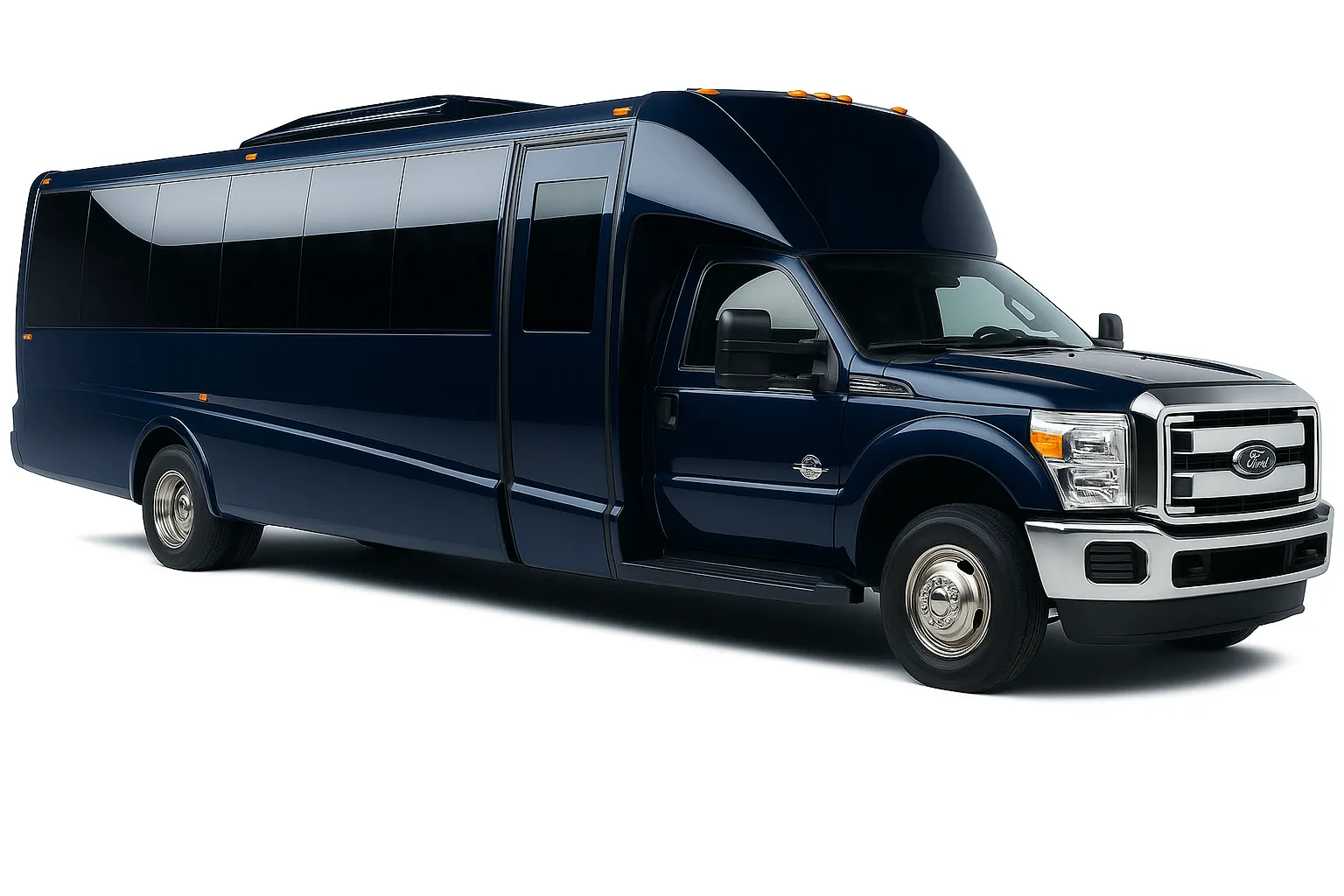
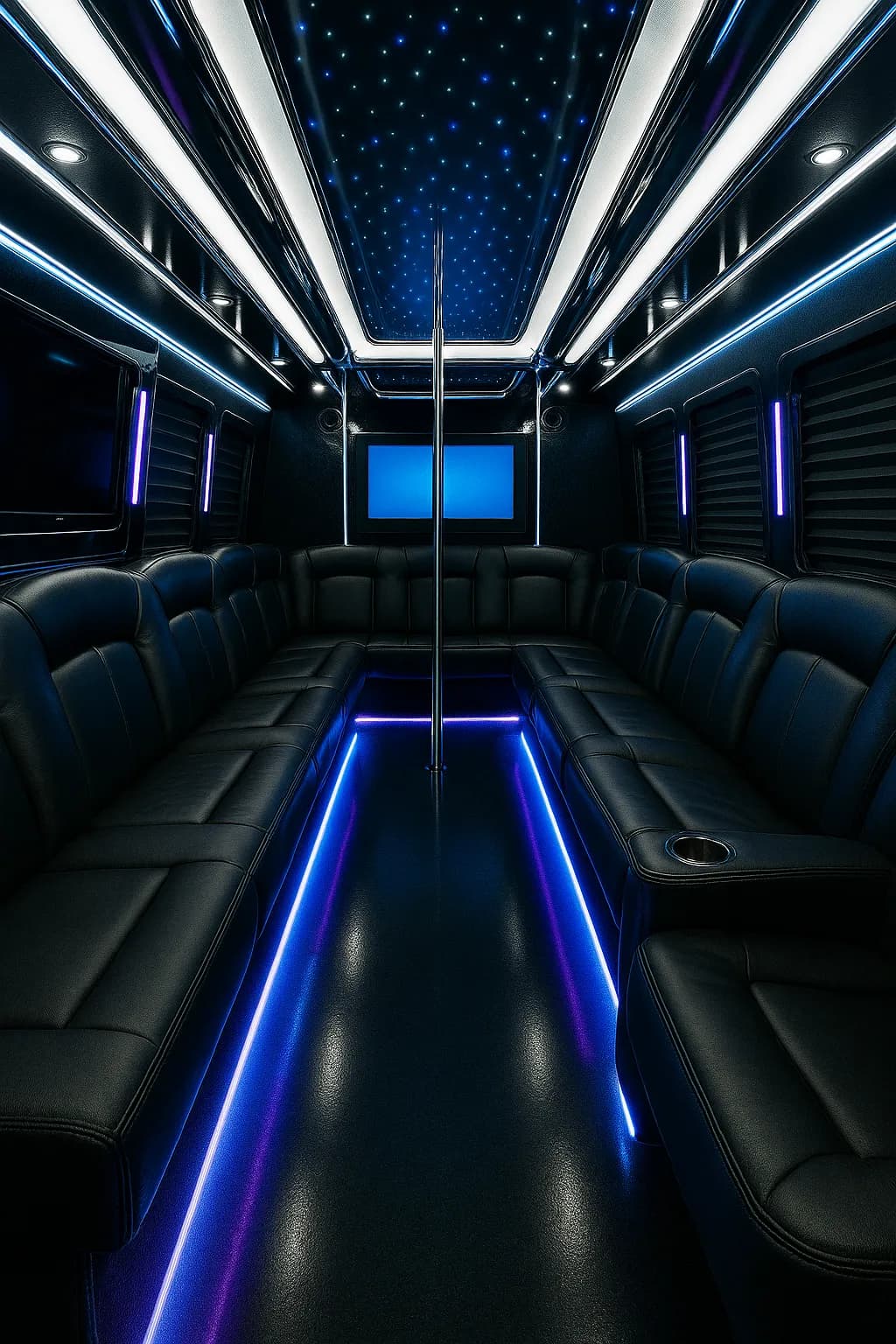
Capacity: 26 passengers
“The 26 passenger party bus is the prom, homecoming, sweet 16, and quinceañera bus: comfortable for 20 to 22 teens in…”
View Details →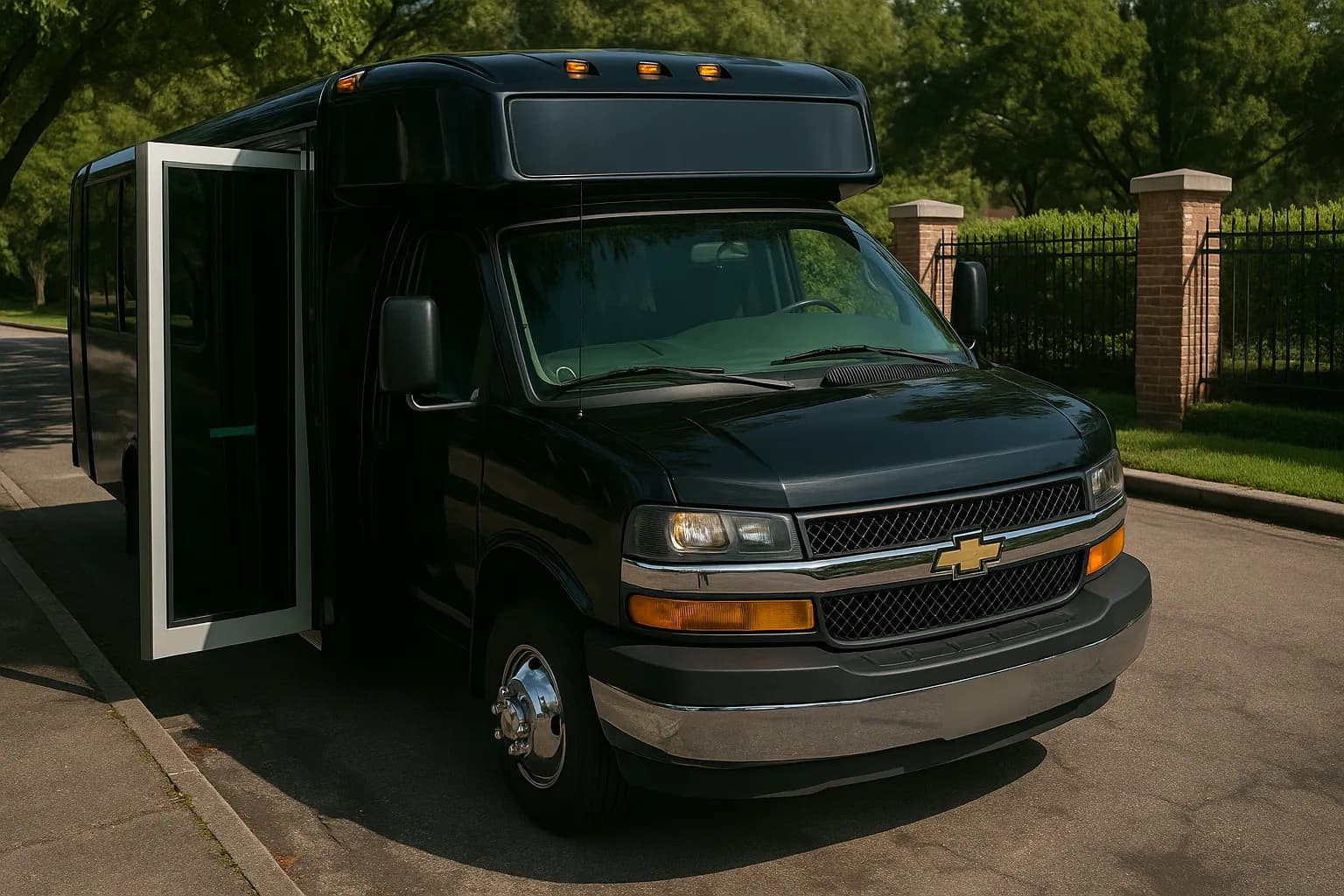
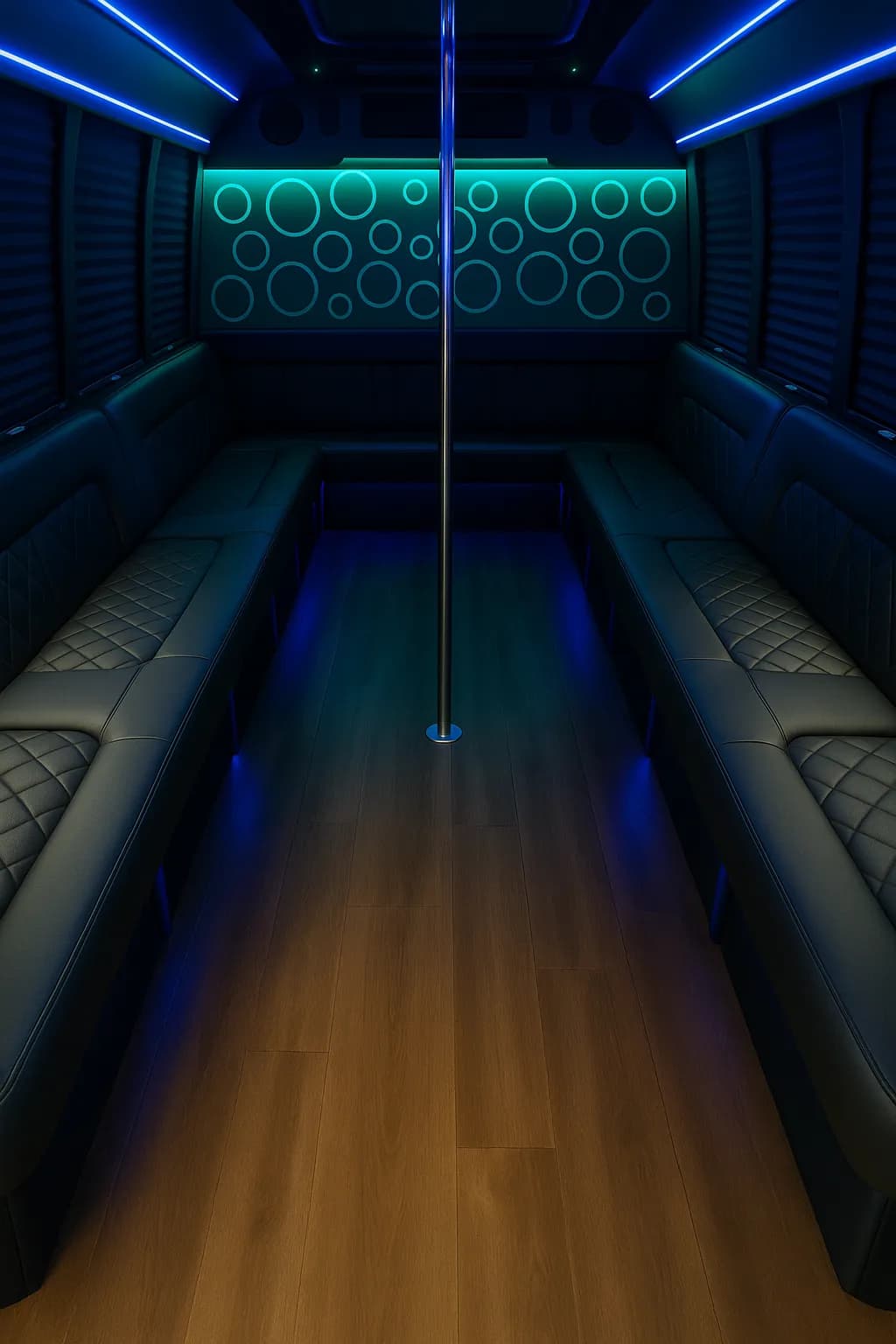
Capacity: 20 passengers
“The 20 passenger party bus is the default answer for a Chicago night out: big enough for 15 to 17 adults to spread out,…”
View Details →Party Buses polls
Vote to see how other groups answered. One vote per poll, no sign-up, and nothing personal is stored.
No votes yet — be first
No votes yet — be first
No votes yet — be first
Straight answers for planning a group trip in Chicago
Tell us about your event and ask for a written quote. If your reservation is serviced by an affiliate or sister company, confirm vehicle, operator, base rate, minimum hours, and included charges with that provider before paying a deposit.