Skip to content

Free Chicago planning tool

Event Timeline Planner: Build a Clock-Time Schedule for Your Group

This planner turns a rough idea of the night into a schedule with real clock times. You give it a pickup time, how long boarding takes, the drive to each stop, and how long you plan to stay. It returns the arrival and departure time for each stop, the final drop-off time, and the total reserved time the plan needs.

Written quote before deposit
Vehicle and operator details confirmed
Route timing and stop plan reviewed
Sound system and lighting options vary by vehicle
BYOB policies confirmed by event type
Stops planned within reserved time
Read 29 dated customer comments✓ Online quote request anytime✓ Serving All of Chicagoland

Get Your Free Quote

Pickup ZIP, date, headcount, and hours get you one written total with the driver, fuel, taxes, and gratuity included.

Or call 1-773-570-7445partybusexperts@gmail.com

Event Timeline Planner

Set a pickup time, stop lengths, and drive legs to get a clock-time schedule you can send to the group.

Stop 1
Stop 2

Your schedule

  1. 6:00 PMVehicle arrives; group boards
  2. 6:15 PMWheels rolling
  3. 6:40 PMArrive: Dinner (1 hr 30 min)
  4. 8:10 PMBack on board, leaving Dinner
  5. 8:25 PMArrive: Second stop (1 hr)
  6. 9:25 PMBack on board, leaving Second stop
  7. 9:55 PMFinal drop-off
Total reserved time needed3 hr 55 min

Send this schedule with your quote request so the hours, route, and stop order appear on the written quote. Drive times are your own estimates; check a live map for your date and time.

Runs in your browser with no account. Results are planning aids, not a quote or a reservation. When the numbers look right, send them with a quote request or call 1-773-570-7445.

How to use the event timeline planner

That total matters because group transportation is usually quoted by the hour, and the hours on your written quote are the hours you have. A plan that looks like four hours in your head often runs closer to five and a half once boarding and drive legs are counted. Seeing the clock times also exposes problems early: a dinner reservation you would miss, a venue that closes before you arrive, or a drop-off later than half the group wants.

  1. Set the pickup time. The field defaults to 6:00 PM.

  2. Set the boarding time in minutes. The default is 15, adjustable in steps of 5 up to 120. The schedule shows a separate "Wheels rolling" line after this gap.

  3. Edit the two starter stops, "Dinner" and "Second stop". For each one, type a name, the drive to get there in minutes, and the time you will spend there. The defaults are a 25-minute drive and 90 minutes for dinner, then a 15-minute drive and 60 minutes.

  4. Use "Add a stop" for anything else, up to 10 stops. New stops start at a 15-minute drive and a 45-minute stay. Remove any stop with the link under it.

  5. Enter the drive from the last stop to the final drop-off. The default is 30 minutes.

  6. Read the schedule and the "Total reserved time needed" row, then use "Copy schedule" to paste the plain-text version into your group chat or your quote request.

Our booking-network data

What inquiry data says about this decision

Figures from 65,687 quote-request inquiries across the national booking network we belong to. They describe inquiries, not completed trips, and are not specific to Chicago.

26%

Across 65,687 non-spam inquiry records for 2024–2025 event dates, 26% of requested event dates fell in fall.

30%

Across 65,687 non-spam inquiry records for 2024–2025 event dates, 30% of requested event dates fell in spring.

81%

Across 65,687 non-spam inquiry records for 2024–2025 event dates, 81% of requested event dates fell on Friday or Saturday.

5%

Across 65,687 non-spam inquiry records for 2024–2025 event dates, 5% of requested event dates fell in January.

Source: 65,687 group-transportation inquiry records with 2024–2025 event dates, collected across the national booking network that Chicago Party Bus Fun is part of. These are quote requests — not completed trips, unique customers, or Chicago-only figures. How we measure this

Why the schedule starts when the vehicle arrives, not when you leave

The first line of the schedule reads "Vehicle arrives; group boards," and the clock starts there. That mirrors how hourly reservations generally work: the reserved time begins at the scheduled pickup, so a group that takes 25 minutes to get out the door has used 25 minutes of its night. Confirm on your written quote exactly when billing starts and ends.

The boarding field is where you get honest about your group. Six people leaving one condo can board in five minutes. Twenty people meeting at a Lincoln Park three-flat, with coolers, a cake, and two people still parking, will take fifteen to twenty. If the pickup is on a narrow one-way street or a block with permit parking, the vehicle may have to stage around the corner and the walk adds time.

A useful habit is to give the group a meeting time 15 minutes before the pickup time you enter here. The planner then shows the driver's schedule, and your group chat shows the earlier one. If you have not settled the headcount yet, run the group size calculator first, because a bigger group boards more slowly at each stop, not just the first one.
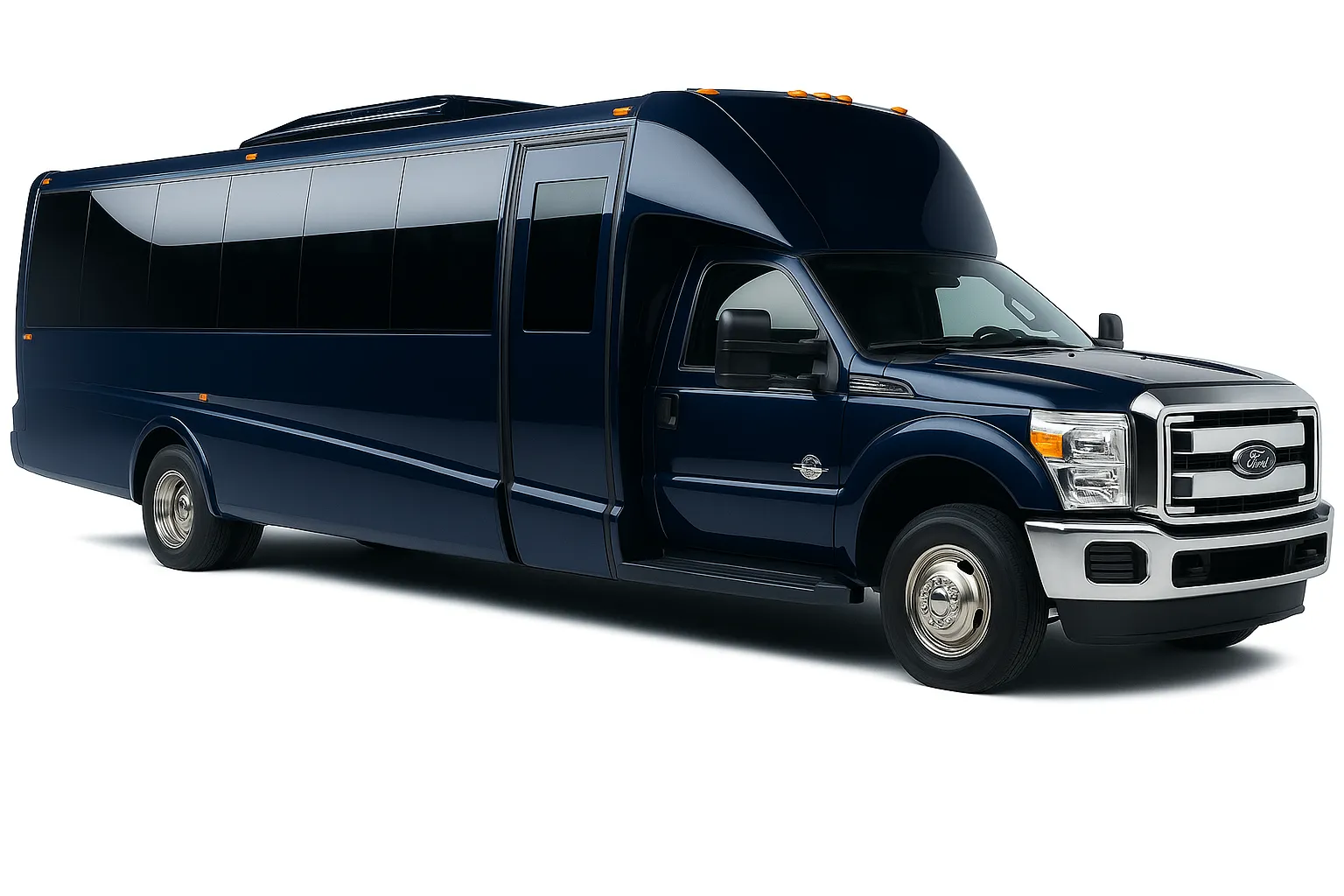
26-passenger party bus arriving for a scheduled pickup
26-passenger party bus arriving for a scheduled pickup. Representative photo; confirm the assigned vehicle with your written quote.

Estimating Chicago drive legs you can defend

The planner does not look up traffic. Each "Drive to get here" value is your own estimate, which means the schedule is only as good as the numbers you type. Two things make Chicago legs longer than a map app suggests on a quiet afternoon.

First, a large vehicle drives differently from a car. It takes wider turns, avoids some low viaducts and residential streets, and may be restricted on parts of DuSable Lake Shore Drive, so confirm routing with the operator rather than assuming the lakefront shortcut. Second, the last half mile is the slow part. Getting from the Kennedy to a curb in River North or Fulton Market on a Saturday night can take as long as the expressway portion did.

For common legs, the route time estimator gives a low and high planning range by time of day. Enter the high end here for any leg that touches a weekday rush, a game at Wrigley Field or the United Center, or a festival weekend. Then check a map app for your actual addresses at the same day and hour a week before. If the plan centers on one neighborhood, such as a West Loop night, short legs of 5 to 10 minutes are realistic and you can spend the saved time at the stops.

Turning the total into the hours you request

The bold "Total reserved time needed" row is the gap between pickup and final drop-off. It is a minimum. Most planners should request slightly more than this number, because a quote is usually written in whole or half hours and because overtime, where it exists, tends to cost more than the same time booked up front. Ask how overtime is billed and in what increments, and get the answer on your written quote.

If your total comes out at 5 hours 10 minutes, the decision is between trimming a stop to fit five hours or requesting five and a half. The trip duration estimator handles that rounding and adds a buffer, and the budget calculator shows what the extra half hour does to each person's share using the hourly figure from your own quote.

The planner also warns you when a schedule runs past 12 hours. Wedding days hit this often: a morning hotel pickup, ceremony, photos, reception, and a late return. In that case it is usually cleaner to plan two reservations, for example a ceremony block and a late-night return shuttle, than one long block with hours of idle time in the middle. The wedding transportation planner helps size the shuttle side of that.
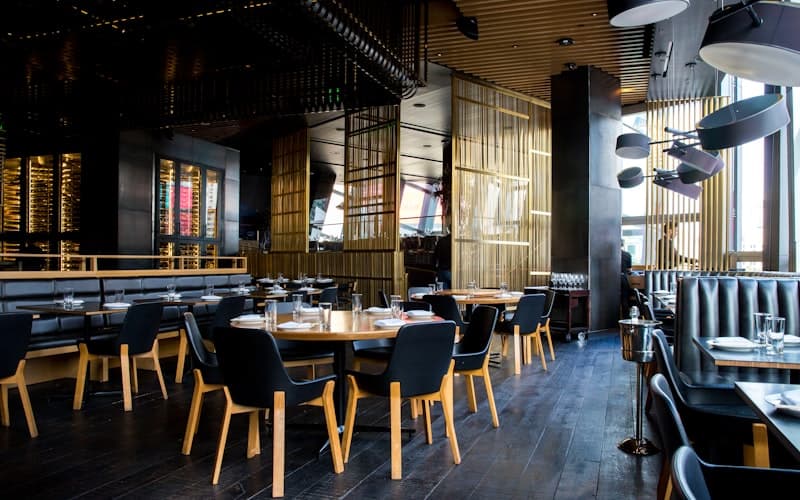
Guests gathered at a dinner stop on a planned itinerary
Guests gathered at a dinner stop on a planned itinerary. Representative photo; confirm the assigned vehicle with your written quote.

Sharing the schedule so it ends up on the quote

A schedule that lives only in your notes does not protect you. The "Copy schedule" button produces plain text, one line per event plus the total, which pastes cleanly into an email, a text thread, or the notes field when you request a quote. Sending it with the request means the operator can price the real route and stop order, and you can check that the hours, addresses, and number of stops on the written quote match what you sent.

Timing of that request matters more for some events than others. Among wedding inquiries for 2024–2025 event dates, 41% were received 90 days to two years before the event. That figure comes from a national dataset of quote requests across the booking network this site belongs to, not from Chicago alone, and it describes inquiries rather than completed bookings.

For the group, send the schedule twice: once when the plan is set, and again the morning of the event with the meeting time in bold at the top. If several people are still voting on stops, settle it with a quick group poll before you build the final version here.
Worked example

Worked example: a three-stop birthday night from Lakeview

A group of 18 is planning a Saturday birthday. Pickup is set to 5:30 PM in Lakeview with the default 15 minutes of boarding, so the schedule shows "Wheels rolling" at 5:45 PM.

Stop 1 is dinner in the West Loop: a 25-minute drive and 90 minutes there. The planner shows arrival at 6:10 PM and back on board at 7:40 PM. Stop 2 is a bar in Wicker Park: 15 minutes of driving and 60 minutes there, so arrival at 7:55 PM and departure at 8:55 PM. The planner adds a third stop in River North with a 20-minute drive and a 75-minute stay: arrival at 9:15 PM, back on board at 10:30 PM.

With a 30-minute final drive back to Lakeview, the final drop-off lands at 11:00 PM. The total reserved time needed reads 5 hr 30 min (15 + 25 + 90 + 15 + 60 + 20 + 75 + 30 = 330 minutes).

Multi-Stop Trips polls

Vote to see how other groups answered. One vote per poll, no sign-up, and nothing personal is stored.

How often do you include local cuisine in your multi-stop itineraries?

How often do you include local cuisine in your multi-stop itineraries?

No votes yet — be first

What is your preferred method for booking transport between cities?

What is your preferred method for booking transport between cities?

No votes yet — be first

What type of activities do you prioritize in a multi-stop itinerary?

What type of activities do you prioritize in a multi-stop itinerary?

No votes yet — be first

Event Timeline Planner: questions and answers

Straight answers from the Chicago booking desk

Does the planner check live traffic for my drive legs?
No. Every drive time in the schedule is a number you typed. The planner only adds them up and converts the running total to clock times. For a realistic figure, look up your actual addresses in a map app at the same day of the week and hour as your event, then add a margin for a larger vehicle.
How many stops can I add?
Up to 10. The tool starts with two stops and the "Add a stop" button is disabled once you reach ten. In practice, more than four or five stops in one evening leaves very little time at each one, because every stop costs a drive leg plus the minutes it takes to unload and reload the group.
What happens if my schedule crosses midnight?
The clock times wrap correctly, so a stop that ends 40 minutes after 11:30 PM shows as 12:10 AM. The total reserved time is calculated from elapsed minutes, not from the clock, so it stays accurate. For late nights, check when each venue stops serving and whether the operator has a latest drop-off time, and ask for that to be stated on your written quote.
Why does the planner warn me about schedules over 12 hours?
A total above 720 minutes triggers a note suggesting you check stop lengths or plan two reservations. Sometimes the cause is a typo, such as 900 entered for 90. When the length is real, as with many wedding days, a single block often includes hours where the vehicle sits unused. Two shorter reservations can fit the day better. Ask the operator how driver hours and long blocks are handled.
Should I include the return drive to the pickup address?
Yes, if the group is being dropped back where it started. Enter that leg in the "Drive from last stop to final drop-off" field. If people are being dropped at several addresses, estimate the time to the last one, since the reservation generally runs until the final passenger is off. Multiple drop-offs should be listed in your quote request so they appear on the written quote.
Can I use this for a prom or homecoming schedule?
Yes. A typical prom schedule has a photo stop, the drive to the venue, a long stay, and a return. Enter the dance itself as one long stop. Prom and other under-21 events are alcohol-free without exception, and schools often set arrival cutoffs, so build the schedule backward from the latest allowed arrival. The prom checklist covers the rest of the planning.
What should I do if the group runs late during the night?
Decide in advance which stop shrinks. The easiest way is to mark one stop as flexible when you build the schedule, usually the last bar or a photo stop. If you are 20 minutes behind after dinner, shorten that stop rather than hoping to make it up on the road. Tell the driver about changes early, and ask before the event how extra time is billed if you decide to extend.

Ready for real numbers? Request a written quote

Tell us about your event and ask for a written quote. If your reservation is serviced by an affiliate or sister company, confirm vehicle, operator, base rate, minimum hours, and included charges with that provider before paying a deposit.

Or call 1-773-570-7445 • Email partybusexperts@gmail.com

Call NowFree Quote