
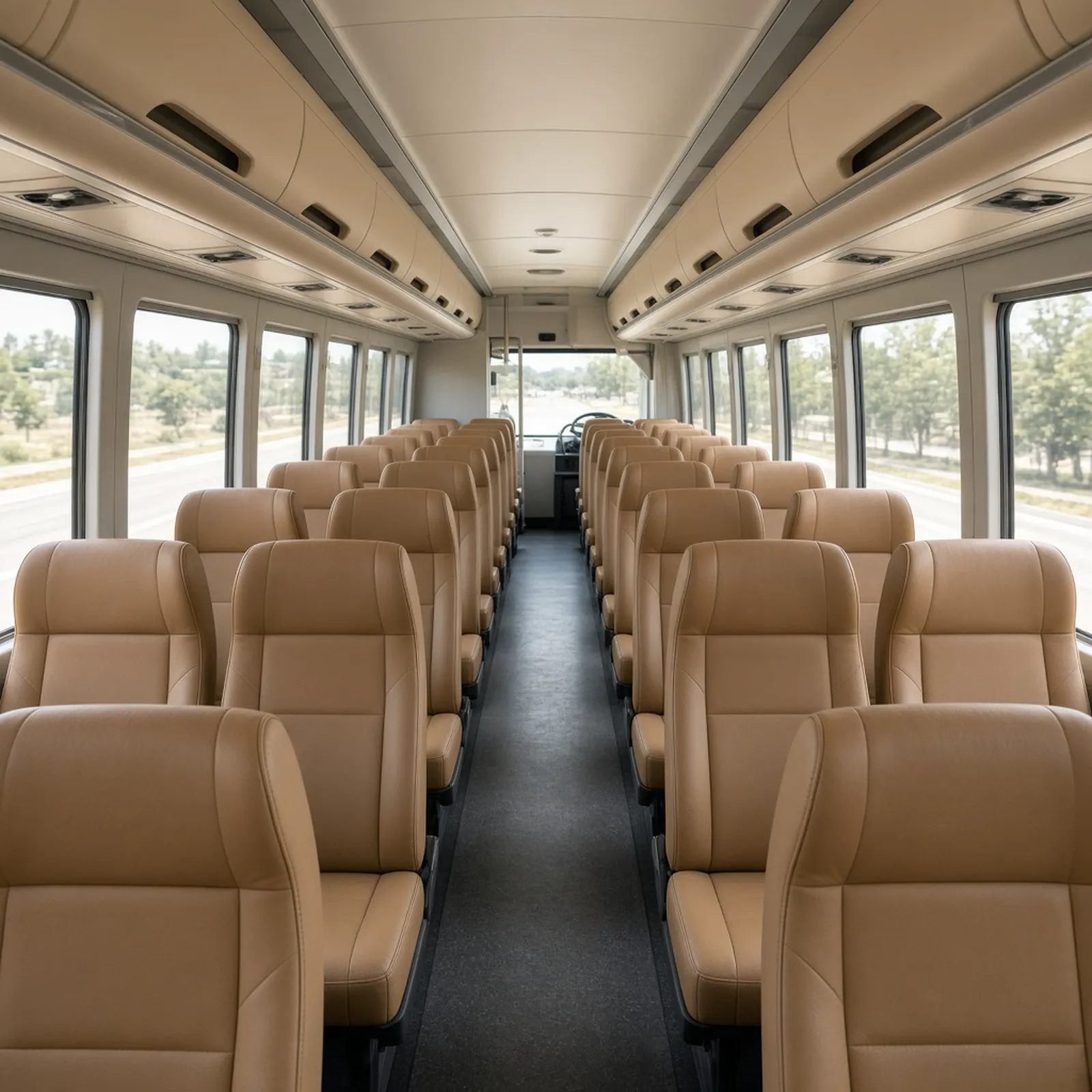
38 Passenger Shuttle Bus
Capacity: 38 passengers
“The 38 passenger shuttle bus is a workhorse for convention and meeting shuttles: repeated loops between hotels and…”
View Details →Seats up to 40 · shuttle bus
Deciding between a 40 passenger shuttle bus and two smaller vehicles in Chicago? Compare cost, redundancy, loading time, and street access before booking.
Pickup ZIP, date, headcount, and hours get you one written total with the driver, fuel, taxes, and gratuity included.
Quick answer
Choose the 40 passenger shuttle bus when 34 to 38 people need to leave from one place, arrive together, and hear the same announcements. It is usually simpler and cheaper than two 20-seat vehicles. The thing to check is whether your pickup and venue can take a bus this long, because that is where two smaller vehicles win.
Forty is a round number, and it is where a lot of planners pause. A group of 36 or 38 could ride in one 40 passenger shuttle bus, or it could be split across two vehicles of 20. Both are legitimate answers, and the right one depends on things that have nothing to do with seat count: where people are starting from, how tight the venue's driveway is, whether the group needs to arrive as one, and how much a backup matters to you.
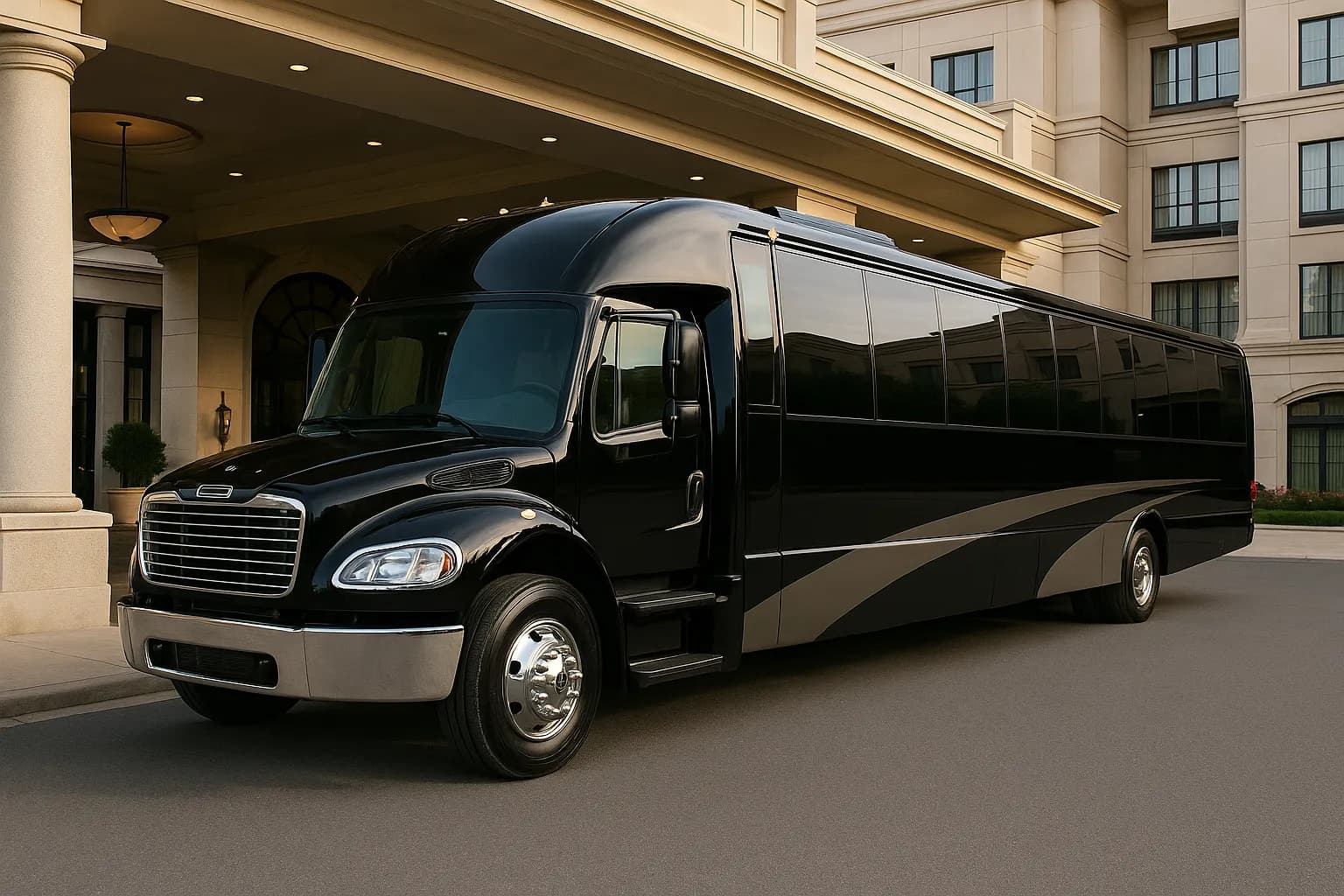
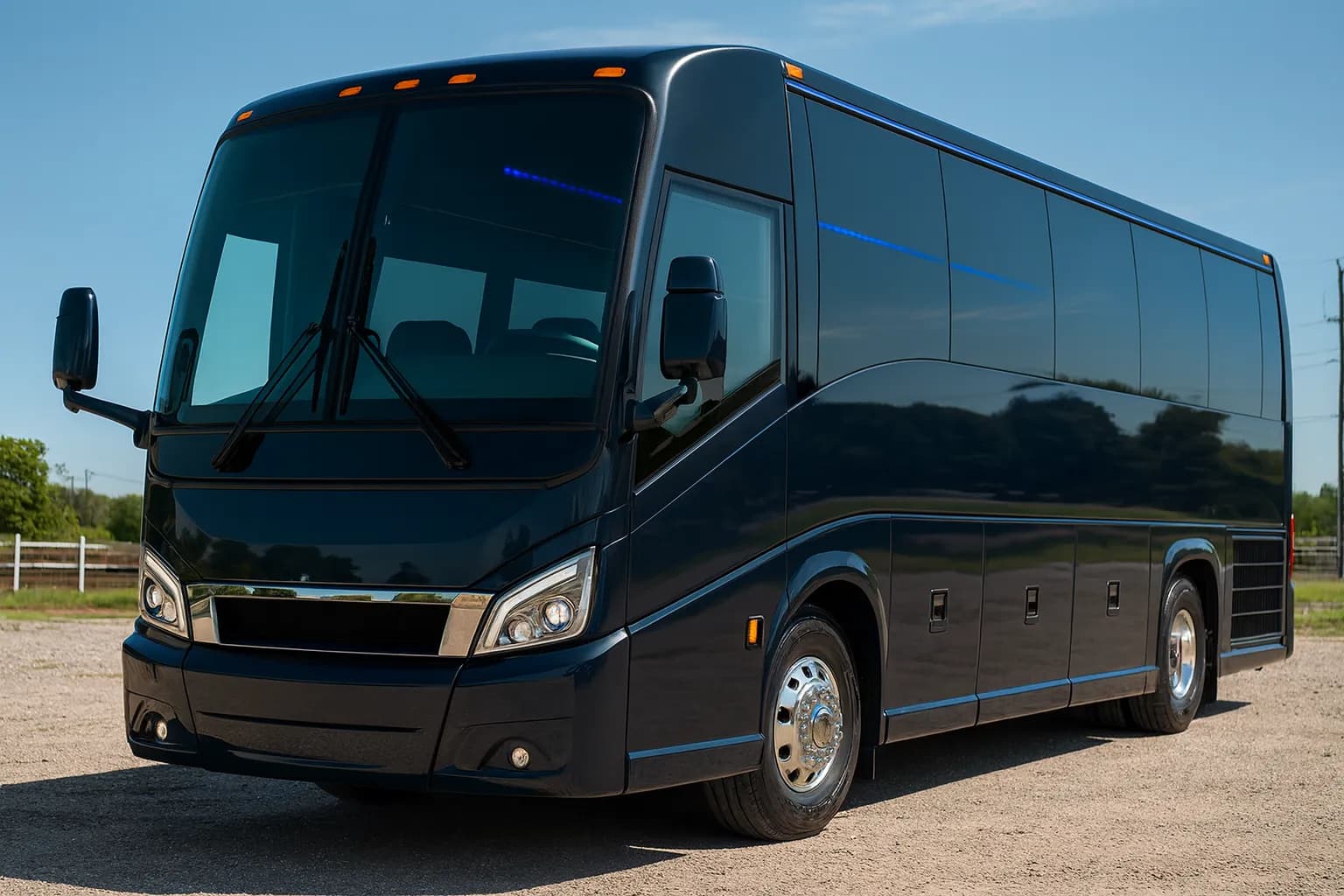
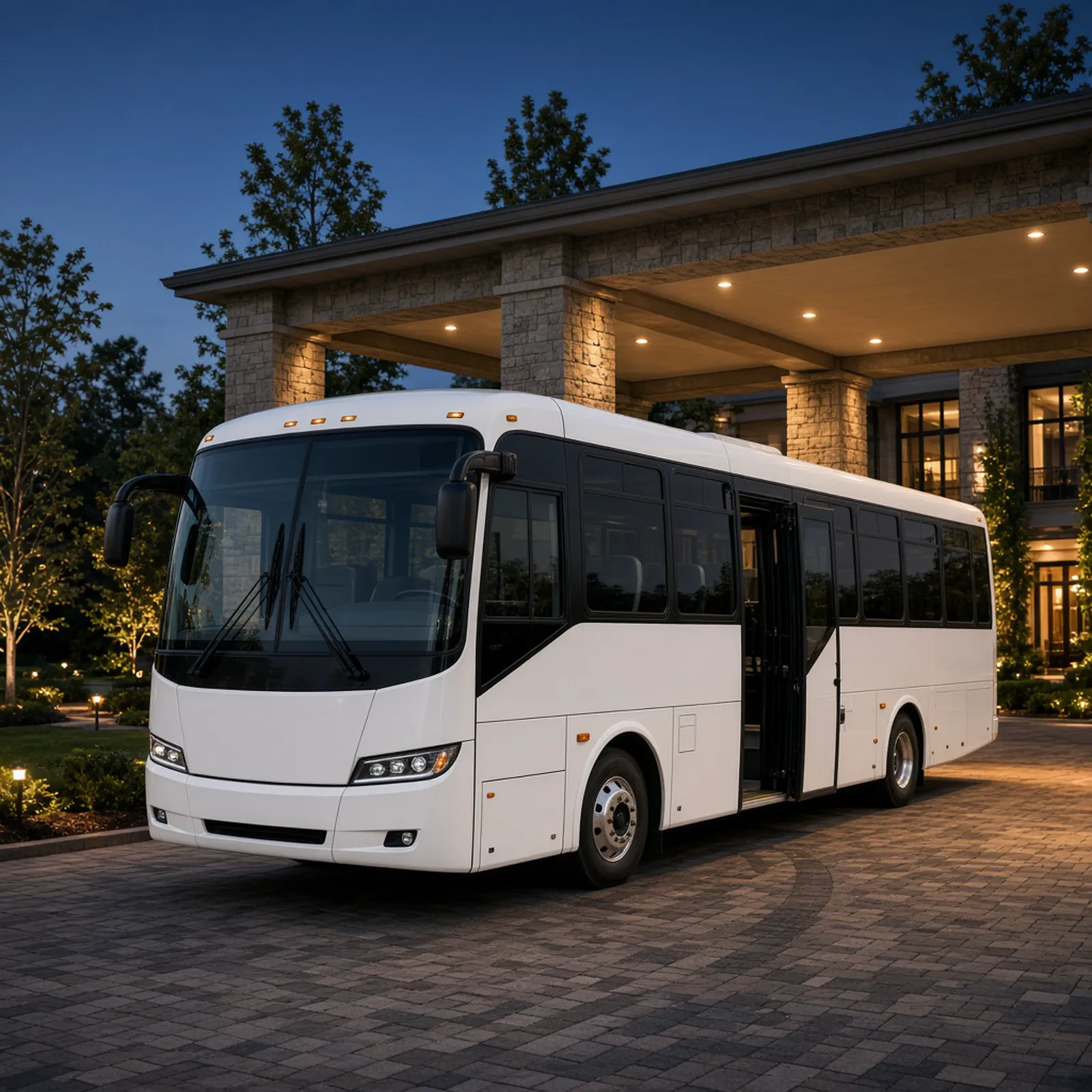
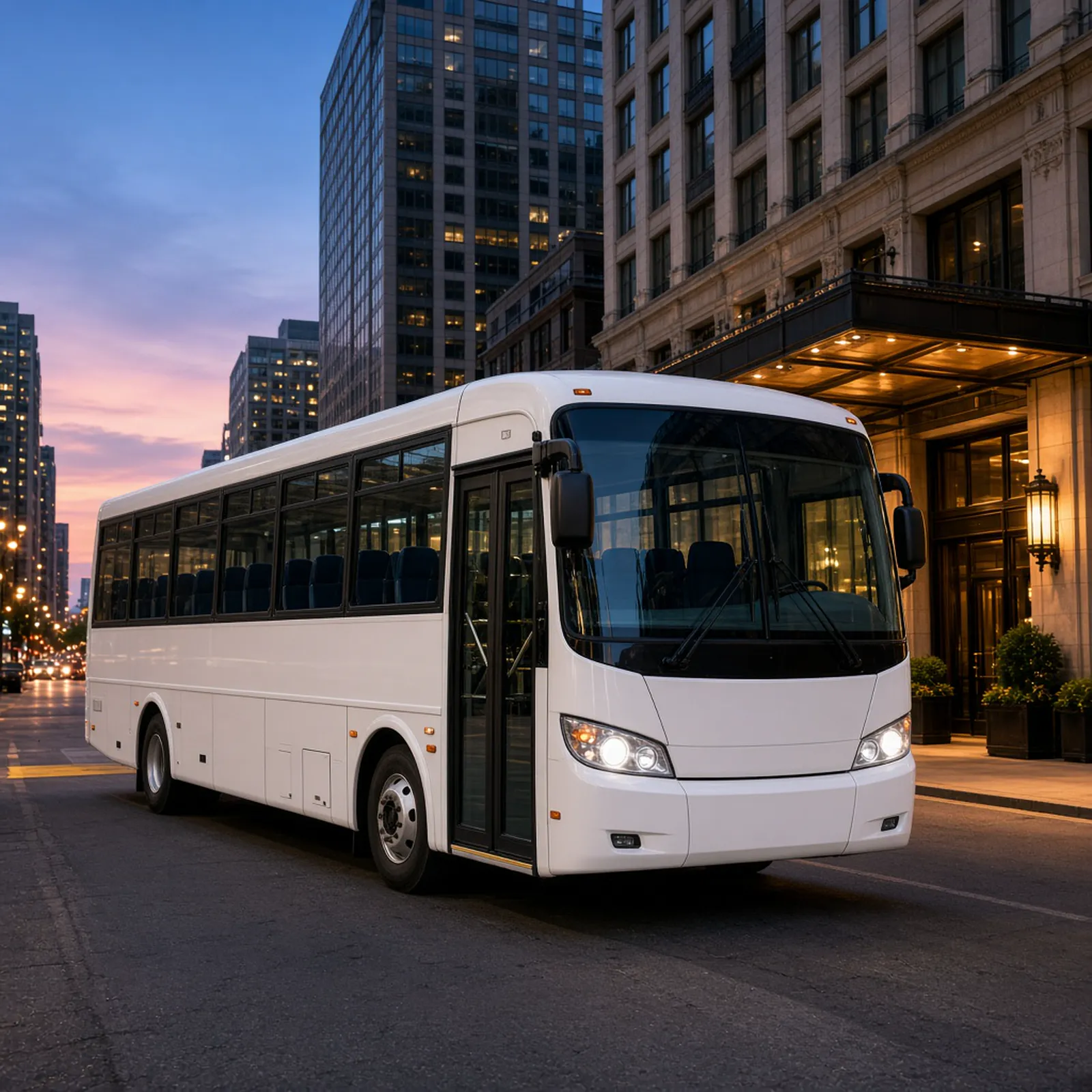
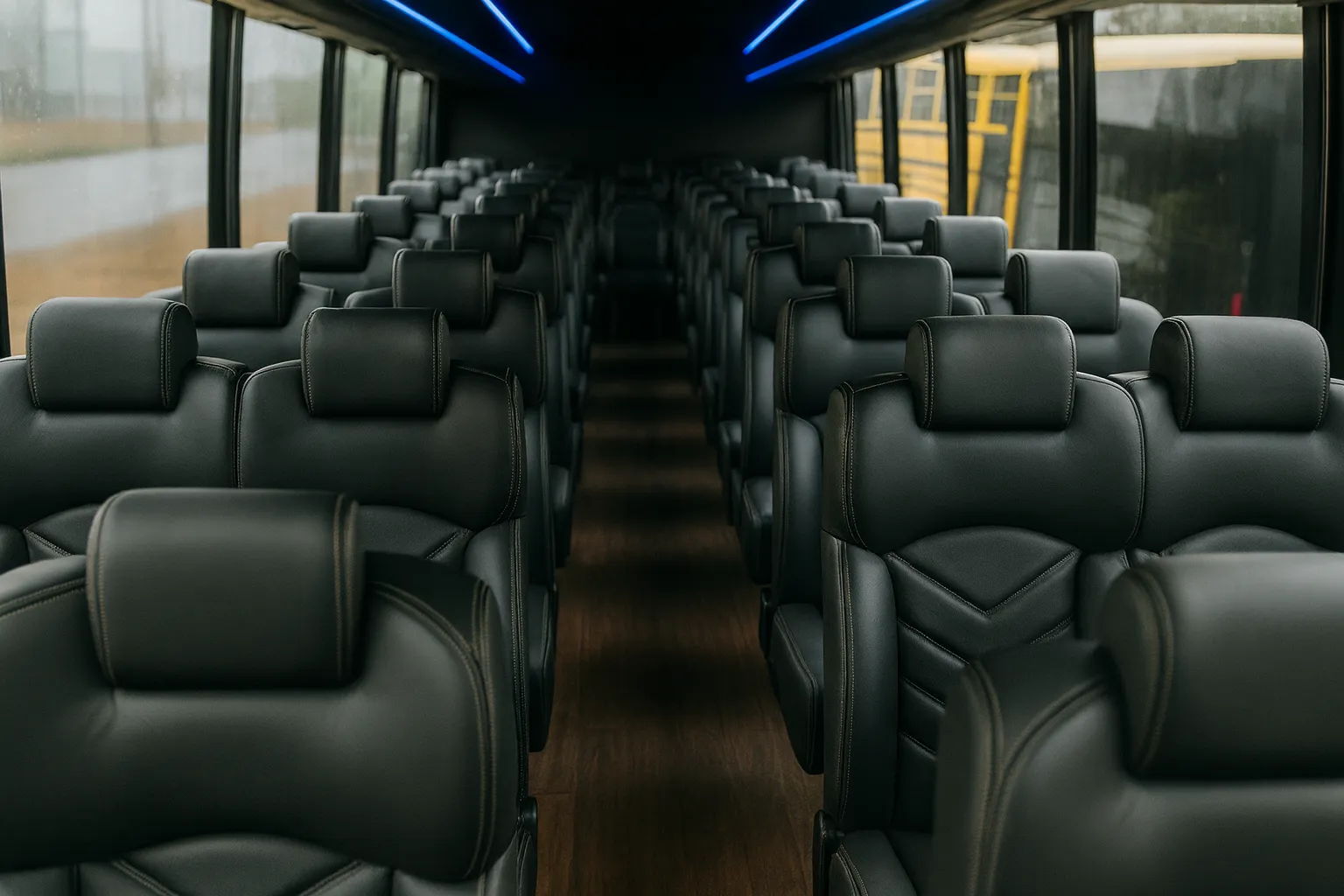
The bus itself is a full-length shuttle: ten rows or so of forward-facing pairs, a center aisle, a wide front door, big windows, and a driver's PA. It is tall enough to stand upright in and long enough that it needs real room to turn. On board, the feel is closer to a small coach than to a hotel courtesy van, which is why it works for a 40 minute ride to the suburbs as well as a ten minute hop across the Loop.
It sits between the 38 passenger shuttle bus, which suits groups that top out in the mid-thirties, and the 42 passenger shuttle bus, which makes more sense once bags and equipment start taking seats. Storage, audio, and accessibility equipment differ from one bus to another, and the written quote lists what the assigned vehicle includes.
Cost first, since it is what most people ask. One large bus means one driver, one hourly minimum, and one fuel bill. Two 20-seat vehicles mean two of each. The per-hour figure for a 40-seater is higher than for a 20, but it is rarely double, so for the same hours a single bus usually comes out ahead. Run both options through the budget calculator with your real hours before assuming.
Redundancy is the argument for two. If one vehicle of two has a mechanical problem or is caught behind a crash on the Kennedy, half your group still arrives and the other half is delayed. If your only bus is delayed, everyone is. For a wedding ceremony or a flight, that is worth weighing; for a dinner with a flexible start, less so.
Then there is togetherness. One bus means one headcount, one set of announcements, one arrival. Two vehicles arrive minutes apart, and somebody is always on the wrong one. On the other hand, two vehicles can start from two different places, and can leave an event at two different times, which a single bus cannot do without making people wait.
Finally, access. Two 20 passenger shuttle buses can use a residential street, a tight hotel driveway, or a restaurant's front curb that a 40-seater has to pass by.
Forty people do not board a bus instantly. Everyone uses the same front door, climbs the same steps, and walks the same aisle, and the line stalls whenever someone stops to stow a coat or pick a seat next to a friend. A realistic figure for a full 40 passenger shuttle is 10 to 12 minutes to load and 6 to 8 to unload, and more if there are bags or mobility needs. Two 20-seat vehicles loading side by side do it in about half that.
On a trip with a single pickup and a single drop-off, those minutes barely matter. On a day with four or five stops, such as a tour, a progressive dinner, or a multi-site company visit, a large bus can spend the better part of an hour simply filling and emptying. Build it into the schedule instead of discovering it.
You can speed things up. Load from the back of the bus forward. Keep bags off the aisle. Give one person a list and the authority to say the bus is leaving. Count heads rather than calling names. And tell the group the departure time is ten minutes earlier than the time you have given the driver. The event timeline planner has room for these buffers, and they are the difference between a timetable that holds and one that slides all day.
Our inquiry data gives a useful picture of this size band. Among quote requests recorded against vehicles of 31 to 40 seats, 61% gave a passenger count between 31 and 40, which means most people asking for this bus really do have a group that size. More interesting is the 9% whose count was 41 to 55. Those planners were trying to fit a group into a vehicle that could not legally seat them. If your list has 41 names, you need the 42 passenger shuttle bus or larger; there is no squeezing on a bus where each rider needs a seat.
Weddings are heavily represented here. About 22% of inquiries for 31 to 40 passengers were labeled as weddings, nearly twice the 12% share across the dataset. The rest is a mix of corporate outings, reunions, church groups, and milestone birthdays where the host wants guests moved rather than entertained in transit.
The comfortable load for a 40-seater is 34 to 38. That leaves a few open seats for coats, a late addition, or the photographer and their gear. If your group is 28 to 32, you are paying for rows you will not use, and the 32 passenger shuttle bus is a better fit. The group size calculator will turn a shaky guest list into a range.
A 40 passenger shuttle bus handles expressways and arterial streets without fuss. Problems appear at the ends of the trip. Residential blocks in Lincoln Park, Lakeview, and Wicker Park are narrow, parked solid on both sides, and sometimes interrupted by cul-de-sacs and traffic diverters. A bus can get in and then have no way to turn around. For a home pickup in the city, plan on meeting the bus at the nearest major cross street.
Height is the other constraint. Chicago has old railroad viaducts with low clearances, particularly on the West and South Sides, and parts of Lower Wacker and some hotel and garage entrances are off limits to a tall vehicle. Drivers route around them, which occasionally makes the bus's path longer than the one your phone suggests.
Wrigleyville on game days, the area around the United Center on event nights, and the lakefront during festivals all have closures and restricted curbs. A large bus will usually drop a few blocks out and return to an agreed spot afterward. Suburban venues are the opposite: banquet halls, golf clubs, and office campuses in places like Schaumburg have room to spare. Wherever you are going, ask the venue where a 40-foot vehicle should load, and pass the answer along.
Our booking-network data
Numbers from quote requests across our booking network that involve mid-size groups and shuttle bus requests. They are a useful reality check on timing and group size before you lock in a 40-passenger vehicle.
43%
vs 26% across all inquiries
16%
vs 26% across all inquiries
61%
vs 4% across all inquiries
9%
vs 1% across all inquiries
Source: 65,687 group-transportation inquiry records with 2024–2025 event dates, collected across the national booking network that Chicago Party Bus Fun is part of. These are quote requests — not completed trips, unique customers, or Chicago-only figures. How we measure this
Thirty-seven relatives staying in Rosemont ride together to Wrigley Field, get dropped a few blocks from the park because of game-day street restrictions, and meet the bus at a set corner 30 minutes after the final out.
Read the planning guide →Thirty-eight employees leave a Loop office at 10:30 a.m. for a charity golf outing on the North Shore, with a single return after the awards dinner and one headcount at each end.
Read the planning guide →Thirty-six guests ride 35 minutes from a Lombard hotel to a banquet hall with a wide circular drive, where a full-length shuttle can pull to the door without any maneuvering.
Read the planning guide →A 35-person reunion group boards in Oak Park, tours the old neighborhood, then heads to a private room in the West Loop, keeping classmates together who have not shared a bus since senior year.
Read the planning guide →Size the group, pick the vehicle, set the hours, and split the cost before you ask for a quote.
One size up gives you elbow room; one size down trims the hourly cost. The closest matches to the 40 Passenger Shuttle Bus:
Capacity: 38 passengers
“The 38 passenger shuttle bus is a workhorse for convention and meeting shuttles: repeated loops between hotels and…”
View Details →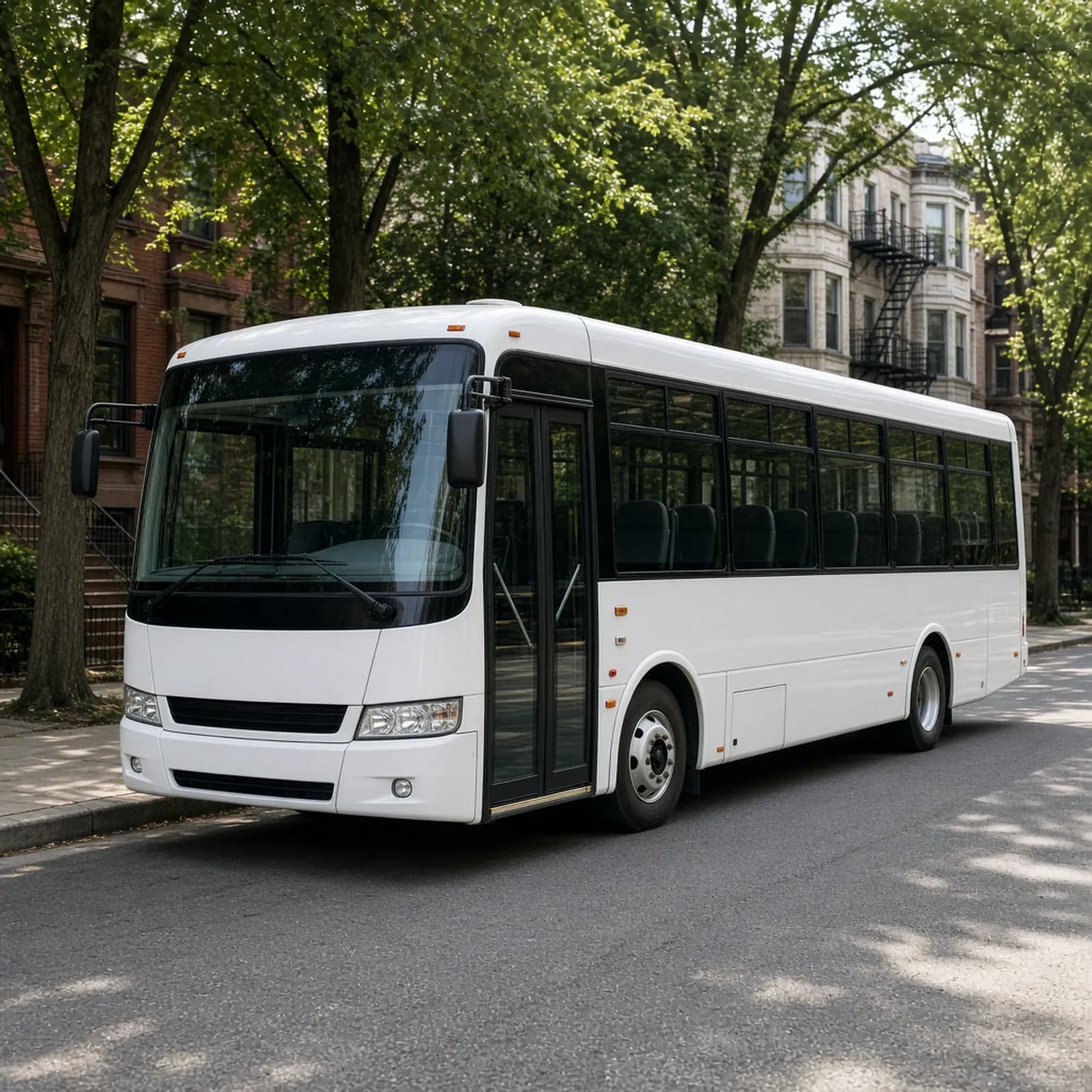
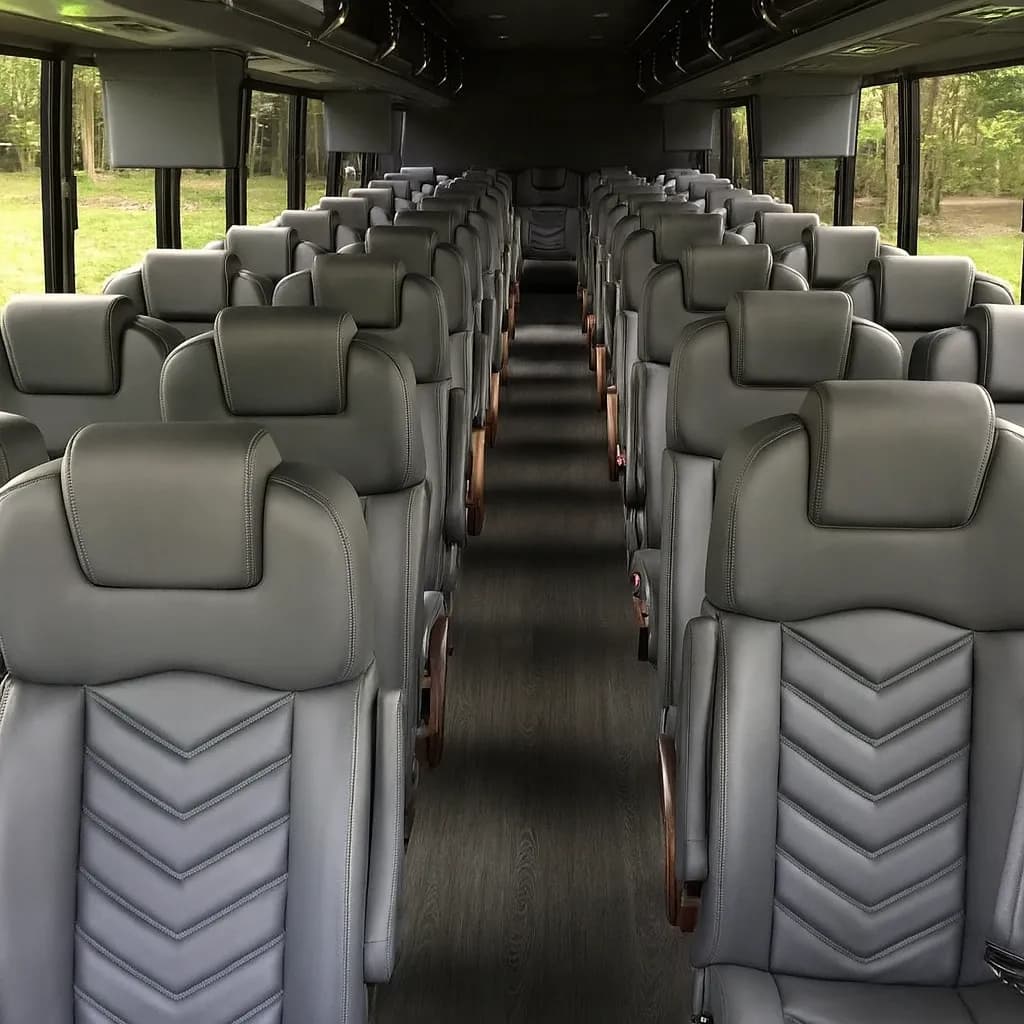
Capacity: 42 passengers
“A 42 passenger shuttle bus works for a team of 25 to 35 players, coaches, and staff who travel with gear, because the…”
View Details →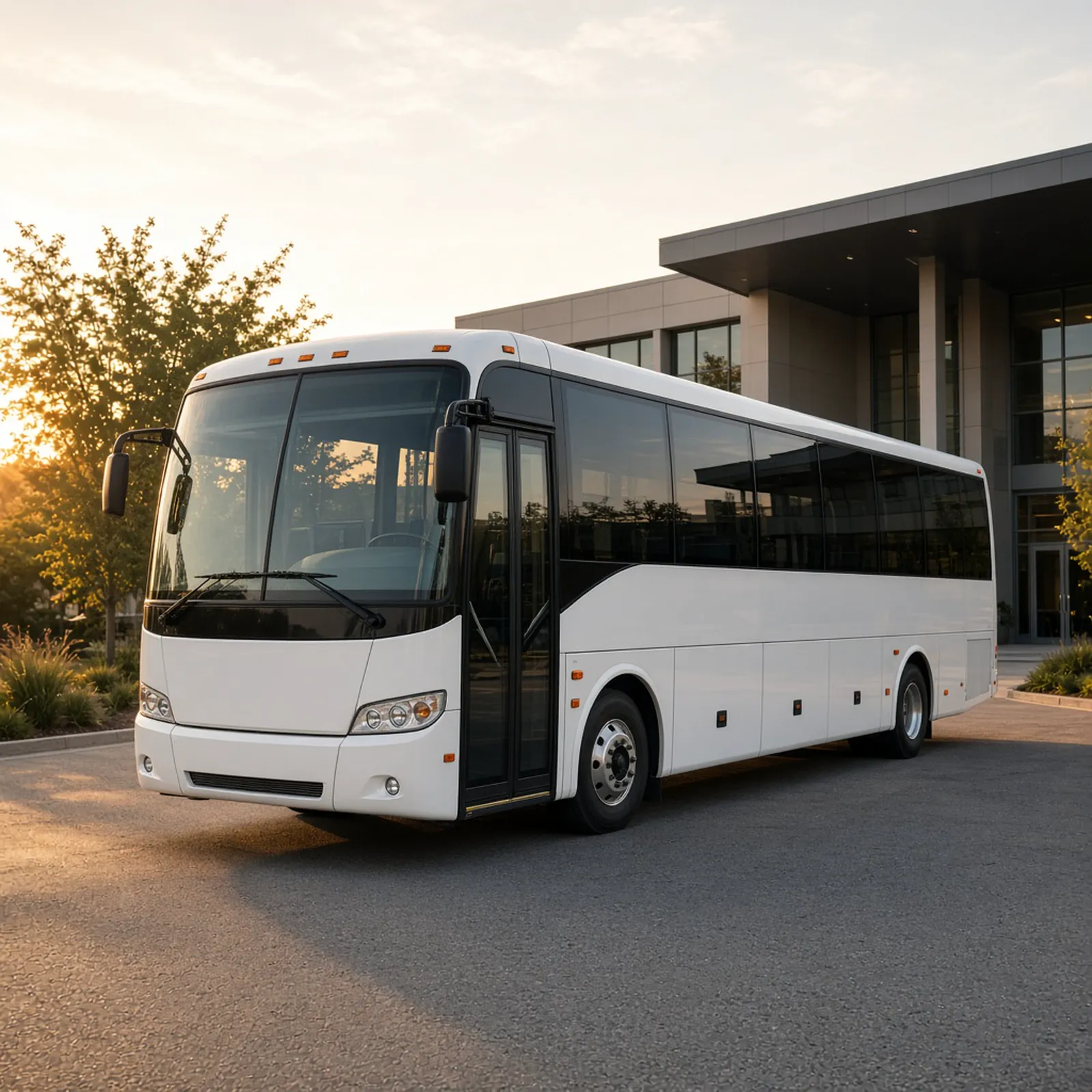
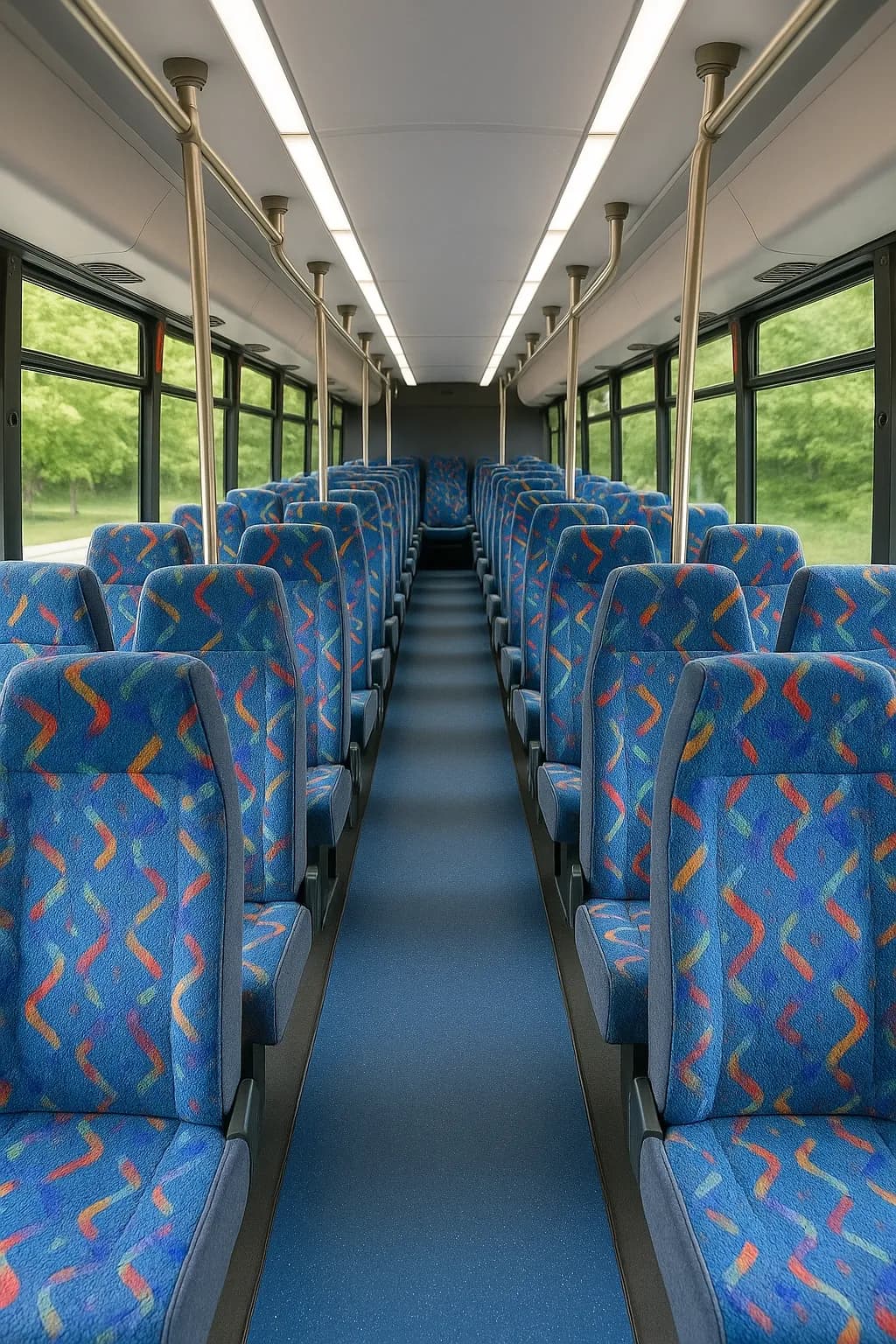
Capacity: 36 passengers
“A 36 passenger shuttle bus is sized for a school or university group of about 30 students plus the adults travelling…”
View Details →Shuttle Buses polls
Vote to see how other groups answered. One vote per poll, no sign-up, and nothing personal is stored.
No votes yet — be first
No votes yet — be first
No votes yet — be first
Straight answers from the Chicago booking desk
Tell us about your event and ask for a written quote. If your reservation is serviced by an affiliate or sister company, confirm vehicle, operator, base rate, minimum hours, and included charges with that provider before paying a deposit.