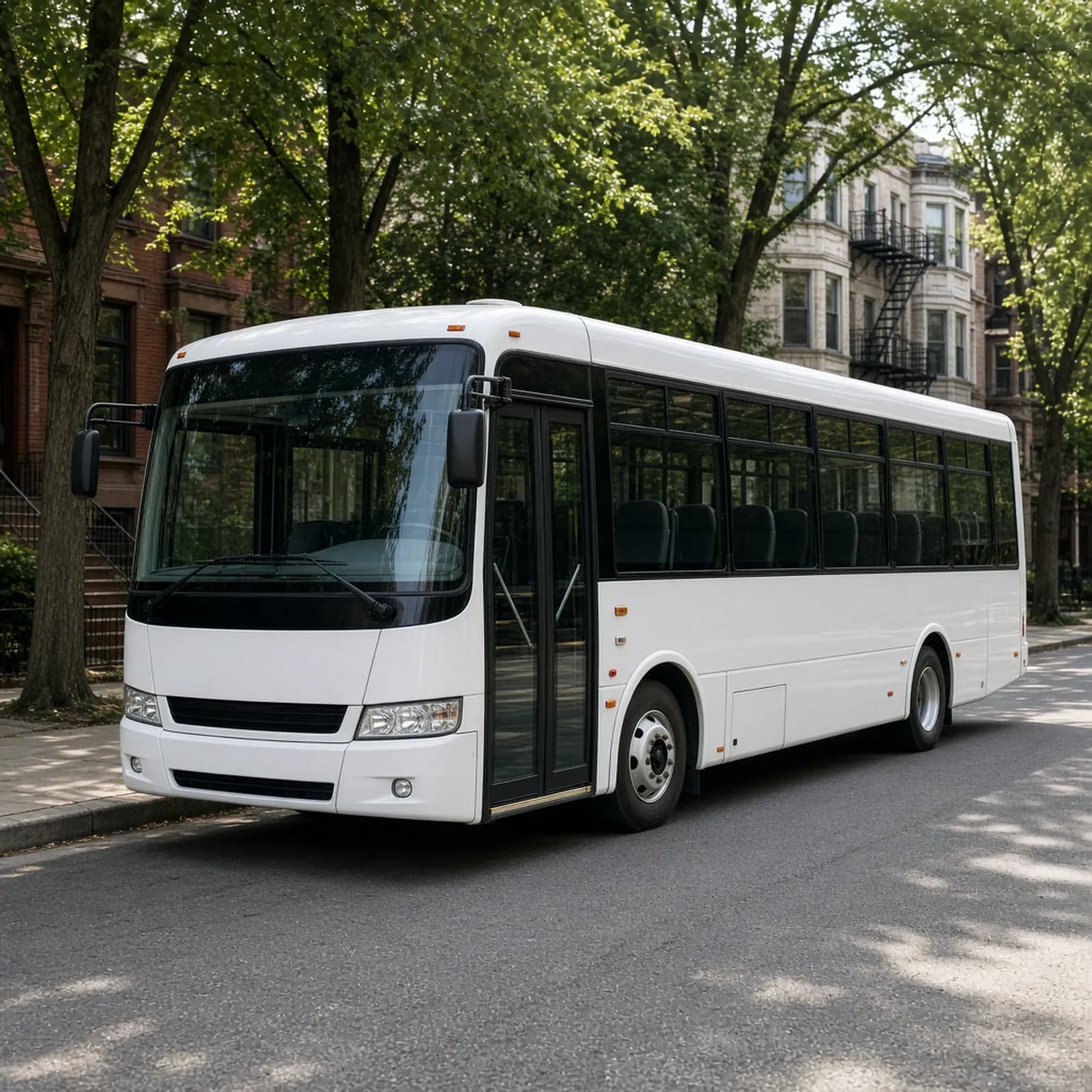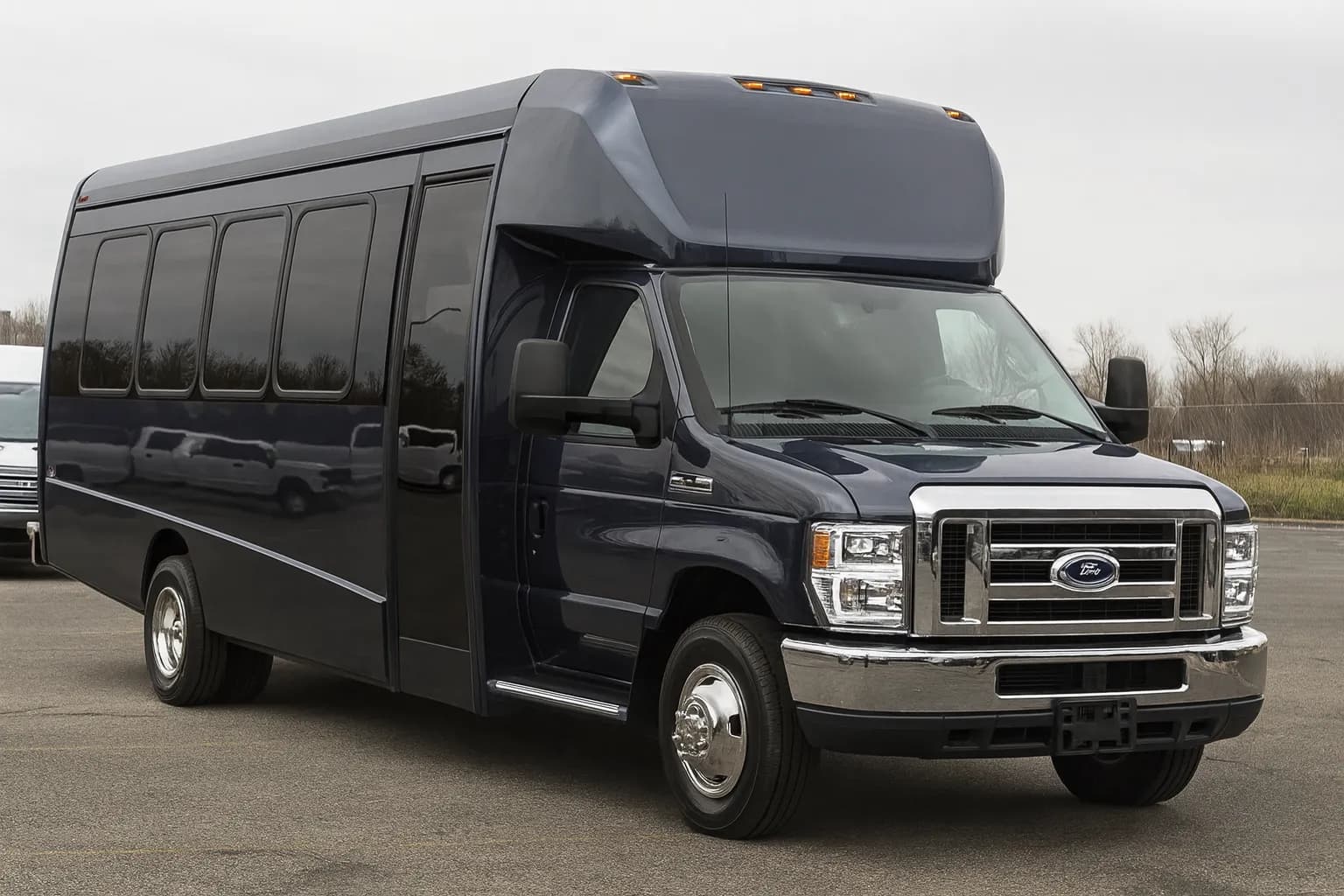

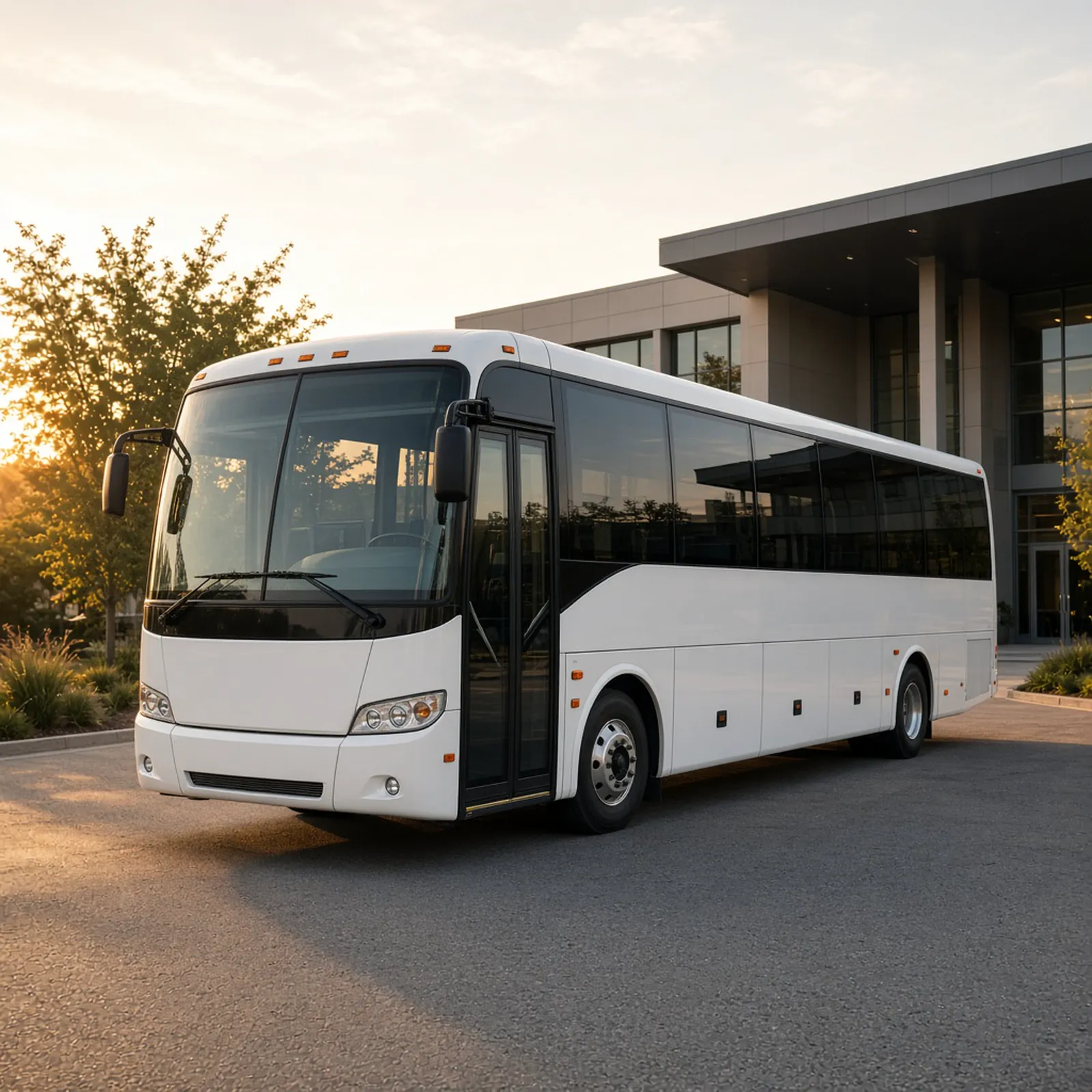
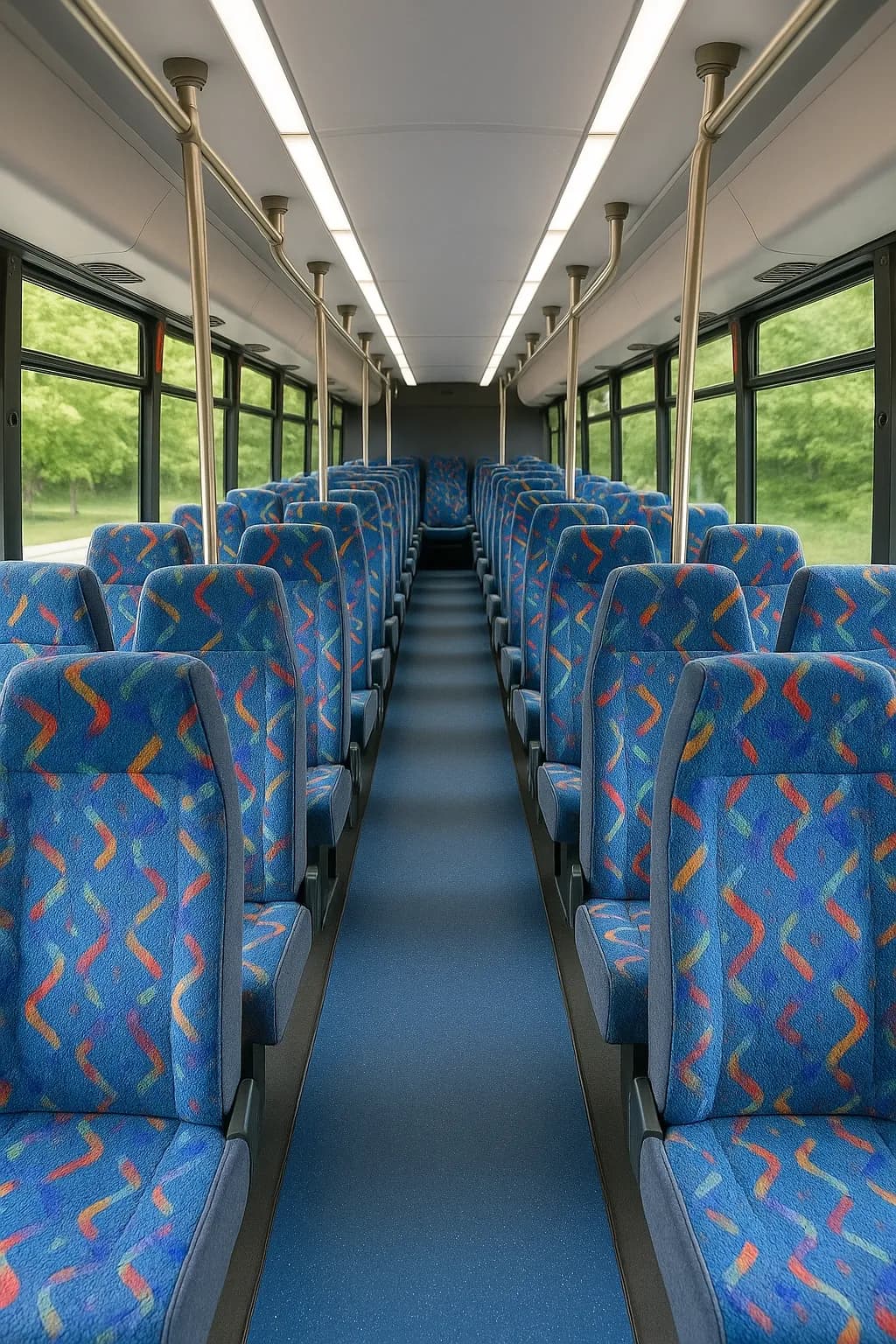
36 Passenger Shuttle Bus
Capacity: 36 passengers
“A 36 passenger shuttle bus is sized for a school or university group of about 30 students plus the adults travelling…”
View Details →Seats up to 38 · shuttle bus
Plan a 38 passenger shuttle bus loop for McCormick Place or Rosemont: headway math, buses needed per hour, hotel staging, and weekday availability.
Pickup ZIP, date, headcount, and hours get you one written total with the driver, fuel, taxes, and gratuity included.
Quick answer
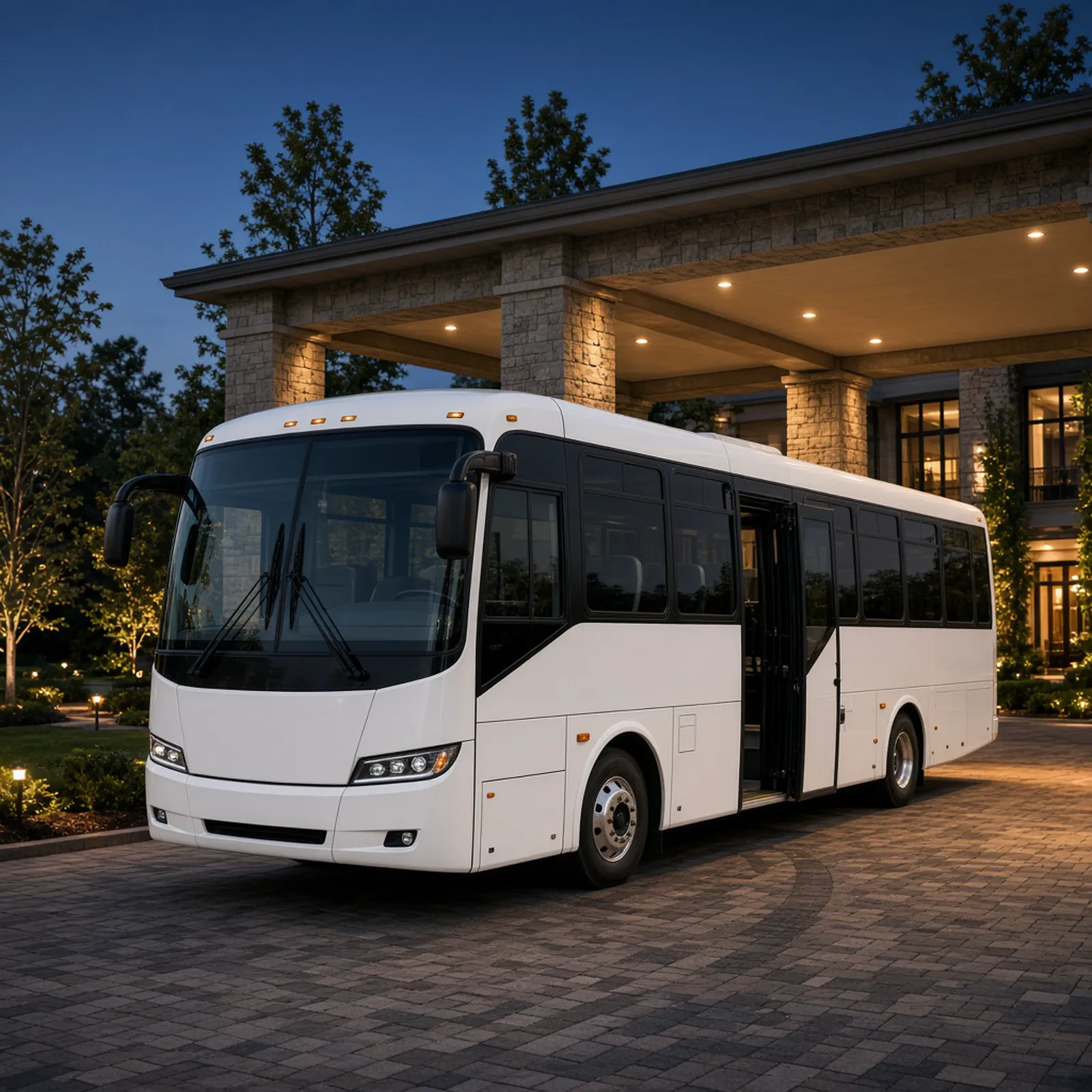
The 38 passenger shuttle bus is a workhorse for convention and meeting shuttles: repeated loops between hotels and McCormick Place or the Rosemont convention center, with 38 seated per trip. It suits planners moving a few hundred attendees over a morning. Check your loop time first, because that sets how many buses you need.
Most vehicles on this site are booked for one group going to one place. The 38 passenger shuttle bus is often booked for something different: a loop. A trade show, association meeting, or company conference puts attendees in hotels that are not within walking distance of the hall, and a bus runs between them on a published schedule for a few hours each morning and evening.
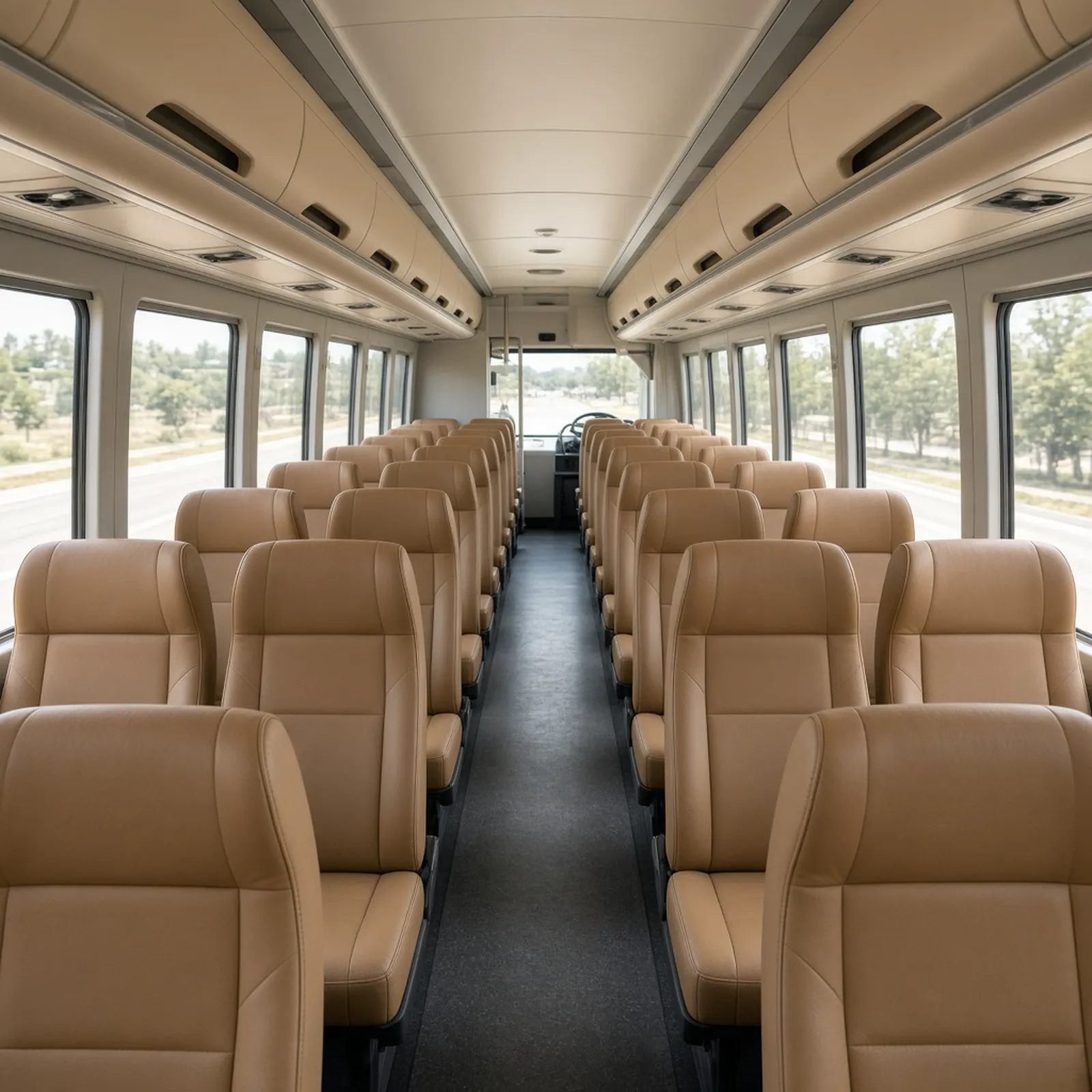
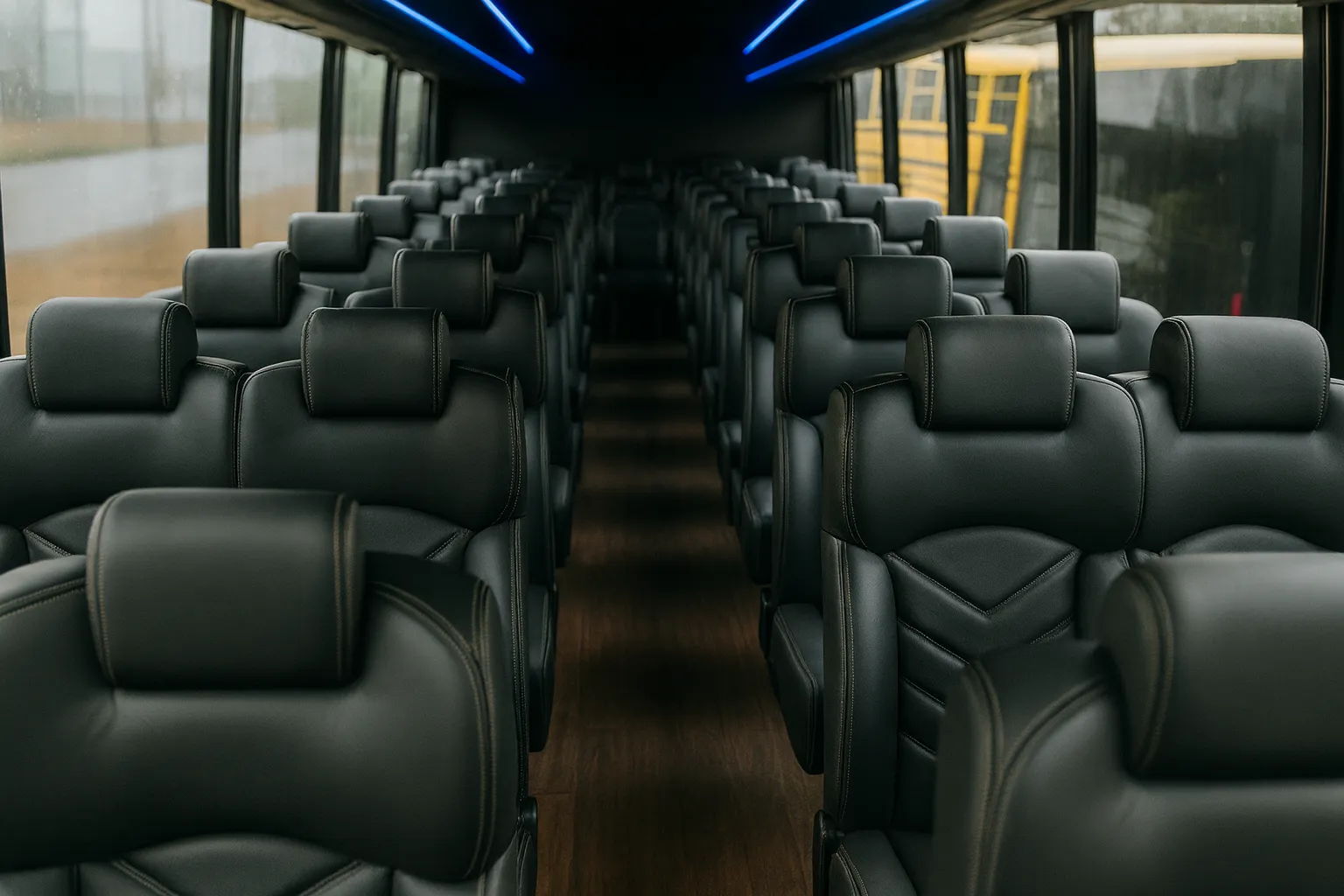
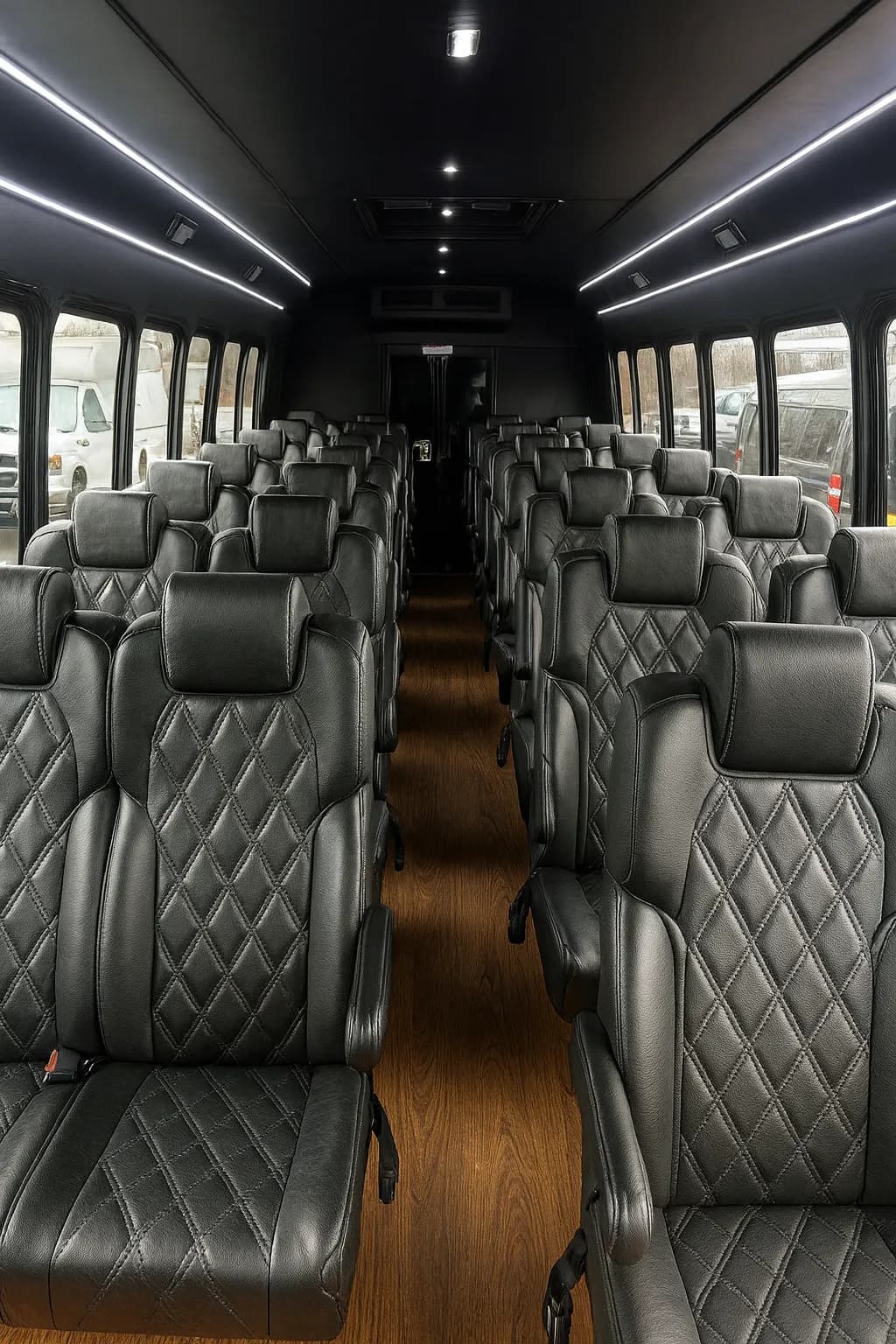
For that job, the features that matter are unglamorous. A wide door and low steps so loading is quick. Forward-facing seats with an aisle so nobody has to shuffle past knees. Room at the seat for a laptop bag and a lanyard's worth of exhibitor swag. A PA so the driver or a staffer can announce the stop. At 38 seats, the bus carries a meaningful chunk of a hotel's attendees per trip while still fitting typical hotel driveways better than a full motorcoach.
The 36 passenger shuttle bus and 40 passenger shuttle bus are close relatives, and for a loop the difference is throughput: two seats per trip, multiplied by every trip in the service window. For a single-move group of 33 to 36, this bus simply gives you breathing room. Equipment such as USB power, signage holders, and wheelchair lifts varies, and the written quote lists what the assigned vehicle includes.
Headway is the gap between buses at a stop, and it is the number attendees actually experience. To find it, time one full loop: load at the hotel, drive to the hall, unload, drive back. Suppose the drive is 15 minutes each way in morning traffic, loading takes 8 minutes and unloading 5. The loop is about 43 minutes; call it 45.
With one bus, headway is 45 minutes, and capacity is 38 seats every 45 minutes, or roughly 50 people an hour. With two buses spaced evenly, headway drops to about 22 minutes and capacity doubles to around 100 an hour. Three buses give a 15 minute headway and about 150 an hour.
Now compare that with demand. If 240 attendees are in the hotel and most want to arrive in the hour before the opening keynote, one bus is not a plan; three might be. Demand is also peaky. The 7:45 bus is jammed and the 9:30 bus carries six people. Many planners run more buses for the first 90 minutes and drop to one for the rest of the morning.
People will wait about 15 minutes for a shuttle without complaint and start ordering rideshares at 25. Use that as your target, check your drive times in the route time estimator, and ask us to quote the peak and off-peak vehicle counts separately.
McCormick Place sits on the lakefront south of the Loop, and the hotels that house its attendees are scattered from the South Loop to River North and the Magnificent Mile. Large shows run official shuttle systems with assigned routes and loading gates. If you are moving your own company's delegation, find out from show management where private charter buses may drop off and pick up, because it is usually not the same place as taxis and rideshares, and it can change by building and by show.
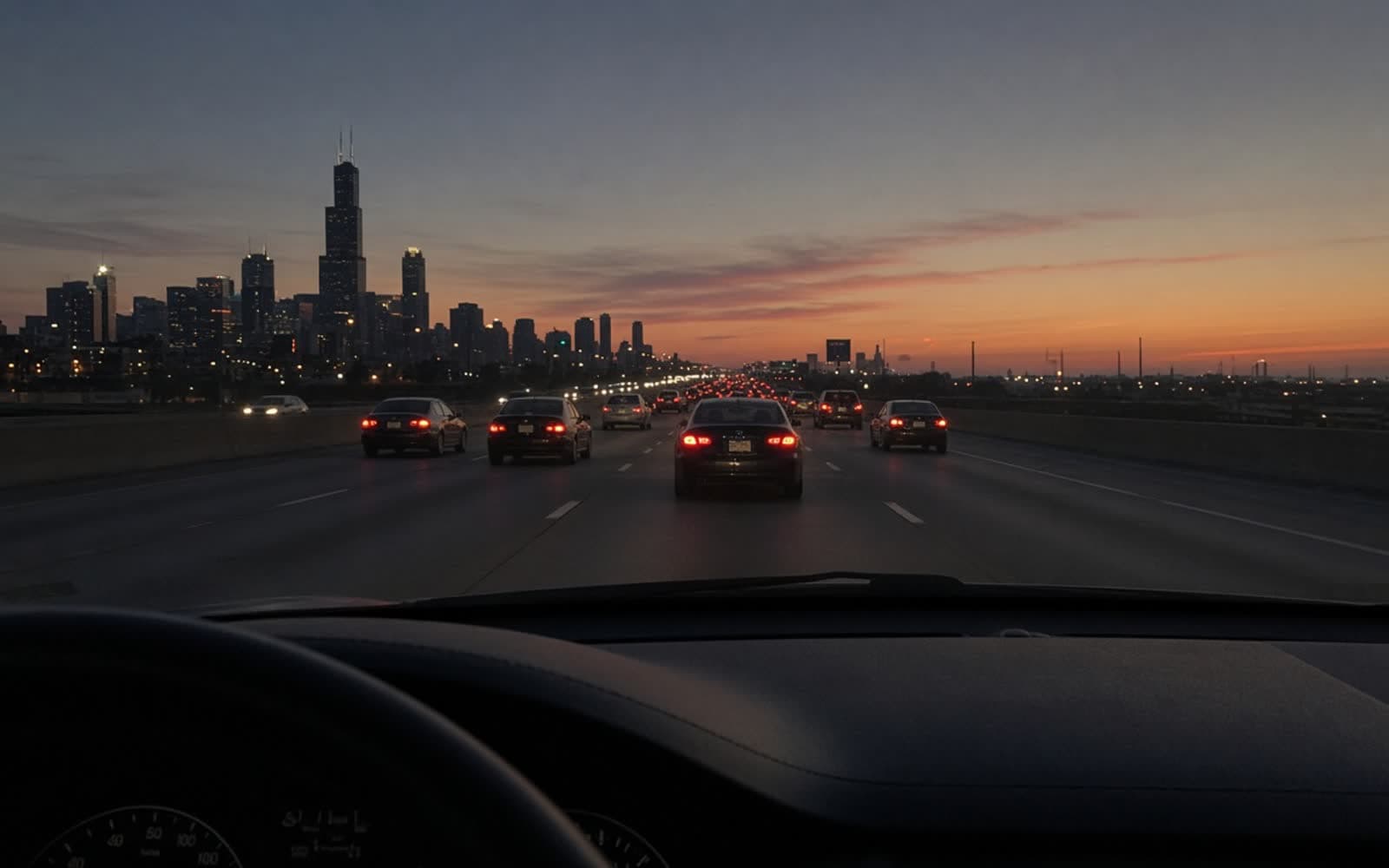
The Donald E. Stephens Convention Center in Rosemont is a different pattern. It is minutes from O'Hare, which makes group airport transfers easy to fold into the same plan, and it is surrounded by hotels, and some of those are connected by skybridge. The shuttle need there tends to come from overflow hotels along Mannheim and Higgins, from Schaumburg and Des Plaines properties, and from evening events in the city. A run from Rosemont to a River North dinner is 30 minutes on a good evening and well over an hour on a bad one on the Kennedy, so evening transfers need more padding than morning loops.
At the hotel end, ask each property where a 38-seat bus should stage and whether it may dwell. A bus that has to circle the block between trips adds minutes to every loop. Our corporate event transportation guide has more on hotel coordination.
Conventions run on the days when the rest of the group-transportation world is slow. In our booking network, 81% of requested dates were Fridays and Saturdays; Tuesdays accounted for 3%. A Tuesday-to-Thursday show is drawing on buses that would otherwise be parked, which generally means more choice of vehicle and more willingness to discuss multi-day arrangements.
The exception is fall. Quote requests recorded against 31 to 40 seat vehicles were weighted toward autumn, 43% compared with 26% for the dataset as a whole, which lines up with wedding season and with the busiest stretch of the convention calendar. A show in late September or October that spills into a weekend is competing with wedding shuttles for exactly this bus.
Meeting planners tend to work early anyway. Only about 17% of inquiries for 31 to 40 passengers arrived under two weeks out, versus 26% overall. For a multi-day loop, earlier is better for a specific reason: you want the same drivers on the route each day, because a driver who has learned the hotel's back entrance on Monday saves you minutes per loop on Tuesday. Ask for that continuity when you request the quote, and use the corporate event checklist to track the other moving parts.
A shuttle loop fails at the curb, not on the road. The single most valuable thing you can add is a person at each hotel stop during peak periods: someone with a radio or a phone who tells attendees when the next bus is due, holds a line, and stops the bus from waiting on one person finishing a coffee. A bus held for two minutes at each of three stops has lost most of a headway by mid-morning.
Signage comes second. Put a sign in the hotel lobby showing the stop location, first and last departure, and frequency. Put a sign in the bus's front window with the route name, especially if an official show shuttle is using the same curb. Publish the schedule in the event app and in the know-before-you-go email.
Decide in advance what happens at the edges. What time is the last bus from the hall, and who announces it? If a session ends early and 120 people walk out at once, do you have a second bus on call or do you tell people honestly that the wait is 30 minutes? If an attendee uses a wheelchair, is a lift-equipped vehicle on the route or available on request? We will ask these questions during quoting, because the answers change how many hours and vehicles the job needs.
Our booking-network data
Numbers from quote requests across our booking network that involve mid-size groups and shuttle bus requests. They are a useful reality check on timing and group size before you lock in a 38-passenger vehicle.
9%
vs 1% across all inquiries
23%
vs 34% across all inquiries
17%
vs 26% across all inquiries
22%
vs 12% across all inquiries
Source: 65,687 group-transportation inquiry records with 2024–2025 event dates, collected across the national booking network that Chicago Party Bus Fun is part of. These are quote requests — not completed trips, unique customers, or Chicago-only figures. How we measure this
A company with 110 staff in two South Loop hotels runs two 38-seat buses from 7:00 to 9:30 a.m. and 4:00 to 6:30 p.m., using the charter drop-off location assigned by show management.
Read the planning guide →Thirty-five association members staying in Schaumburg ride to the Donald E. Stephens Convention Center each morning of a two-day meeting and return after the closing reception.
Read the planning guide →Thirty-six exhibitors leave Rosemont at 5:30 p.m. for a hosted dinner in the West Loop, with the bus staged nearby and a single return to the hotels at 9:45 p.m.
Read the planning guide →After a morning general session downtown, 34 attendees ride to a cooking competition venue on the Near West Side and back to the hotel before the evening reception.
Read the planning guide →Size the group, pick the vehicle, set the hours, and split the cost before you ask for a quote.
One size up gives you elbow room; one size down trims the hourly cost. The closest matches to the 38 Passenger Shuttle Bus:
Capacity: 36 passengers
“A 36 passenger shuttle bus is sized for a school or university group of about 30 students plus the adults travelling…”
View Details →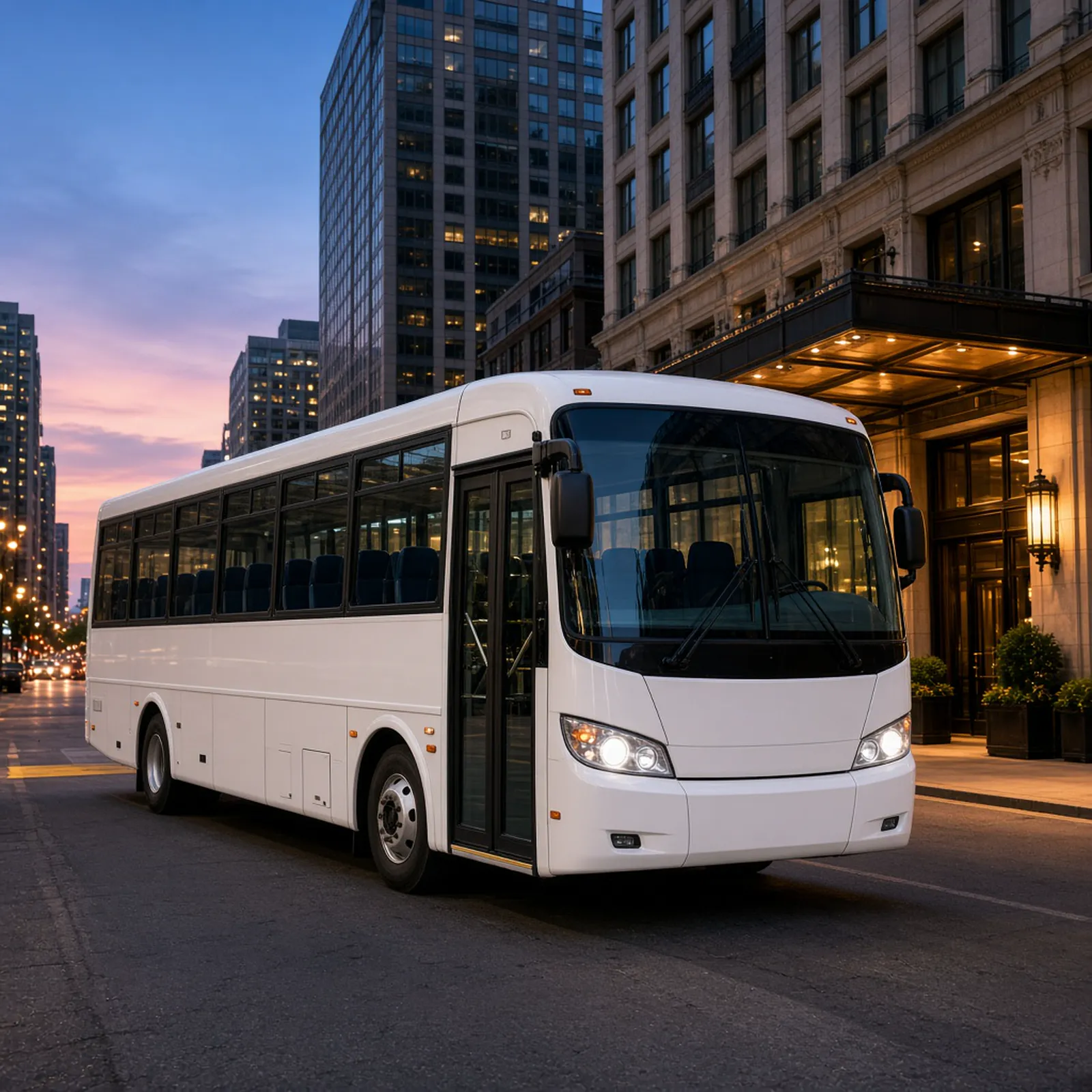
Capacity: 40 passengers
“Choose the 40 passenger shuttle bus when 34 to 38 people need to leave from one place, arrive together, and hear the…”
View Details →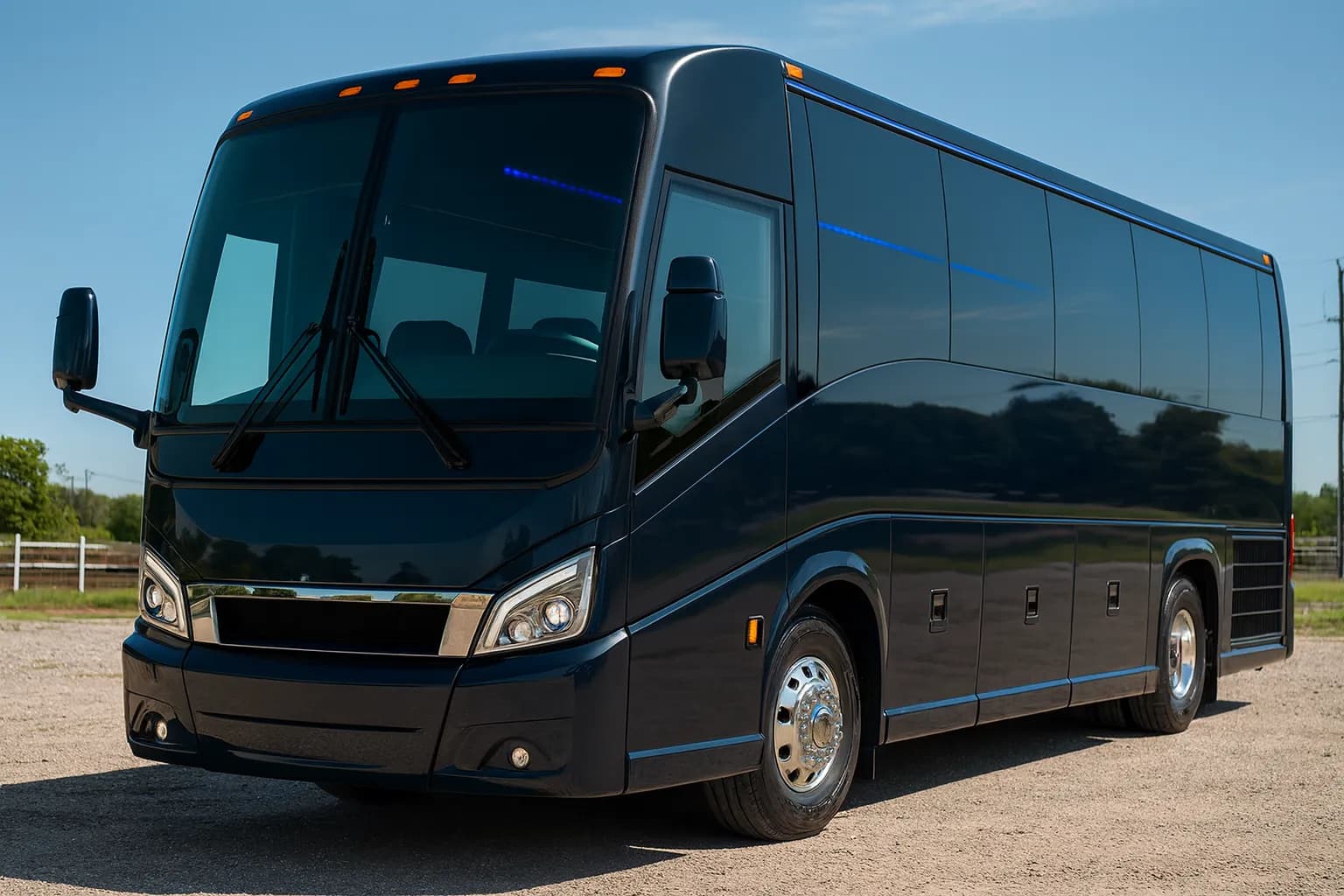
Capacity: 34 passengers
“The 34 passenger shuttle bus fits an office of 28 to 32 heading to a holiday party or client dinner, with everyone…”
View Details →Shuttle Buses polls
Vote to see how other groups answered. One vote per poll, no sign-up, and nothing personal is stored.
No votes yet — be first
No votes yet — be first
No votes yet — be first
Straight answers from the Chicago booking desk
Tell us about your event and ask for a written quote. If your reservation is serviced by an affiliate or sister company, confirm vehicle, operator, base rate, minimum hours, and included charges with that provider before paying a deposit.