
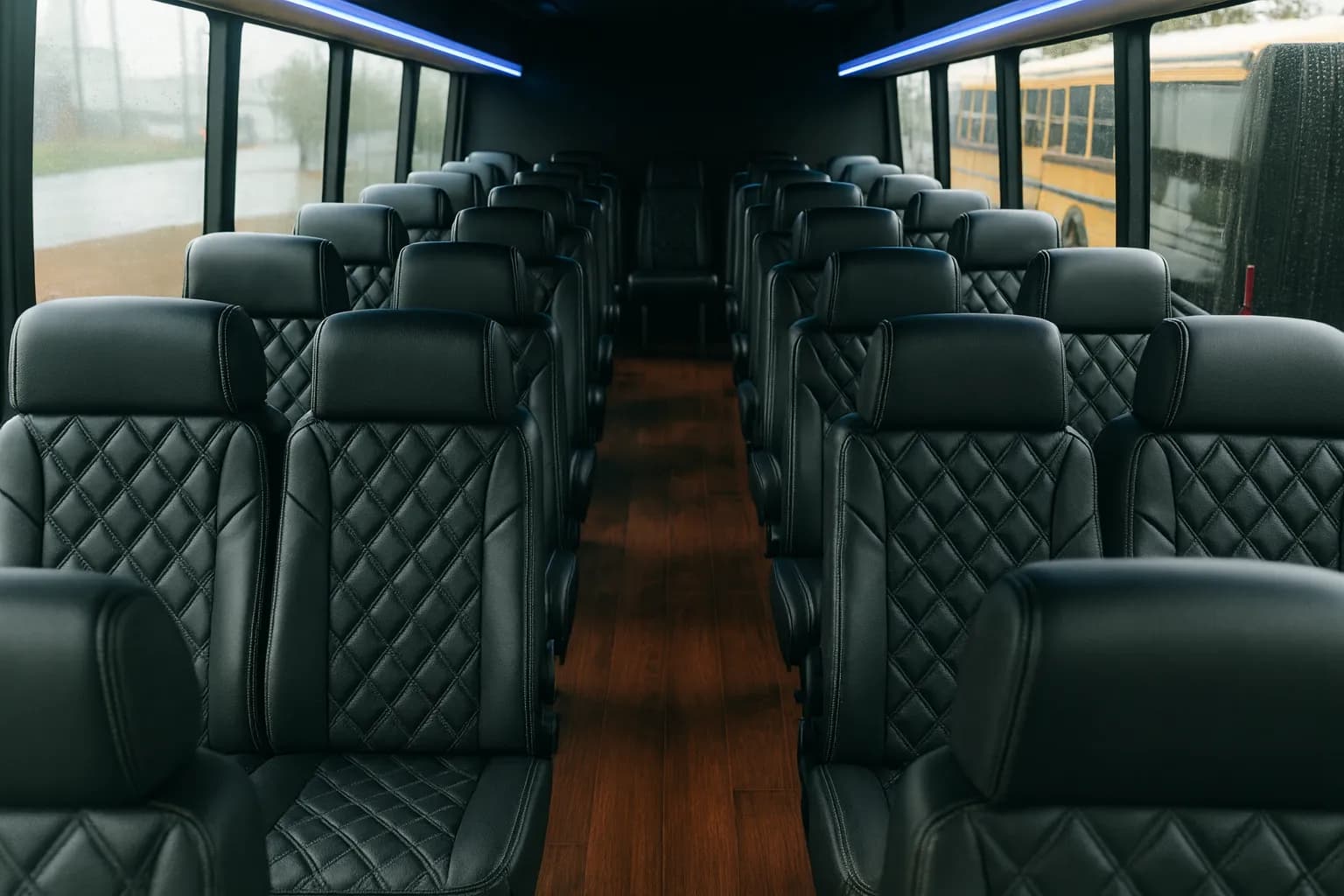
32 Passenger Shuttle Bus
Capacity: 32 passengers
“A 32 passenger shuttle bus suits wedding couples and planners moving a hotel block of roughly 26 to 30 guests to a…”
View Details →Seats up to 34 · shuttle bus
Use a 34 passenger shuttle bus for a Chicago company party: one trip out, staggered returns home, Metra drop-offs, and how to avoid the December rush.
Pickup ZIP, date, headcount, and hours get you one written total with the driver, fuel, taxes, and gratuity included.
Quick answer
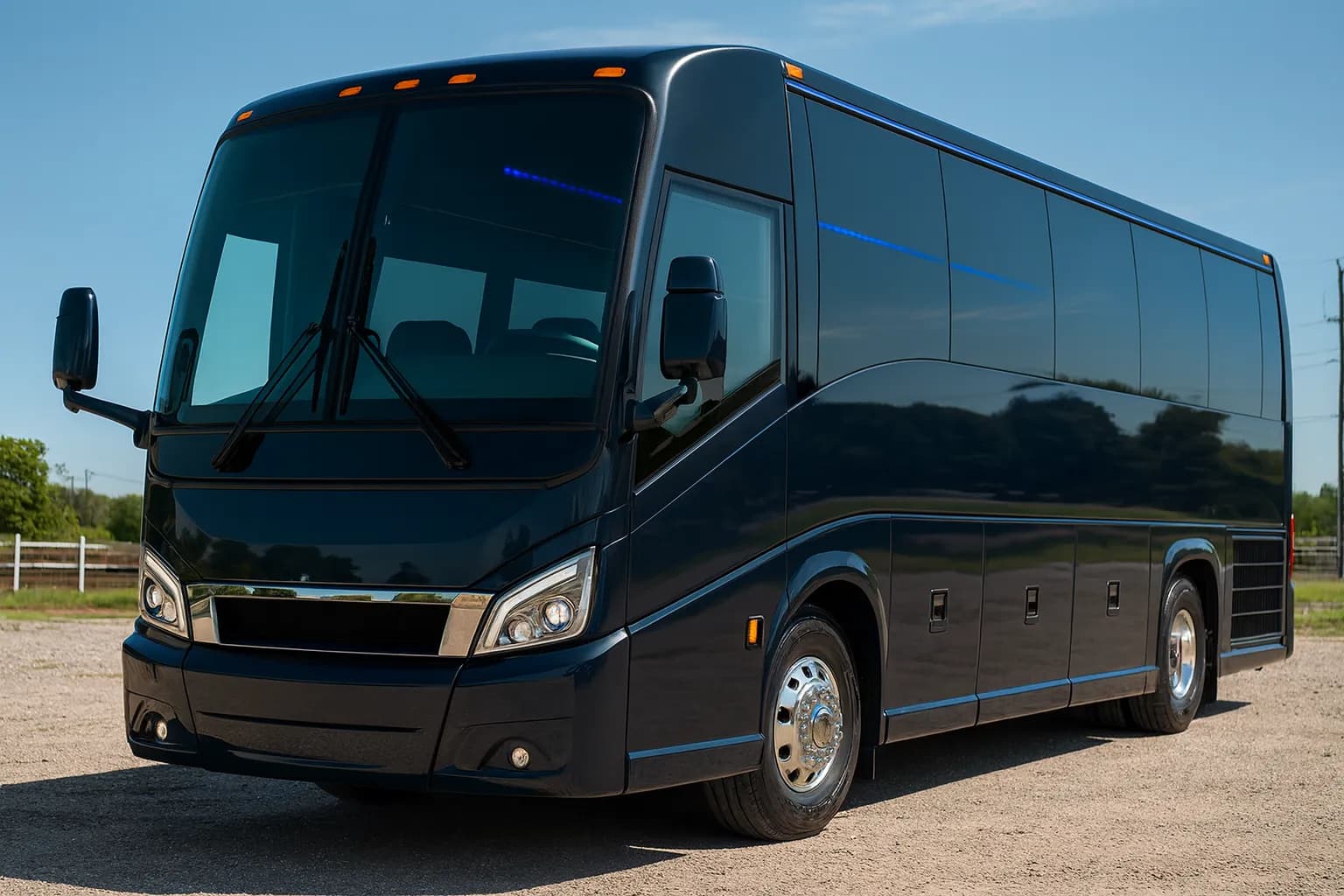
The 34 passenger shuttle bus fits an office of 28 to 32 heading to a holiday party or client dinner, with everyone seated facing forward. It works best when the ride out is one trip and the ride home is two or three timed departures. Check how the quote handles wait time between those returns.
Company parties have a transportation problem that weddings do not: everyone is willing to leave the office together at 5:30, and nobody wants to go home at the same time. The 34 passenger shuttle bus is a good tool for that. It carries a mid-sized department or a small company in one outbound run, then spends the evening as a scheduled ride home, so the person with a 6 a.m. flight and the people closing down the karaoke room both have a seat when they want one.
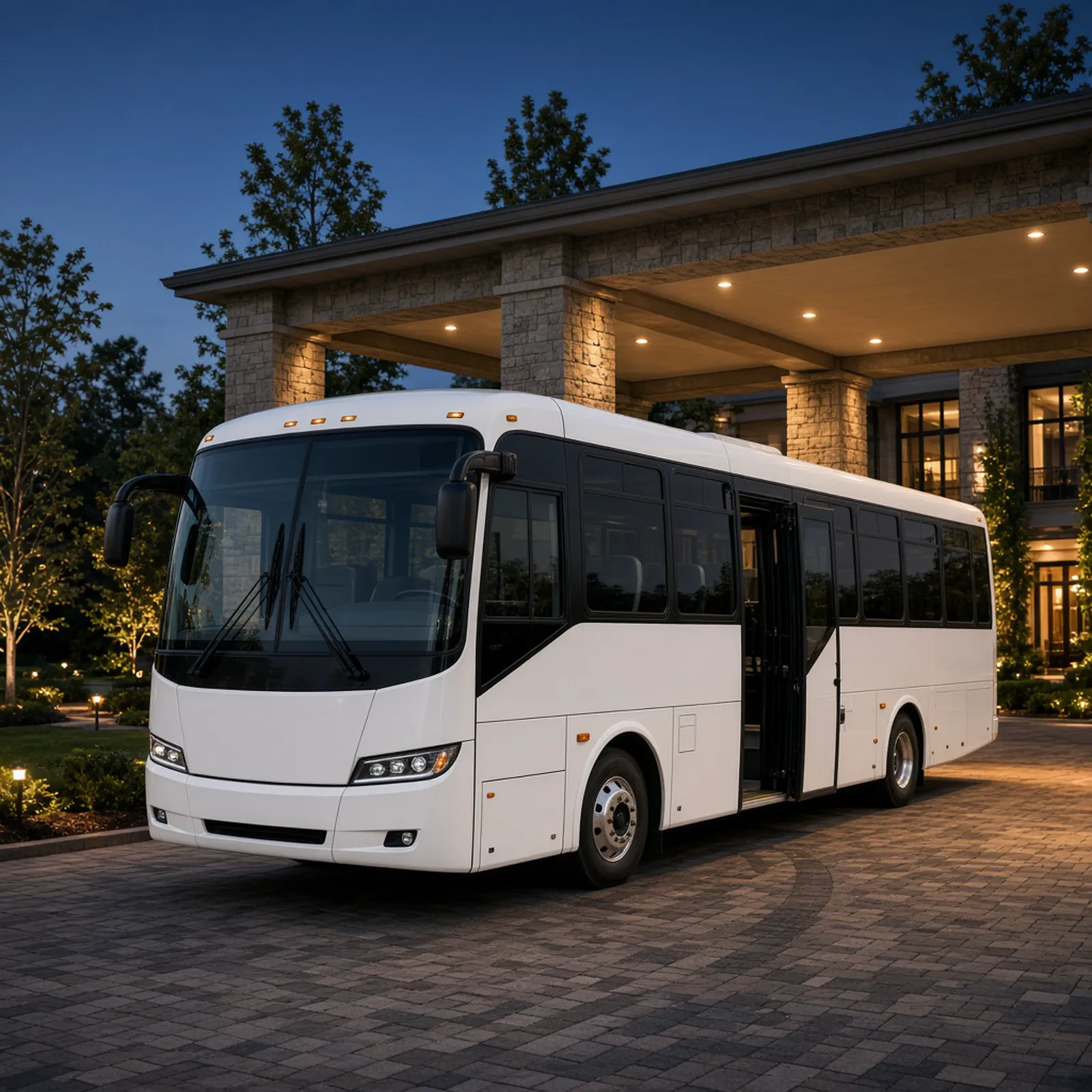
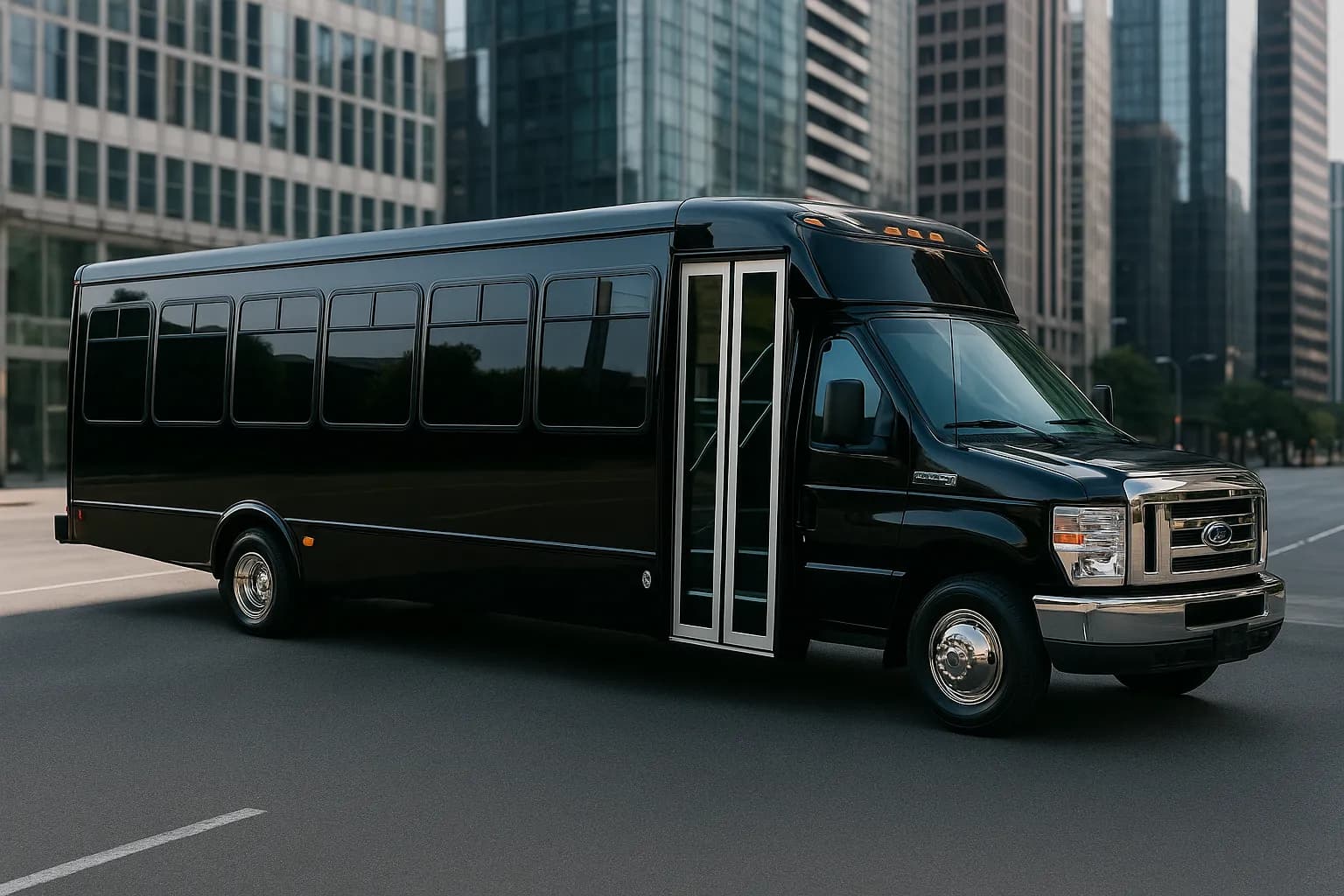
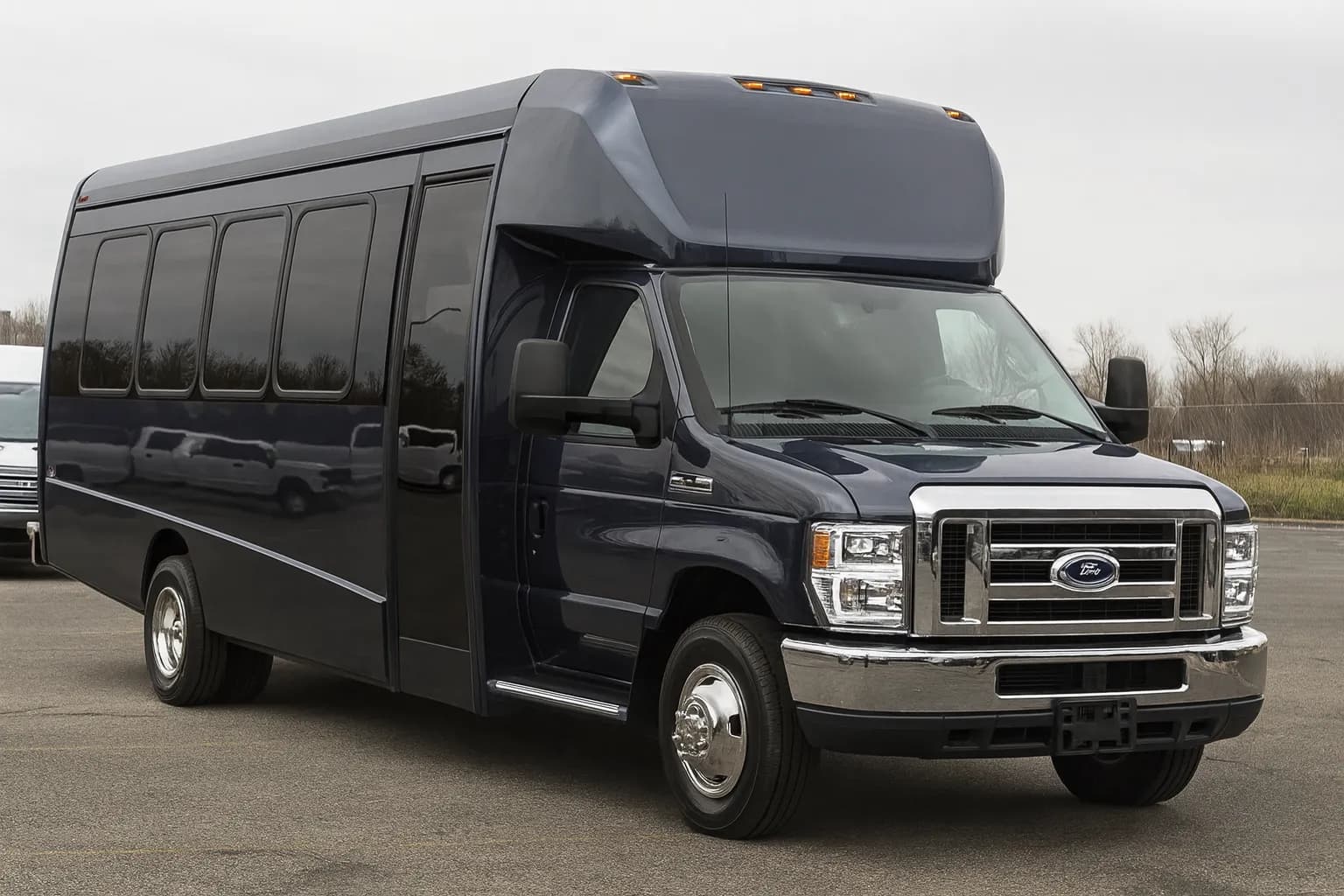
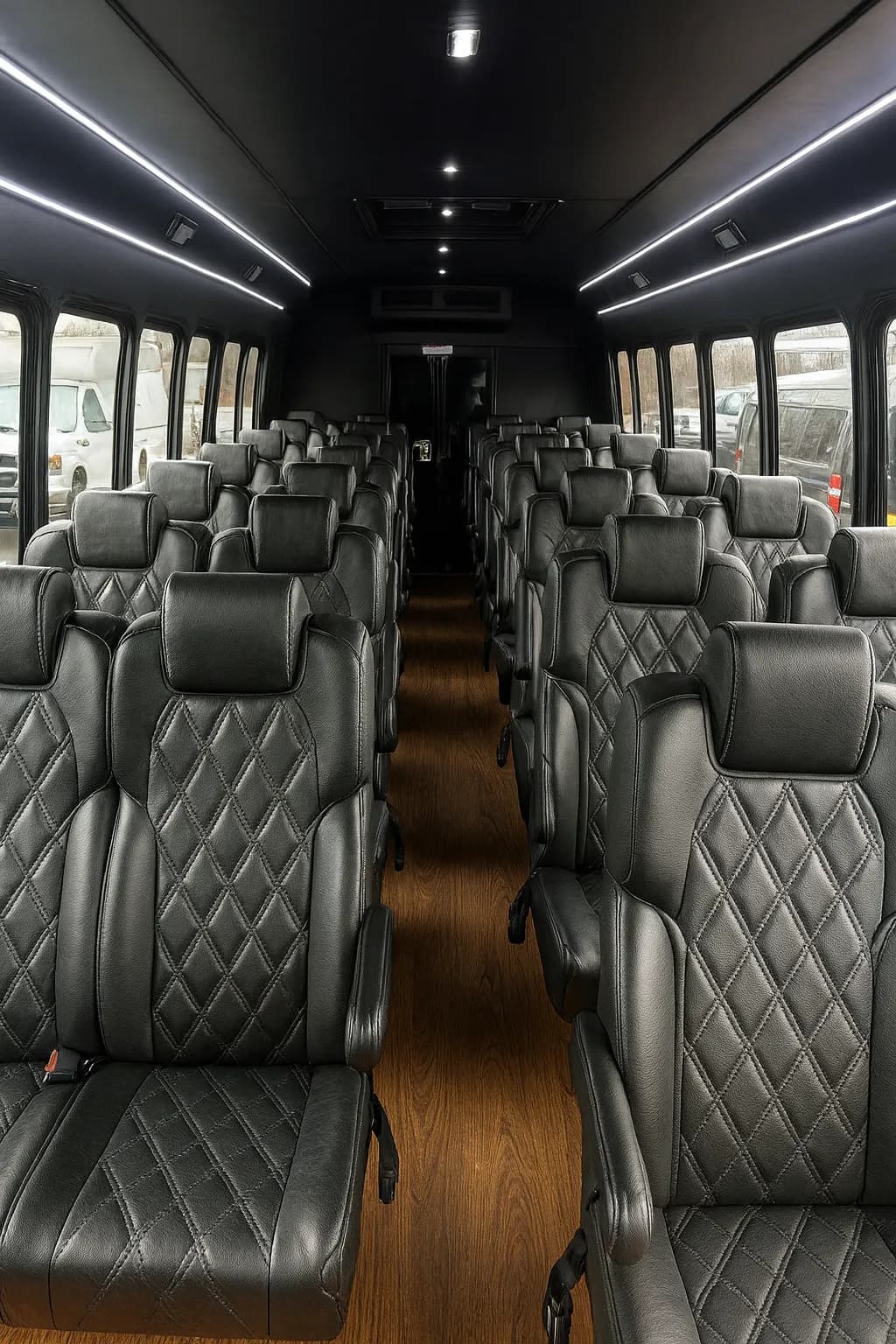
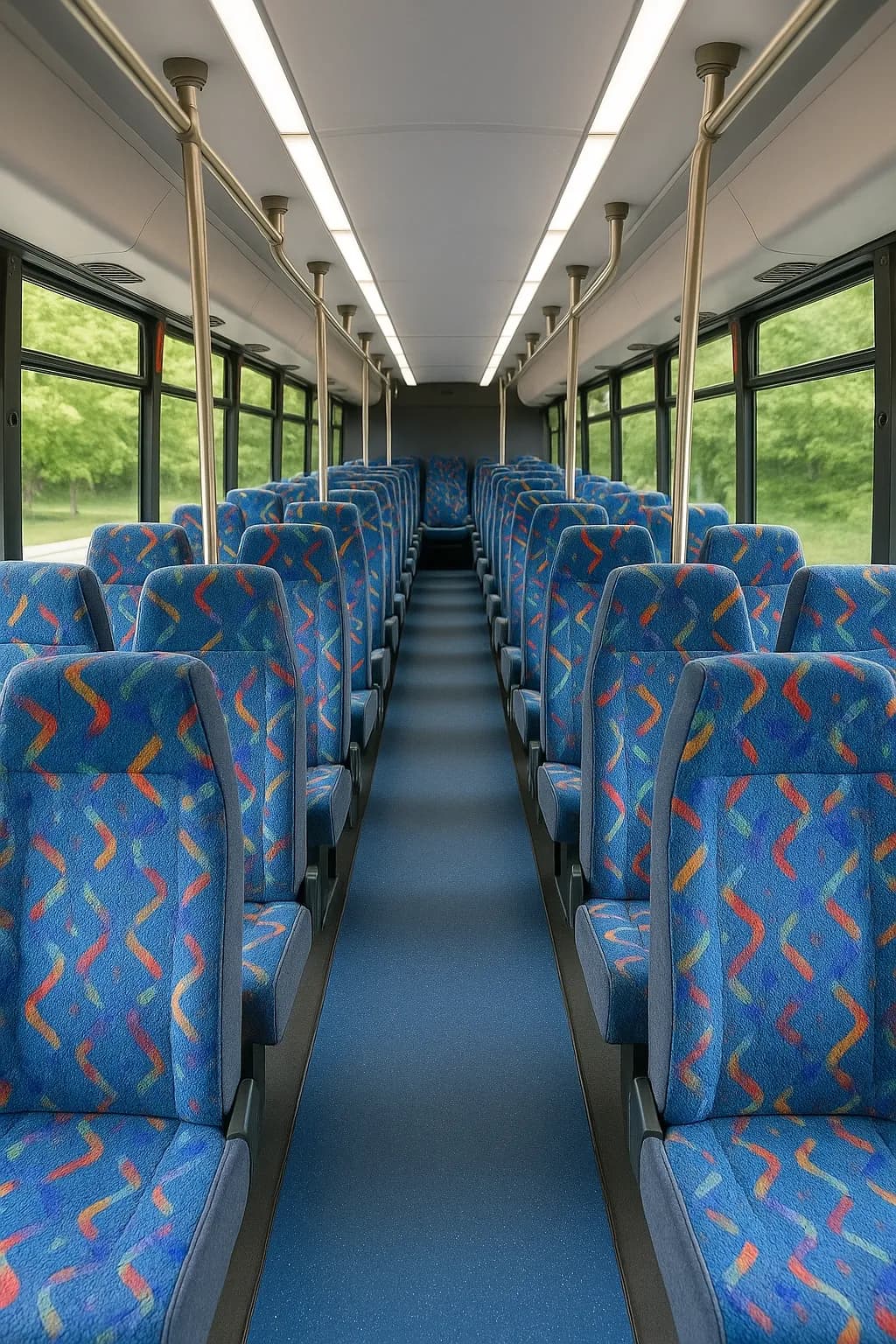
Inside, it is a straightforward bus. Pairs of forward-facing seats line a center aisle, the windows are big, and the door is wide with a handrail. It is a calm environment for colleagues who may not want to sit knee-to-knee on a limo bench with their manager. A PA or basic stereo is typical; entertainment equipment is not the point of this vehicle, and the written quote lists what the assigned bus includes.
Two seats more than the 32 passenger shuttle bus sounds trivial until the week of the event, when two new hires and a visiting director get added. Two seats fewer than the 36 passenger shuttle bus keeps you out of paying for empty rows. If your team wants music and lights on the ride itself, look at the 34 passenger party bus instead; the two vehicles solve different problems.
The outbound leg is easy. Pick one departure time from the office lobby, tell people the bus leaves five minutes after it, and go. The return is where a plan earns its keep. For a party that runs from 6 to 11 p.m., a pattern that works is three departures from the venue: one around 8:30 for people with trains and sitters, one around 9:45, and a last bus at the end. Publish those times in the calendar invite, not just on the night.
Where the bus goes on each return matters as much as when. If everyone parked at the office, the return is a simple shuttle back to one lot. If half the staff commute by Metra, a first drop at Ogilvie or Union Station before continuing to the office saves those riders an hour. Check the last outbound train times on your lines before you set the final departure.
Each return loop takes the bus away from the venue, so do the arithmetic. A suburban office 35 minutes from a downtown venue means a 70 minute round trip plus loading; departures need to be at least that far apart, or you need to accept that the 9:45 bus is really a 10:00 bus. Lay the loops out in the event timeline planner before you promise times to anyone.
Holiday party transportation competes with everything else that happens on Friday and Saturday nights in December. Across our booking network, 81% of requested dates fell on a Friday or Saturday, and that concentration gets sharper when every company in the Loop picks the same two weekends before Christmas. If your date is fixed on one of them, request the bus when you book the venue.
There are two ways to step out of the crush. The first is the weekday party. Mondays drew just 2% of requested dates in the data and Tuesdays 3%, so a Tuesday or Wednesday evening event usually has far more vehicle choice. The second is the post-holiday party: only 5% of requested dates in the dataset fell in January. Plenty of Chicago companies now hold the celebration in the second or third week of January for that reason, along with easier restaurant buyouts.
Winter adds practical details. Ask guests to be in the lobby, not on the sidewalk, and have the driver text the organizer on arrival. Pad drive times for snow, and remember that coats take space; on a full bus they go on laps or in the overhead rack if the vehicle has one. Our winter planning guide covers cold-weather timing in more detail.
A shuttle bus is reserved by the hour with a minimum block, so there are two ways to buy a holiday party. One continuous reservation keeps the same bus and driver with you from the office departure through the last return; between runs the bus waits nearby. Or you book two separate services, an outbound transfer and a later return block, and the bus is released in between.
The continuous block costs more hours but gives you flexibility: if the CEO's toast runs long, the 8:30 departure can slide. The split can cost less when the gap is long, but each piece usually has its own minimum, and a second dispatch on a busy December night is a separate commitment. Ask for both versions in writing and compare the totals rather than the hourly rates.
Think about cost per employee rather than the headline figure. Spread across 30 people, a shuttle is often a small line next to the venue and catering, and it replaces parking reimbursements and a pile of rideshare receipts. It also addresses the question every HR lead is quietly asking about how people get home after an open bar. The budget calculator lets you test the per-head number, and the corporate event checklist covers the rest of the planning.
Office headcounts behave differently from social ones. People say yes in November and drop out the day of the event because of a deadline or a cold; others ignore the invite and then appear in the lobby with their coat on. For a 34-seat bus, a confirmed list of 28 to 32 is the comfortable range. At 34 confirmed you have no margin at all, and the right move is the 36 or a second small vehicle.
Groups in this range are less common than you might think. Only 4% of passenger counts in our inquiry data fell between 31 and 40, compared with 49% between 11 and 20. The practical meaning is that there are fewer buses of this size than there are small ones, which is one more reason not to leave a 30-person company party to the final two weeks. About 17% of quote requests for 31 to 40 passengers arrived with under 14 days to go, versus 26% overall; most planners at this size have learned to move earlier.
Decide whether plus-ones ride. A team of 20 with partners is suddenly a group of 36. If the count is still uncertain, run the group size calculator with your best and worst case, and tell us both numbers when you ask for a quote.
Our booking-network data
Numbers from quote requests across our booking network that involve mid-size groups and shuttle bus requests. They are a useful reality check on timing and group size before you lock in a 34-passenger vehicle.
16%
vs 26% across all inquiries
61%
vs 4% across all inquiries
9%
vs 1% across all inquiries
23%
vs 34% across all inquiries
Source: 65,687 group-transportation inquiry records with 2024–2025 event dates, collected across the national booking network that Chicago Party Bus Fun is part of. These are quote requests — not completed trips, unique customers, or Chicago-only figures. How we measure this
Thirty-one employees leave a Schaumburg office park at 5:15 p.m. for a restaurant buyout in River North, with returns at 8:45 and 11:00 p.m. back to the office lot where their cars are parked.
Read the planning guide →Twenty-eight staff ride from a West Loop office to a private bowling venue on the North Side. The 9:00 p.m. return stops at Ogilvie and Union Station before the office; the last bus runs at 11:15.
Read the planning guide →A 30-person sales team staying near I-88 rides to a downtown Naperville steakhouse for a post-holiday kickoff dinner on a Wednesday, with one return after dessert and a second for the late table.
Read the planning guide →Size the group, pick the vehicle, set the hours, and split the cost before you ask for a quote.
One size up gives you elbow room; one size down trims the hourly cost. The closest matches to the 34 Passenger Shuttle Bus:
Capacity: 32 passengers
“A 32 passenger shuttle bus suits wedding couples and planners moving a hotel block of roughly 26 to 30 guests to a…”
View Details →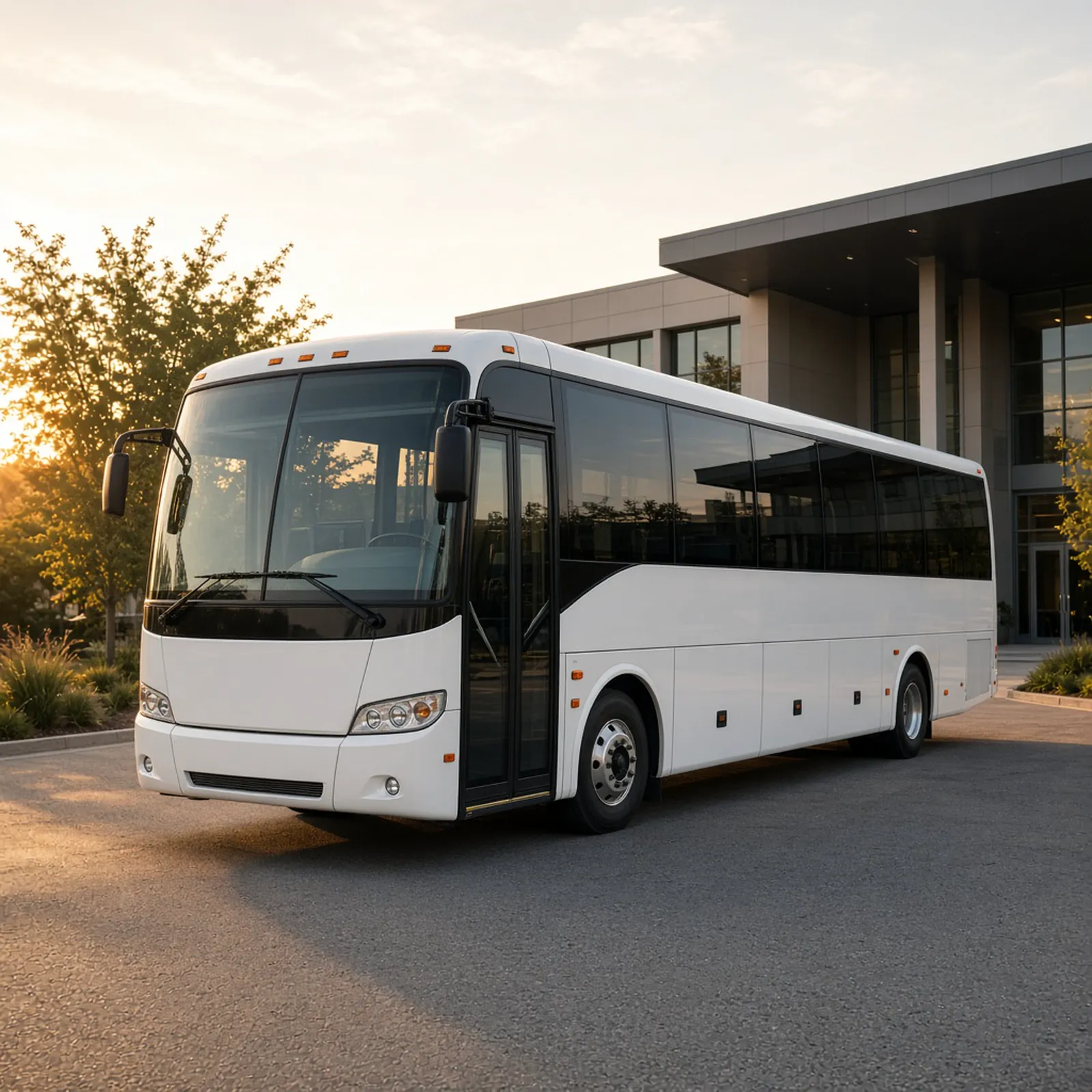
Capacity: 36 passengers
“A 36 passenger shuttle bus is sized for a school or university group of about 30 students plus the adults travelling…”
View Details →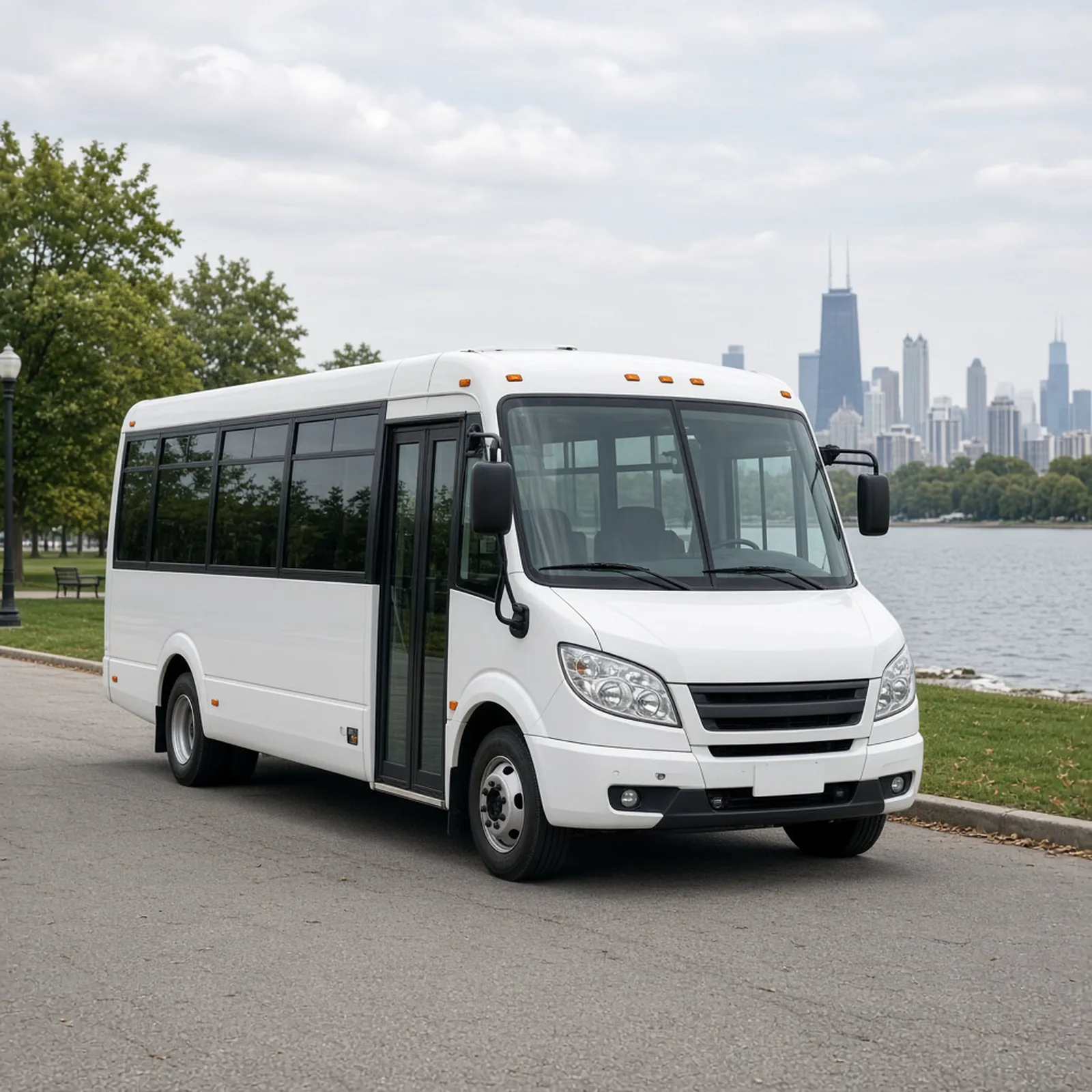
Capacity: 30 passengers
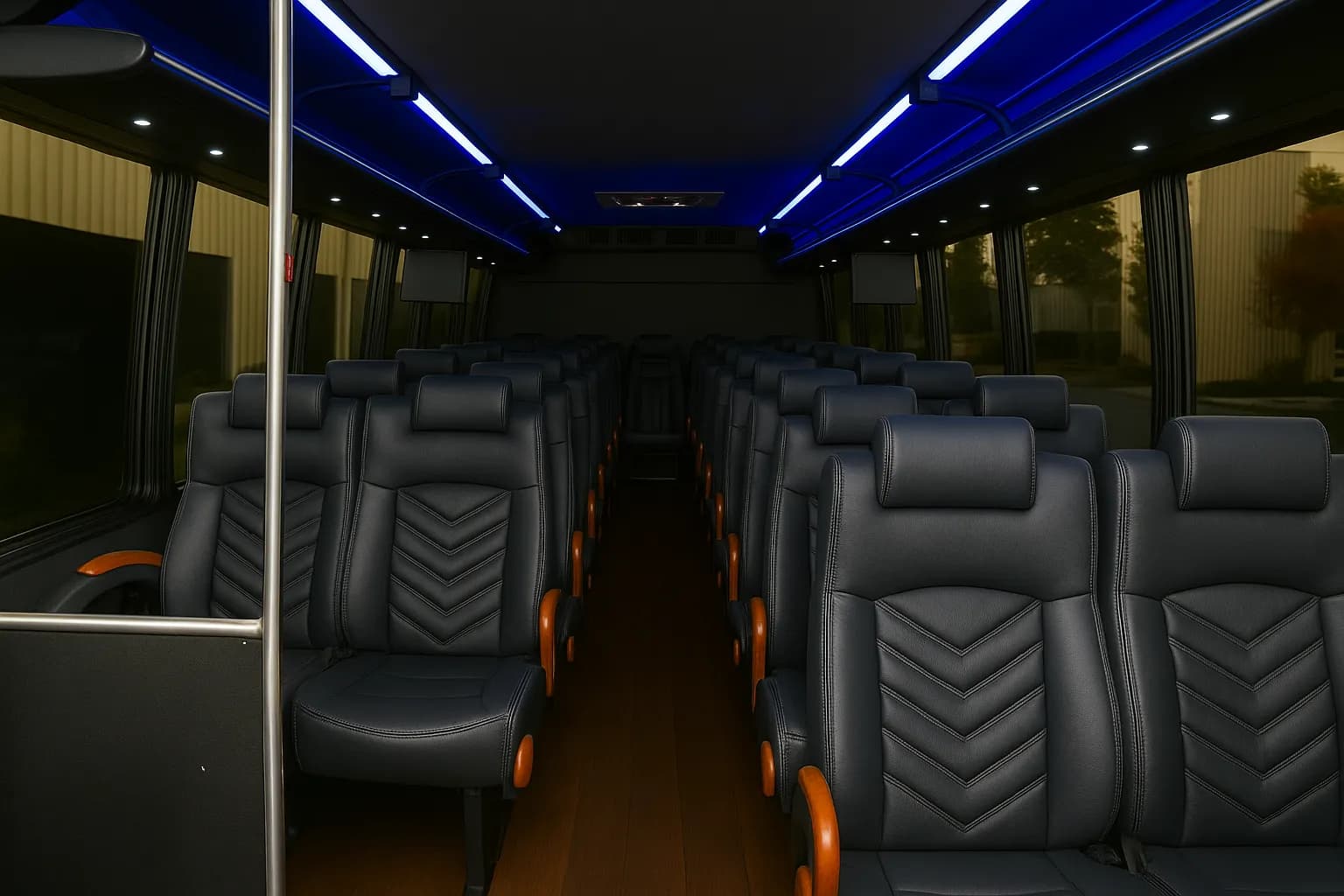
“The 30 passenger shuttle bus is for groups of 24 to 28 that want to stay in one vehicle.”
View Details →Shuttle Buses polls
Vote to see how other groups answered. One vote per poll, no sign-up, and nothing personal is stored.
No votes yet — be first
No votes yet — be first
No votes yet — be first
Straight answers from the Chicago booking desk
Tell us about your event and ask for a written quote. If your reservation is serviced by an affiliate or sister company, confirm vehicle, operator, base rate, minimum hours, and included charges with that provider before paying a deposit.