

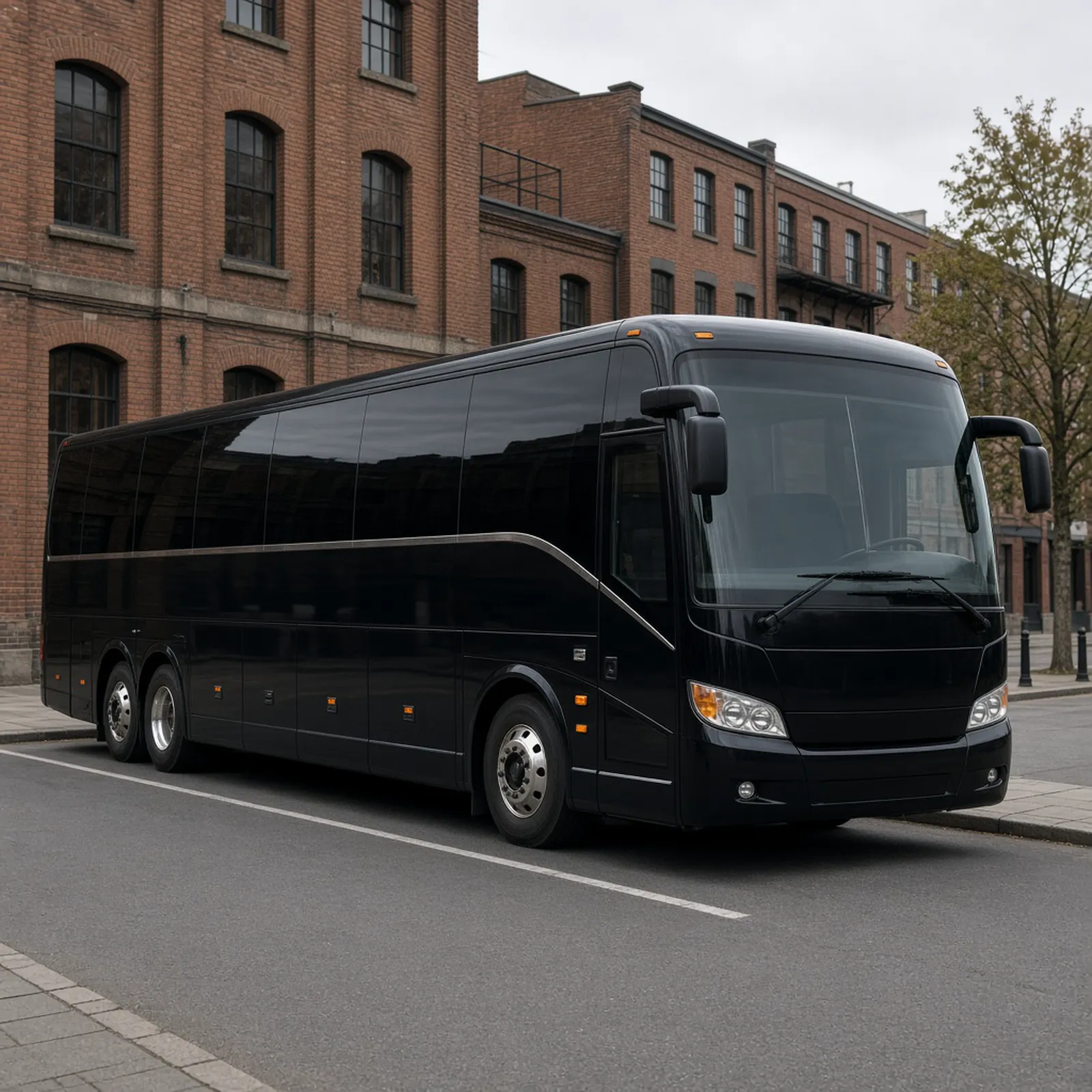
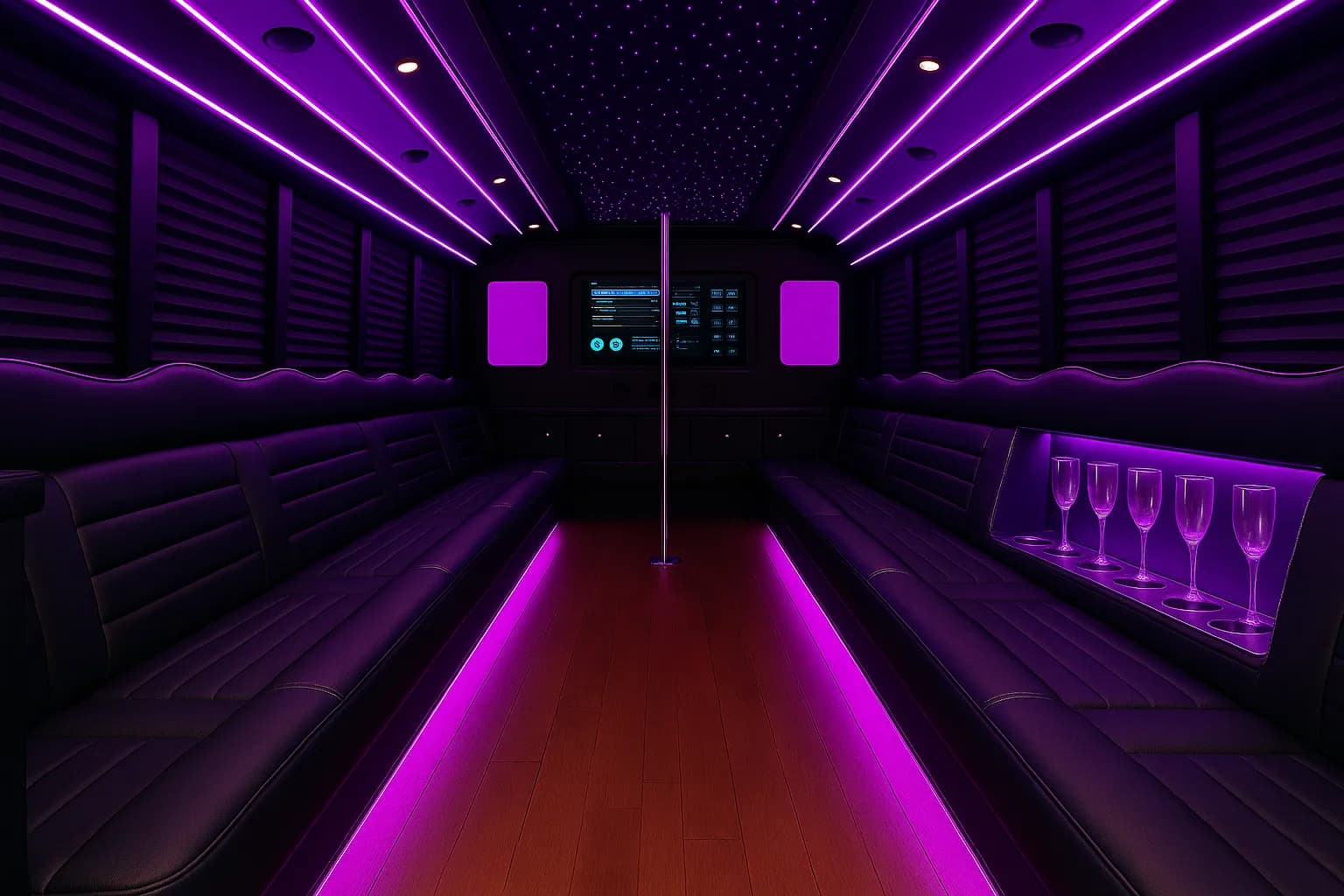
32 Passenger Party Bus
Capacity: 32 passengers
“A 32 passenger party bus suits the group that was supposed to be 25 and kept growing, usually because two circles of…”
View Details →Seats up to 34 · party bus
A 34 passenger party bus fits 28 to 31 people in formalwear. Chicago campus pickup advice, dry-bus rules, and stay-all-night versus drop-and-return pricing.
Pickup ZIP, date, headcount, and hours get you one written total with the driver, fuel, taxes, and gratuity included.
Quick answer
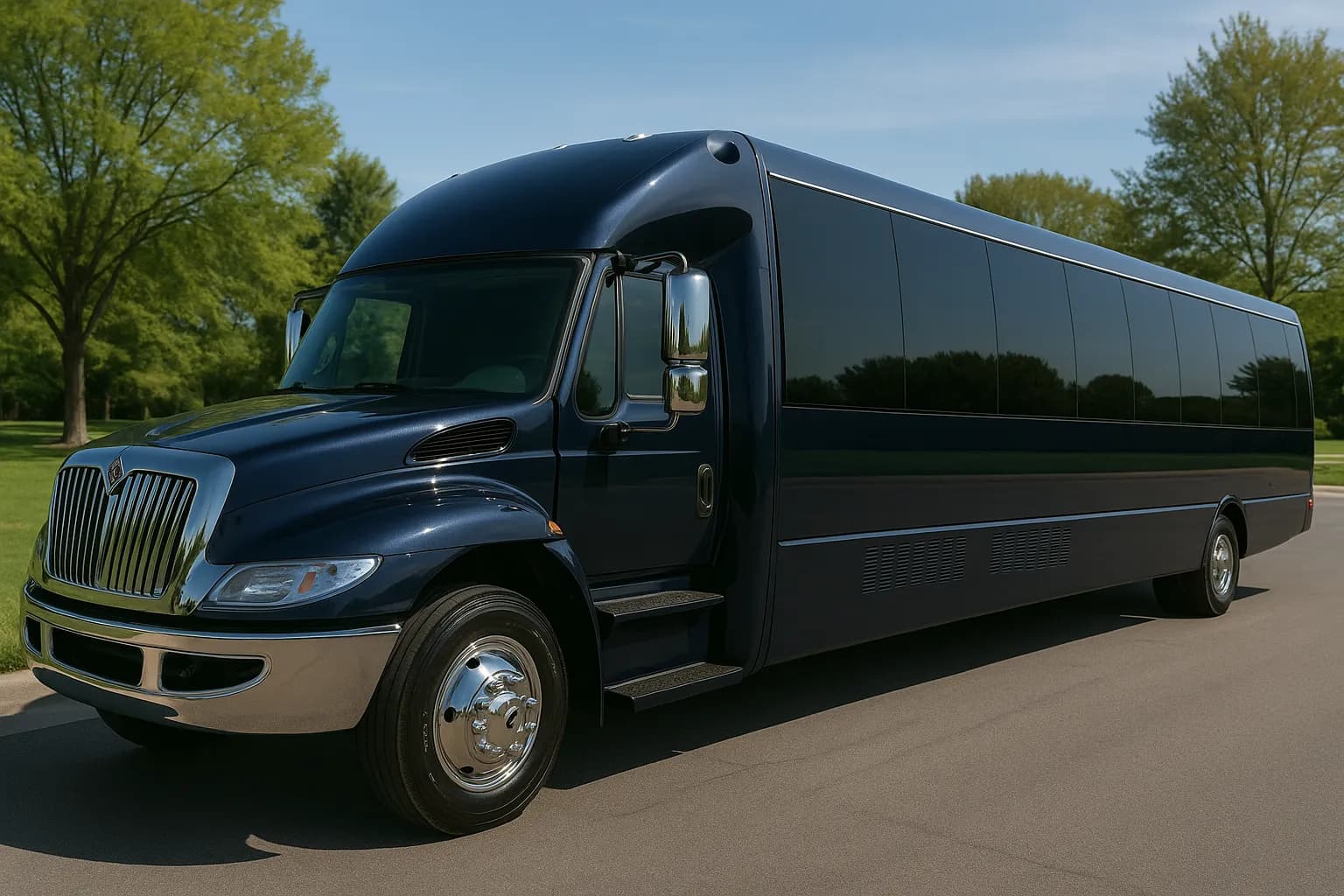
The 34 passenger party bus is the formal-season workhorse: fraternity and sorority formals, date parties, and alumni weekends where 28 to 31 dressed-up people travel as one group. Check whether you need the bus to stay all evening or only for the outbound and return legs, because that choice shapes the whole quote.
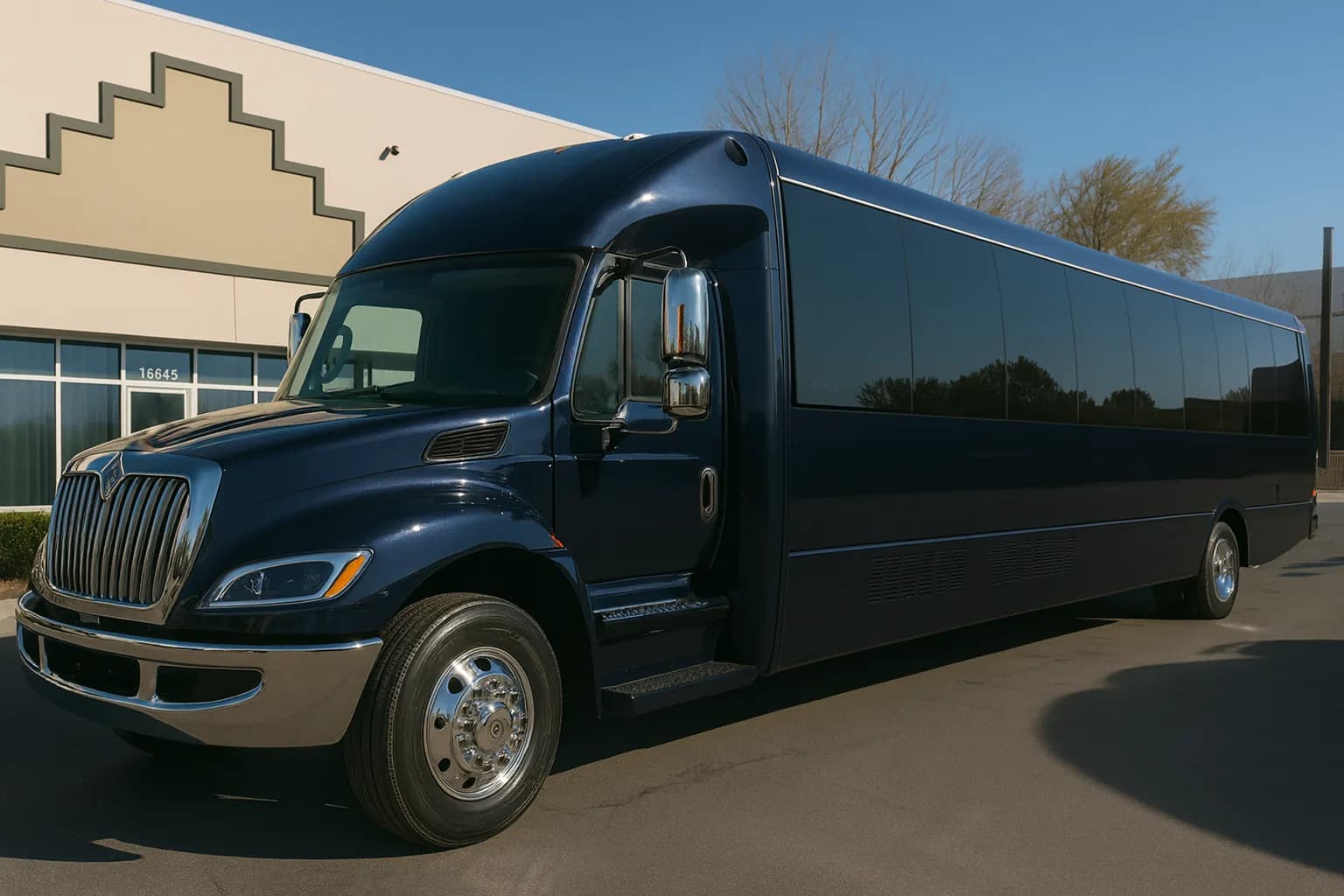
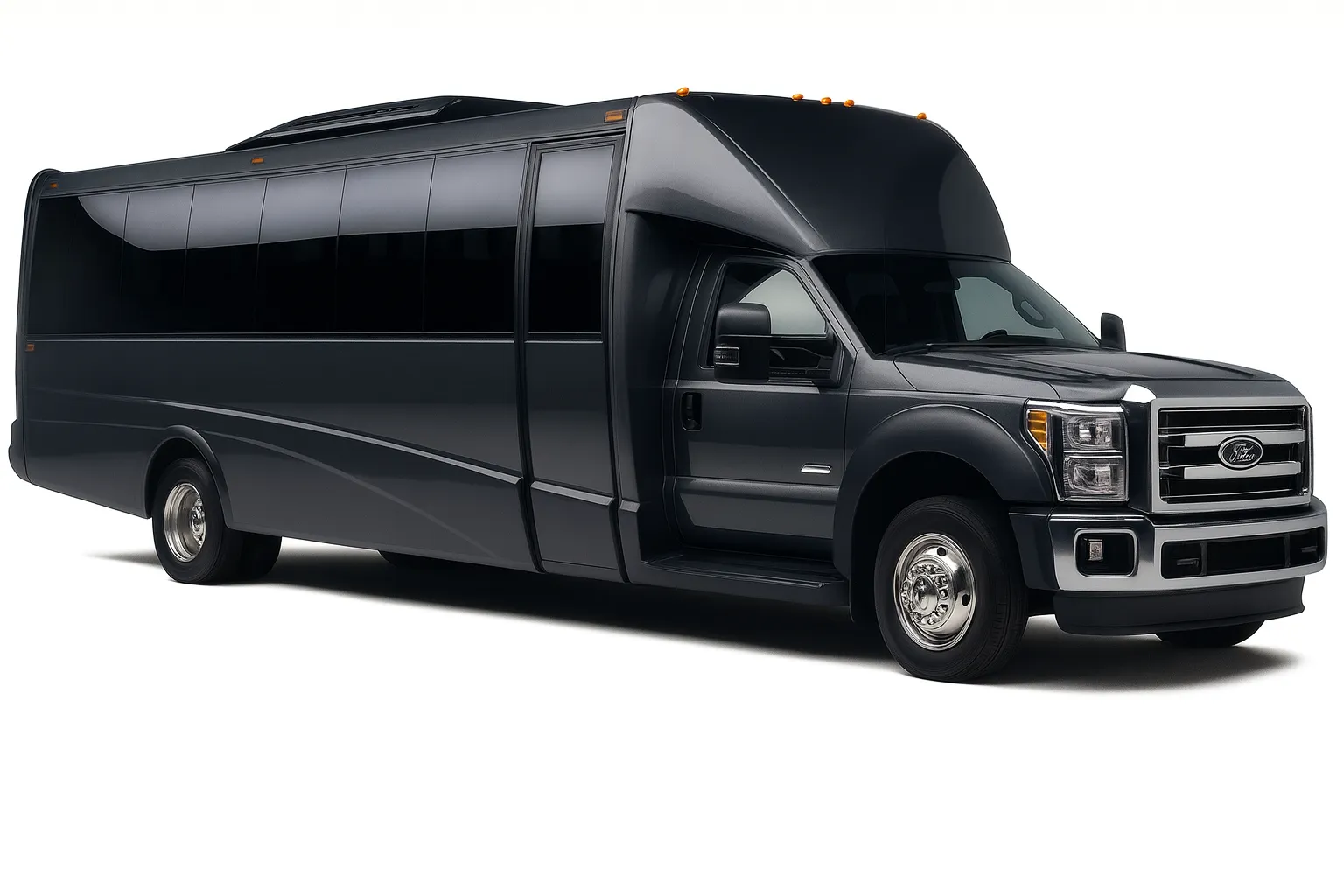
Chapter social chairs tend to find the 34 passenger party bus by arithmetic. Fifteen or sixteen members each bring a date, a couple of seniors join late, and the list settles somewhere around 30. That is too many for the buses most birthday groups use and not enough to justify the largest vehicles on the lot. A 34-seat cabin carries that list with a few seats left for garment bags and the inevitable extra couple.
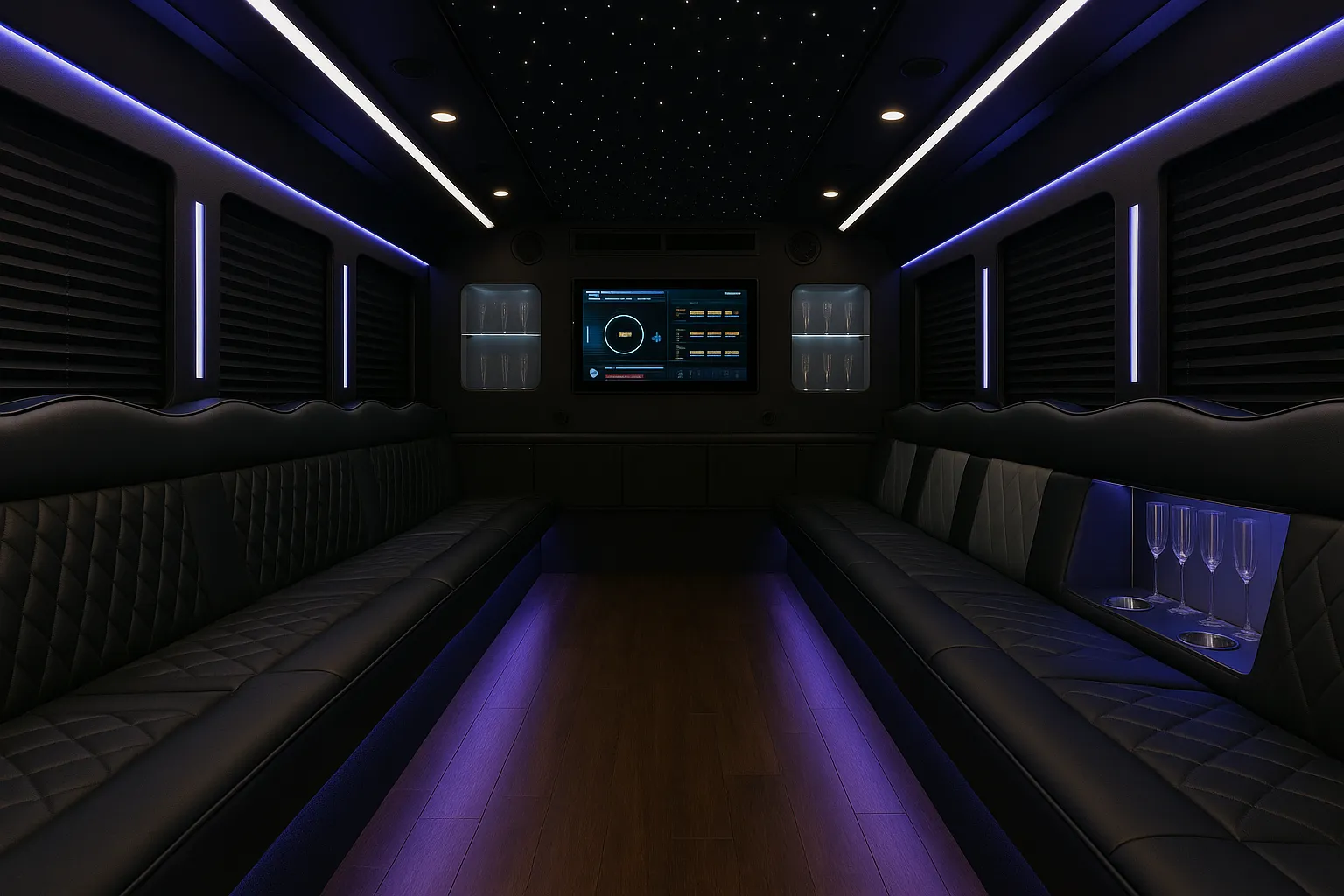
Riding in it feels like a moving pre-party. The bench wraps the perimeter, the center stays open, and a group in suits and cocktail dresses can stand, take photos under the lights, and actually hear each other over the music if someone is sensible with the volume. Compared with a 32-passenger party bus, the extra seats matter most when everyone is in formalwear and nobody wants to be pressed against a stranger's date. Compared with a 36-passenger party bus, it is a touch easier to position on campus streets.
The season is predictable. Among inquiries in our national booking network that specified a 31 to 40 seat vehicle, 43% were for fall dates, well above the 26% share across all inquiries. Fall formals, homecoming weekends, and wedding season stack up on the same October and November Saturdays. Features such as lighting, sound, and cooler space vary between buses, and the written quote lists what your assigned vehicle includes.
A formal has a fixed destination, a fixed start time, and a guest list made of pairs. Those three facts make it a different planning problem from a night out. Pairs mean the count moves in twos, so a bus with two or four spare seats absorbs a late couple where a bus with one spare seat does not. A fixed start time means the whole group boards at once, so the door and the aisle need to handle 30 people in ten minutes without wrinkling anyone.
It also means one bus is often part of a larger movement. A chapter of 90 might need three vehicles, and mixing sizes is normal: two 34s and a 28-passenger party bus, for example, rather than forcing everyone into identical vehicles. Assign people to buses by name ahead of time. "Get on whichever" sounds relaxed and produces one overfull bus, one half-empty bus, and a driver who cannot legally leave.
Larger vehicles get reserved earlier than small ones. In our network, only 16% of inquiries for 31 to 40 seat vehicles arrived inside two weeks of the event, against 26% for inquiries overall. If your formal date is set, the bus should be one of the first things you lock in, right after the venue.
Each Chicago-area campus has its own version of the same problem: dense housing, narrow streets, and nowhere obvious for a long bus to stop.
In Evanston, streets near Northwestern's Greek houses are tree-lined and heavily parked. Sheridan Road is the natural staging street, but it is busy, so set an exact corner and have the group outside five minutes early. Around DePaul in Lincoln Park, Fullerton and Sheffield carry CTA buses and heavy foot traffic; a side of the street without a bus stop or a bike lane is what the driver will look for. Near Loyola in Rogers Park, Sheridan Road bends through campus and loading space is tight, so a nearby wider cross street often works better. In Hyde Park, the Metra embankment along the east side has low viaducts that a tall bus cannot use, so the approach usually comes via the Midway or 55th Street.
Two rules apply everywhere. Check with the university or house corporation about current rules for charter vehicles on or near campus rather than assuming last year's plan still stands. And send the driver a pin, not just an address, because "in front of the house" is not always where a bus can legally stop.
For a formal, the bus is busy for 40 minutes at the start and 40 minutes at the end, and parked for four hours in between. That raises a fair question about paying for the idle time.
There are two structures. A continuous reservation keeps the bus and driver with you for the whole evening. It costs more hours, but you can leave coats and bags on board, leave early if the venue is a bust, and send a few people home mid-event. A split service books an outbound transfer and a separate return. It can cost less on paper, but hourly minimums often apply to each leg, the return bus may be a different vehicle, and the return time is fixed. If the DJ is great and everyone wants another half hour, the bus may not be able to wait.
Ask for both options on your quote and compare them side by side. For a venue 20 minutes away, the difference is frequently smaller than expected once minimums are applied. The trip duration estimator helps you work out how many hours the continuous option really needs, including loading time at both ends.
College groups are mixed-age almost by definition, and that governs what can be on the bus. Alcohol is limited to riders 21 and over, and many quotes will not allow it at all when passengers under 21 are aboard. Most chapters already operate under national risk management policies that are stricter than anything a bus company requires. Read yours first; the usual answer is a dry bus, and that is the simplest thing to plan around.
A few habits make the night run cleanly. Keep a written roster per bus and check names at boarding in both directions, so nobody is left at the venue. Name a sober point person for each vehicle who has the driver's number and the authority to make decisions. Agree in advance on what happens if someone is too intoxicated to board; the driver can refuse a passenger, and a plan made at 6 p.m. beats an argument at midnight. Damage and cleaning charges land on the contract holder, so the chapter should decide how those would be covered before the bus pulls up. None of this is unusual. It is what experienced social chairs do as routine.
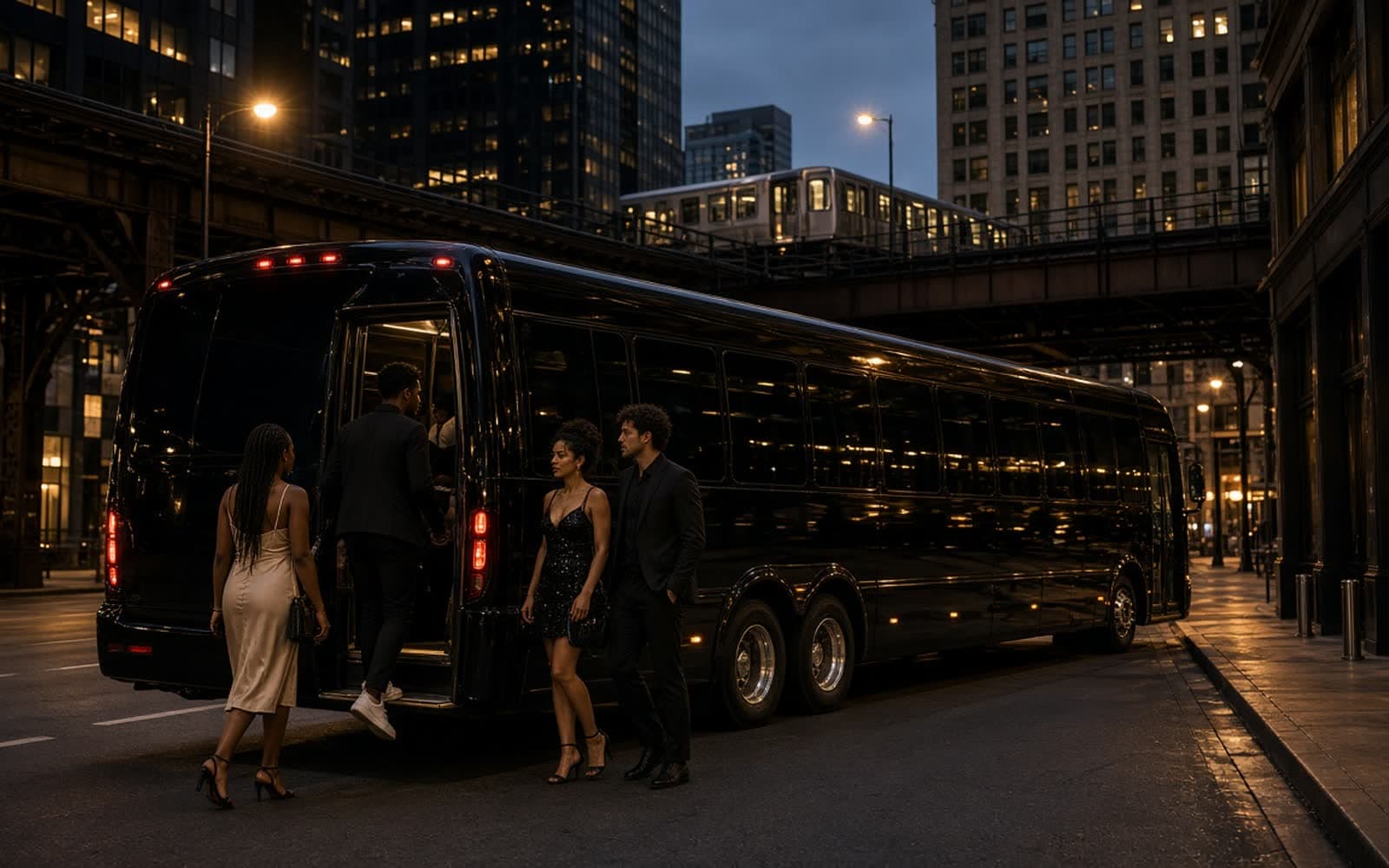
The same shape of event, a dressed-up group of about 30 going to one place and back, turns up outside campus. Wedding parties with both families along for the ride to the ceremony often total 28 to 32. Alumni reunion weekends, a law firm's summer associates heading to a Ravinia concert, a church young-adults group going to a holiday dinner: all land here.
For weddings, remember that the wedding party is rarely the whole transportation plan. Guests moving between a hotel block and the venue are better served by a shuttle loop, and the wedding transportation planner separates those two jobs so you can size each one. Our wedding transportation page covers timing around ceremony and photos.
If your count is sliding toward 35 or 36, move up rather than squeezing. If the group needs forward-facing seats and luggage space more than lights and a dance floor, a 34-passenger shuttle bus carries the same number in a quieter, more conventional cabin.
Our booking-network data
Numbers from quote requests across our booking network that involve mid-size groups and party bus requests. They are a useful reality check on timing and group size before you lock in a 34-passenger vehicle.
81%
23%
22%
12%
vs 28% across all inquiries
Source: 65,687 group-transportation inquiry records with 2024–2025 event dates, collected across the national booking network that Chicago Party Bus Fun is part of. These are quote requests — not completed trips, unique customers, or Chicago-only figures. How we measure this
Thirty people board on Sheridan Road in Evanston at 6:15, ride Lake Shore Drive to a hotel ballroom on the Magnificent Mile, and unload on the side street where the hotel directs buses instead of under the porte-cochère. The roster is checked again at 11:30 before the return north.
Read the planning guide →Pickup on Fullerton near DePaul, a bowling-and-dinner venue in the West Loop, and a return by midnight. A dry bus under chapter rules, a named point person with the driver's number, and a split drop-off in Lincoln Park and Lakeview.
Read the planning guide →Classmates staying at a Loop hotel ride to a Saturday tailgate-style lunch, tour the old neighborhood bars in the afternoon, and finish at a reserved dinner in Old Town. Everyone is over 21, so BYOB terms are confirmed on the quote in advance.
Read the planning guide →From a hotel in Oak Brook to a ceremony in Wheaton, then to photos at a forest preserve and on to the reception. The bus keeps dresses off the ground between locations and keeps grandparents, bridesmaids, and groomsmen on one schedule.
Read the planning guide →Size the group, pick the vehicle, set the hours, and split the cost before you ask for a quote.
One size up gives you elbow room; one size down trims the hourly cost. The closest matches to the 34 Passenger Party Bus:
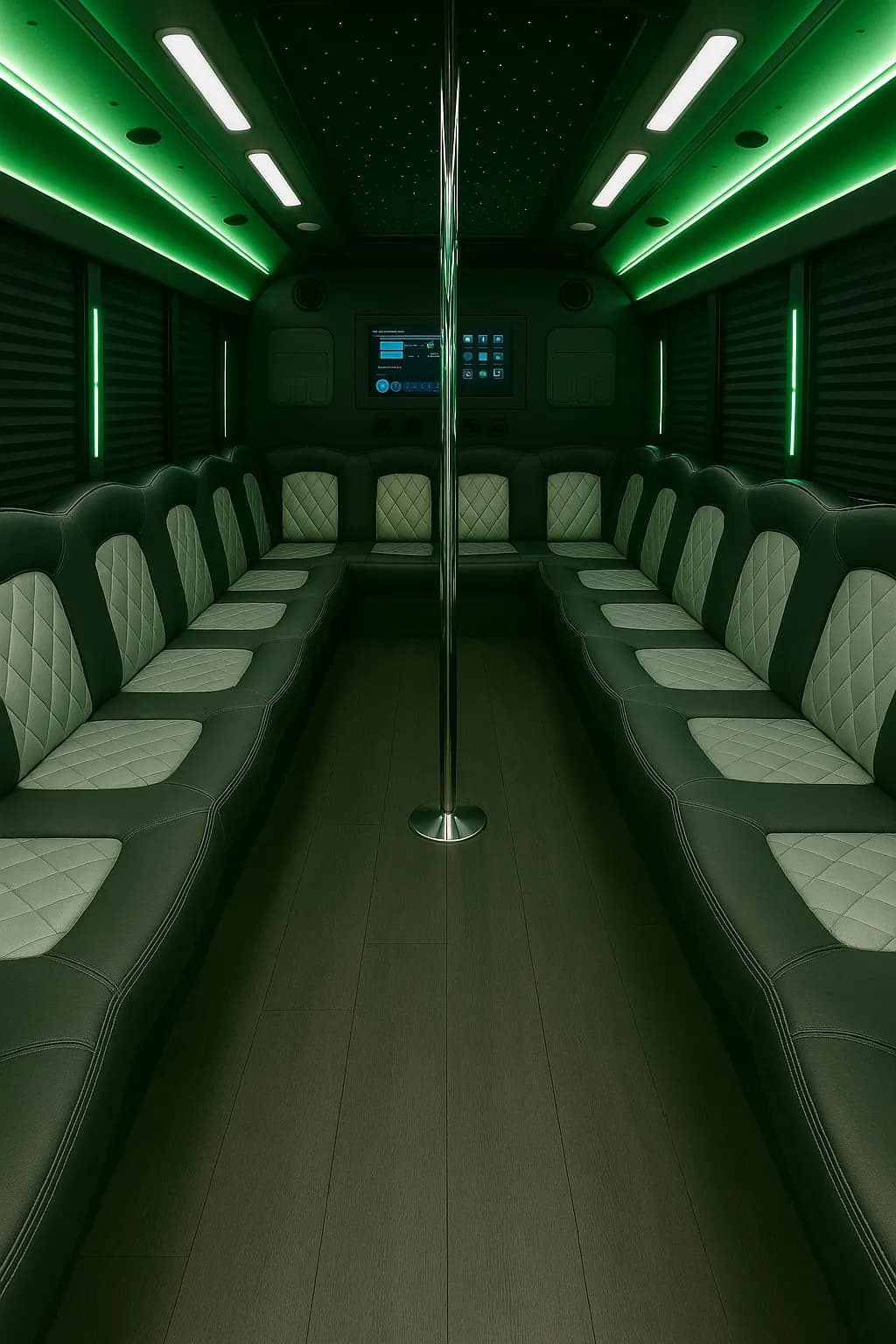
Capacity: 32 passengers
“A 32 passenger party bus suits the group that was supposed to be 25 and kept growing, usually because two circles of…”
View Details →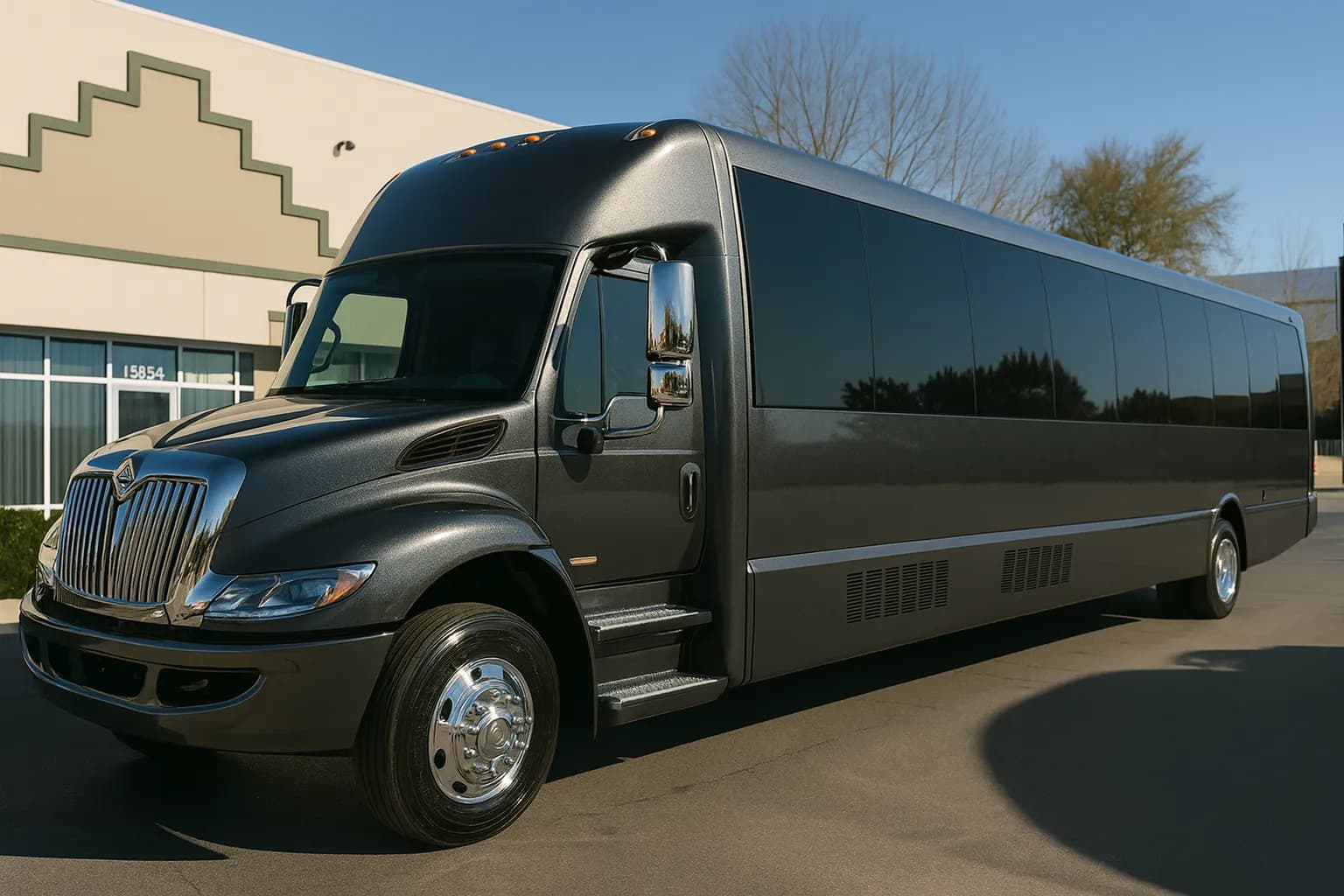
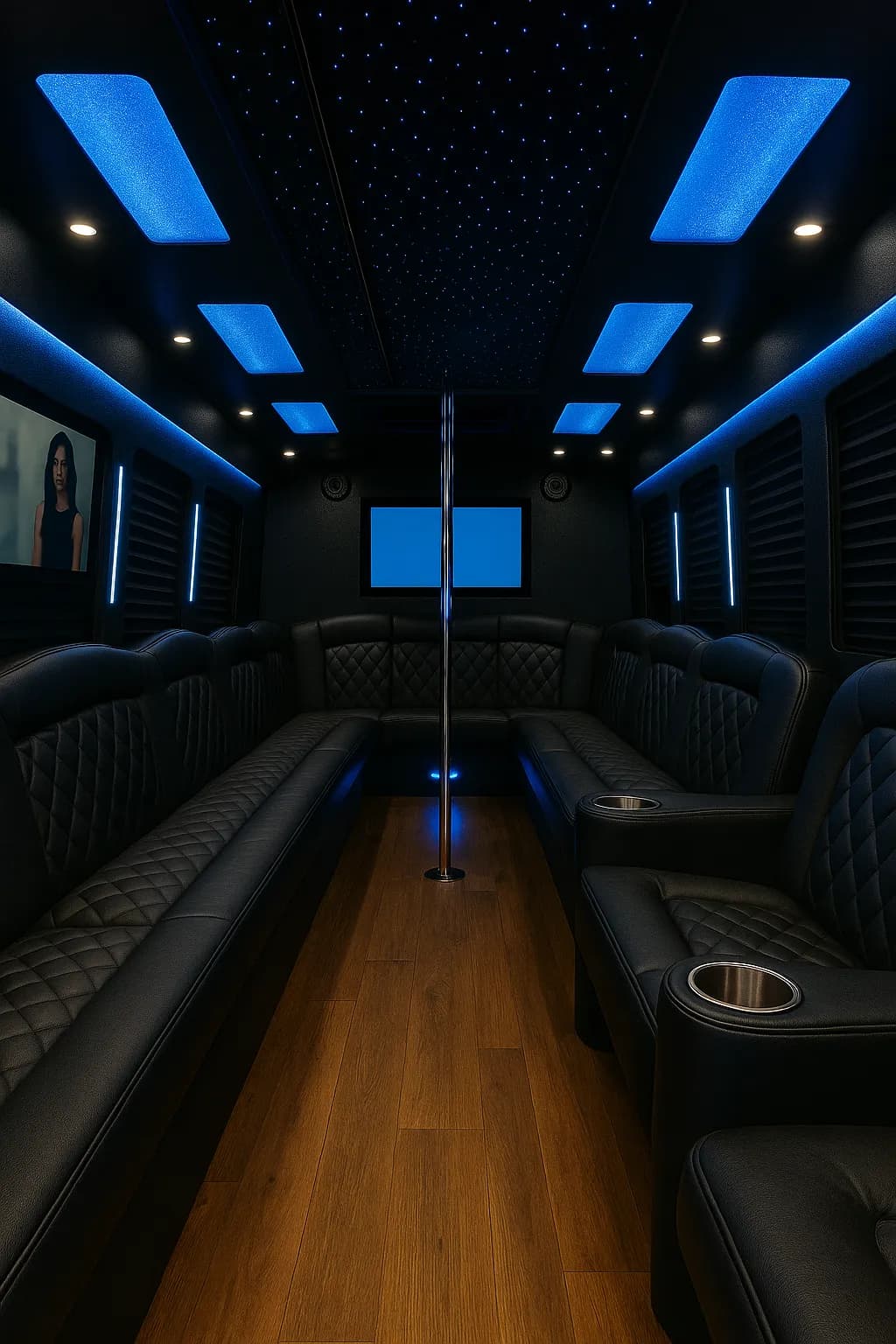
Capacity: 36 passengers
“The 36 passenger party bus is the pick for company outings: a department of 30 to 33 heading to a brewery afternoon, a…”
View Details →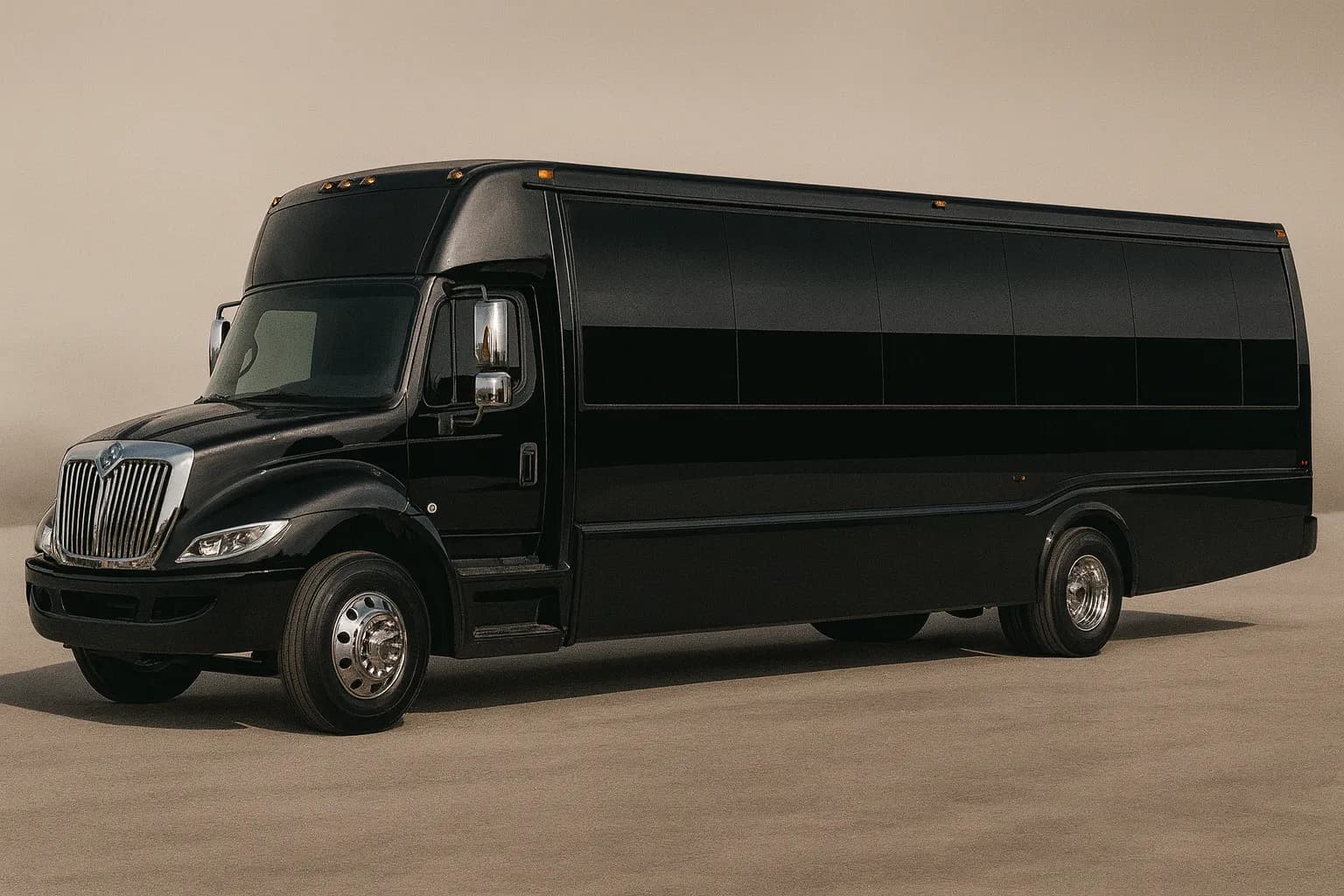
Capacity: 30 passengers
“The 30 passenger party bus is the classic "big bus" for Chicago proms, homecomings, and milestone birthdays.”
View Details →Party Buses polls
Vote to see how other groups answered. One vote per poll, no sign-up, and nothing personal is stored.
1 vote
1 vote
1 vote
Straight answers for planning a group trip in Chicago
Tell us about your event and ask for a written quote. If your reservation is serviced by an affiliate or sister company, confirm vehicle, operator, base rate, minimum hours, and included charges with that provider before paying a deposit.