

50 Passenger Coach Bus
Capacity: 50 passengers
“A 50 passenger coach bus is the workhorse of wedding guest transportation: one vehicle that moves 40 to 48 dressed-up…”
View Details →Seats up to 48 · motorcoach
Plan a Chicago corporate retreat or conference transfer on a 48 passenger coach bus: luggage math, working on board, O'Hare loading, and lead times.
Pickup ZIP, date, headcount, and hours get you one written total with the driver, fuel, taxes, and gratuity included.
Quick answer
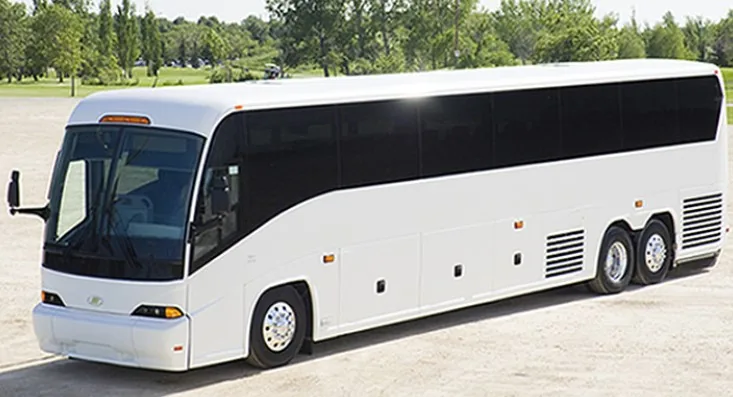
The 48 passenger coach bus suits company retreats, conference transfers, and client groups of roughly 38 to 46 who are traveling with luggage and want to arrive able to work. Reclining seats and under-floor bays do the heavy lifting. The one thing to check: whether the assigned coach has outlets, Wi-Fi, and a restroom.
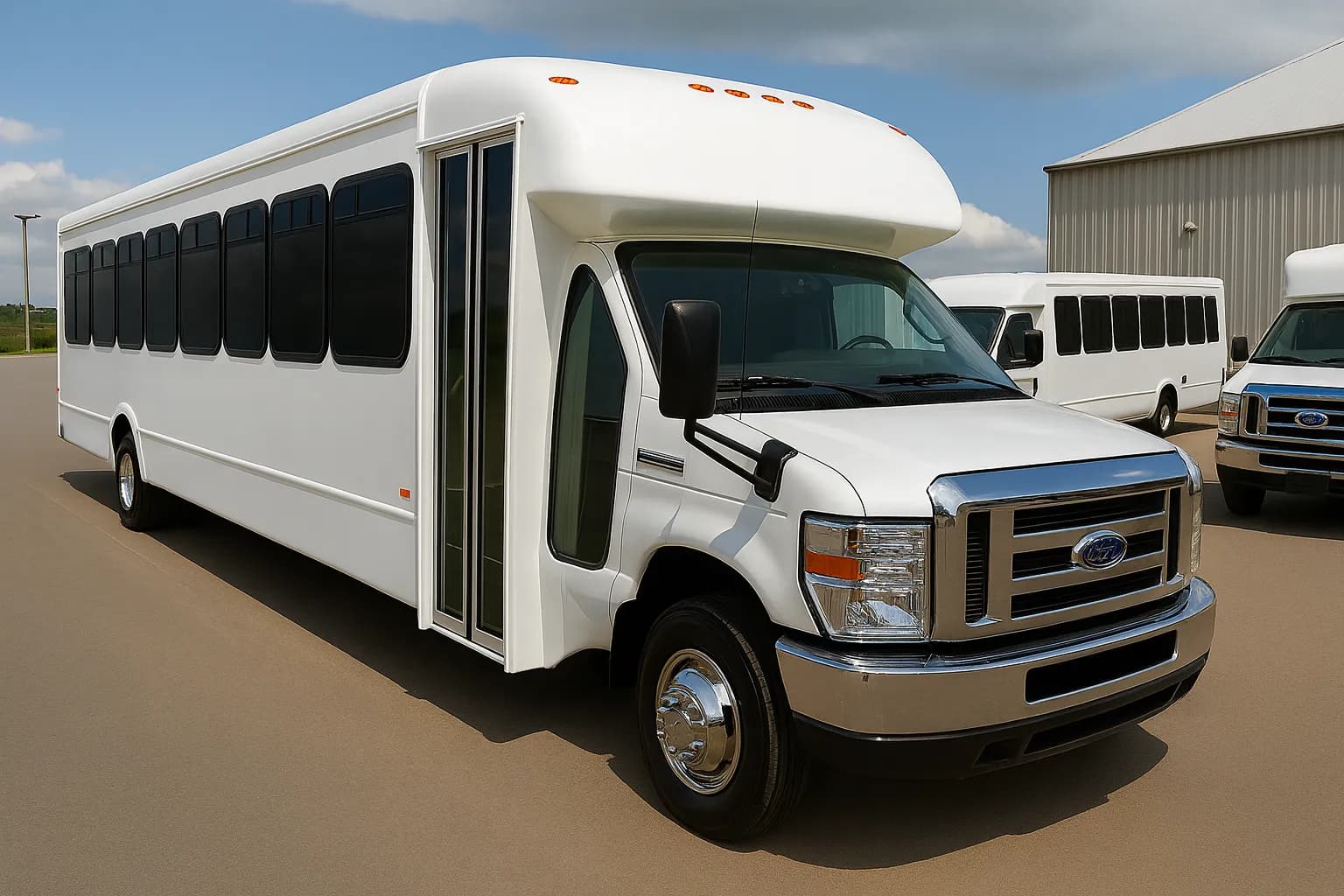
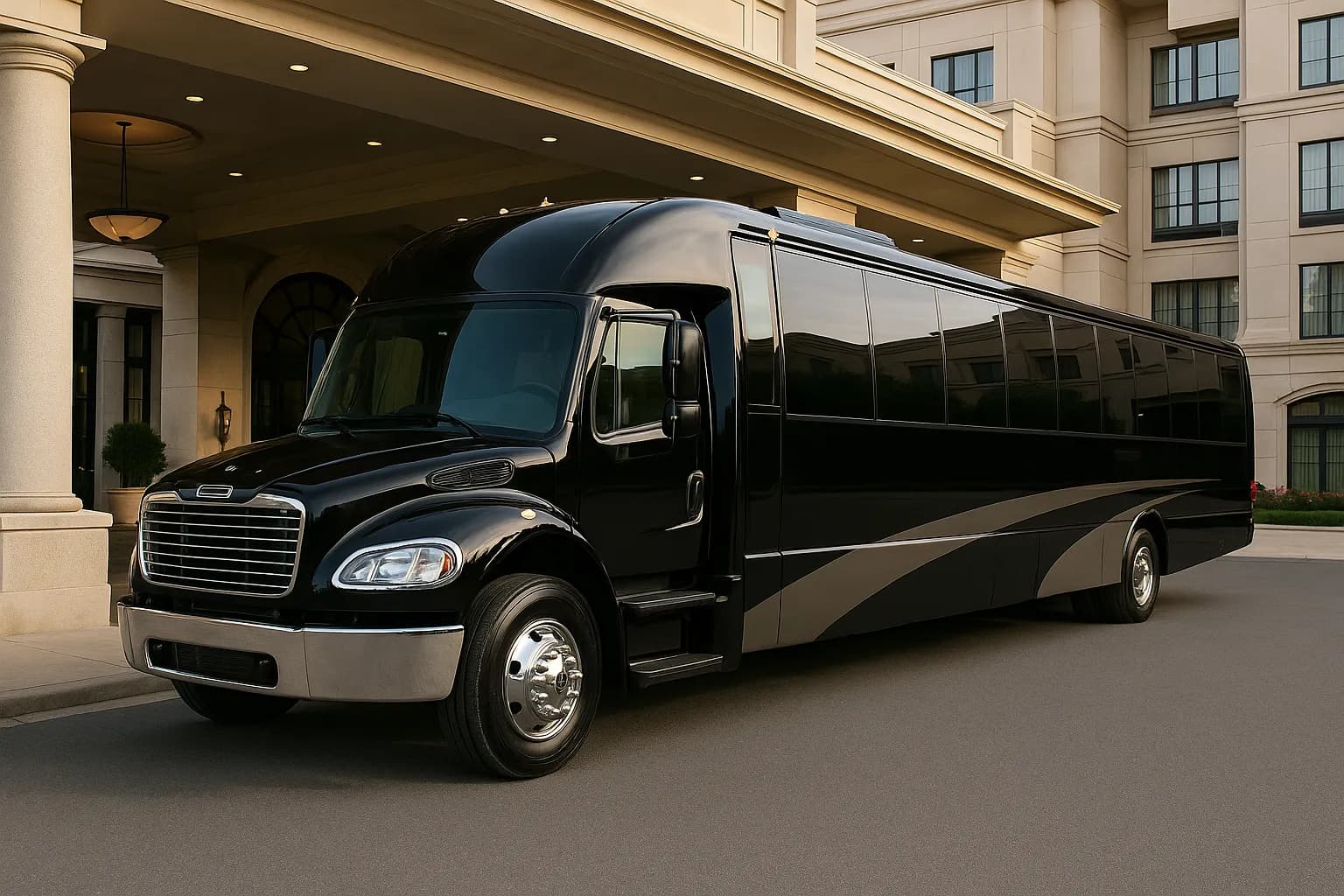
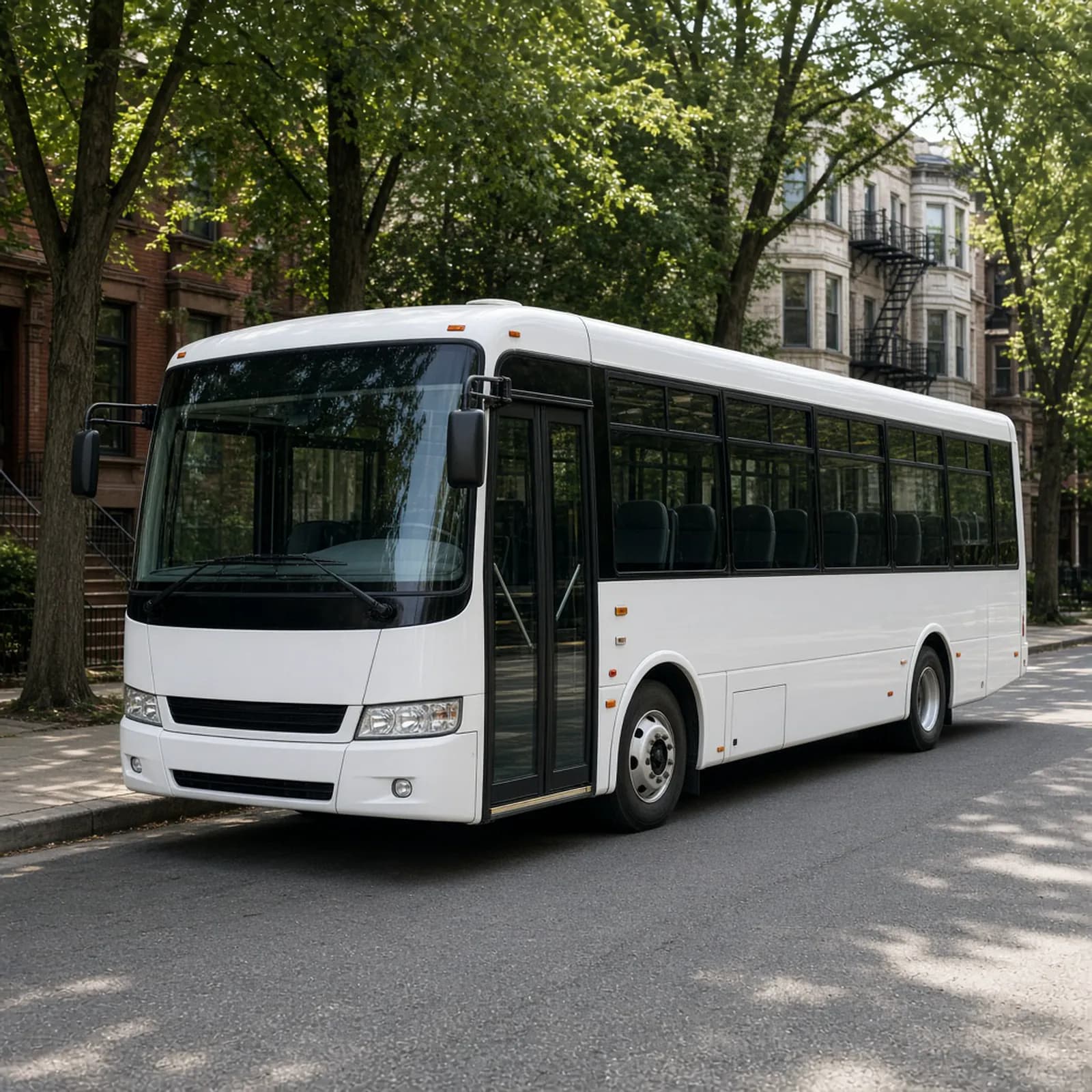
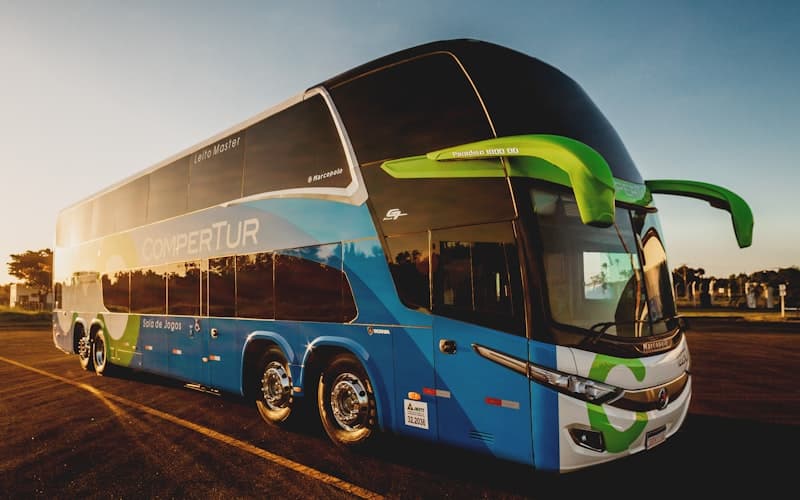
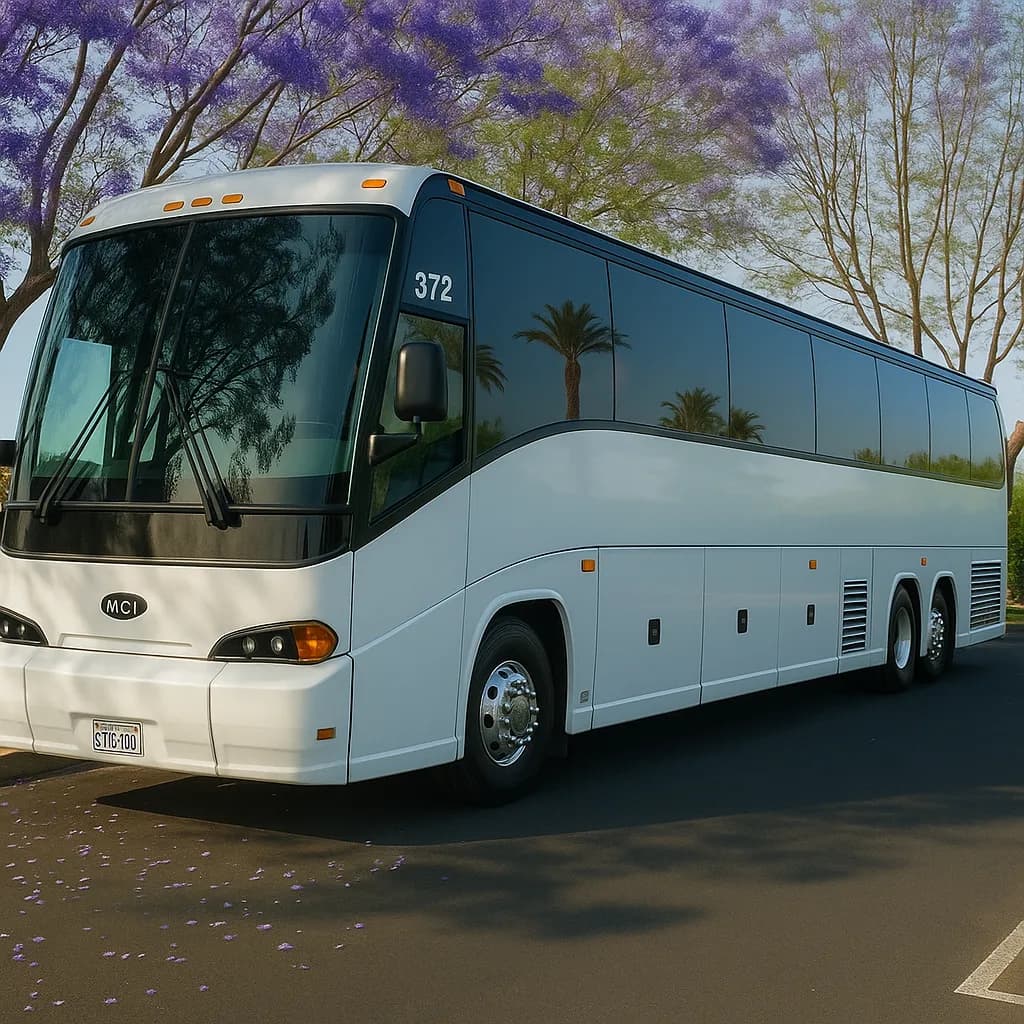
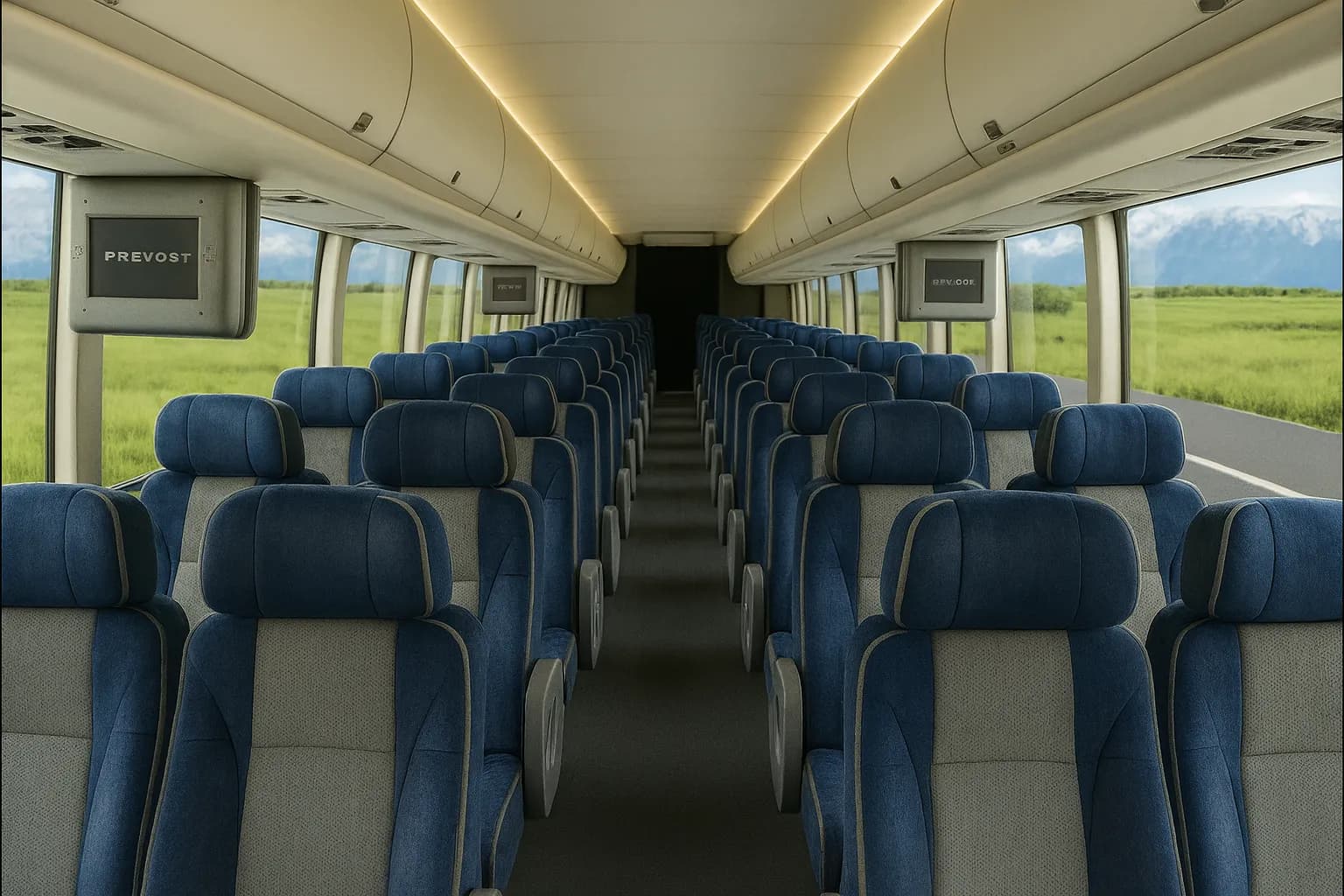
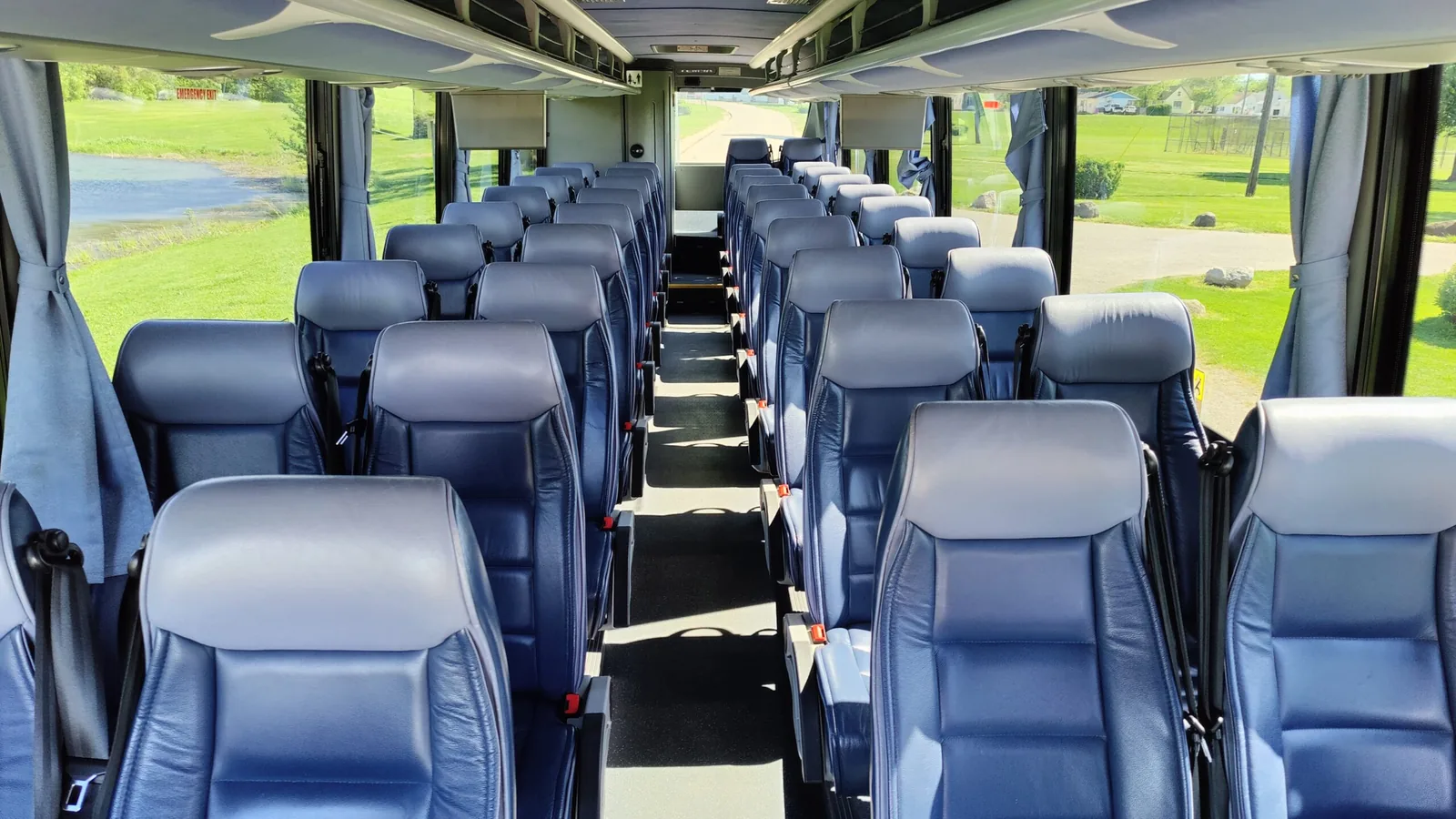
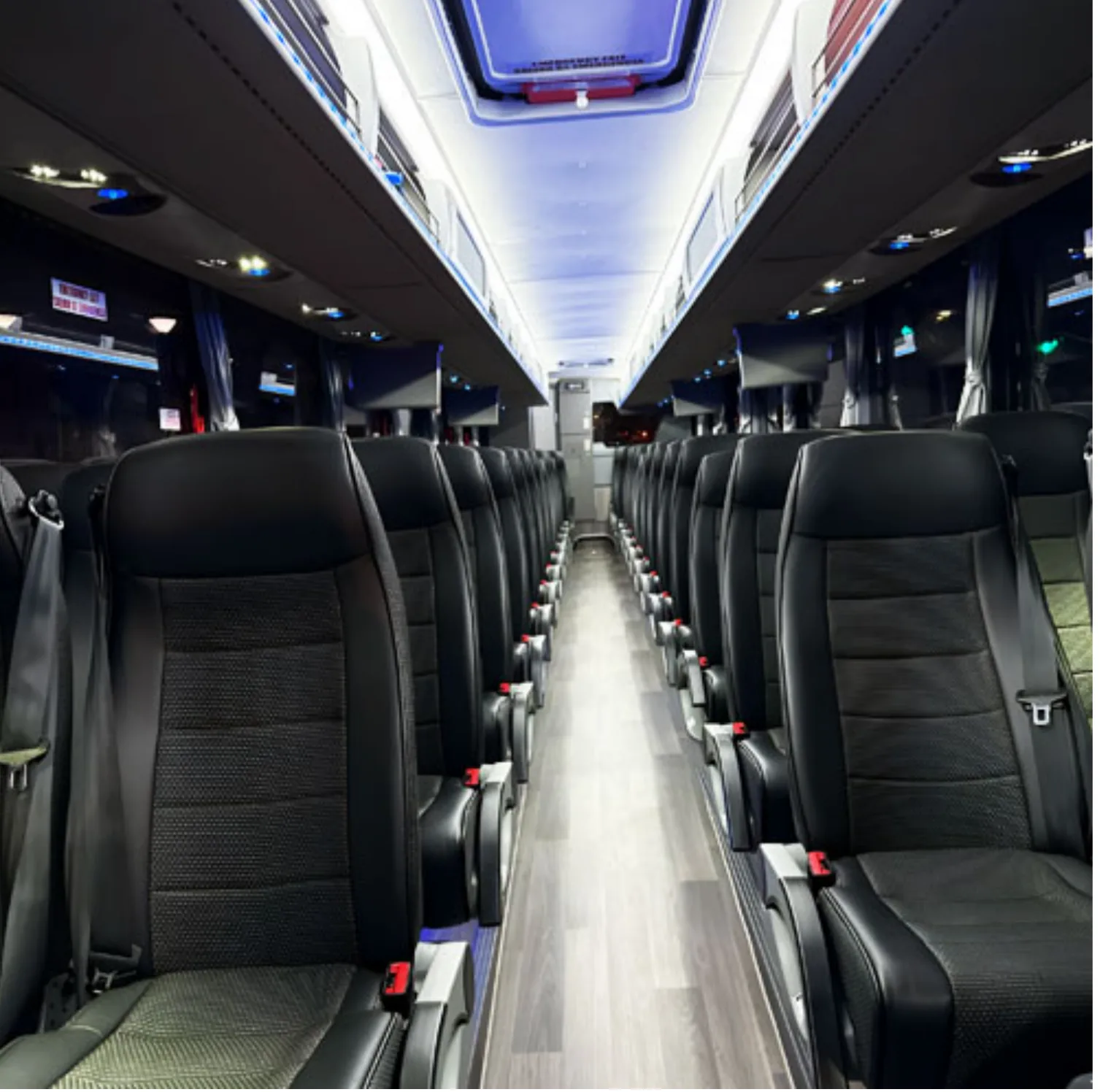
A 48 passenger coach bus in Chicago is usually booked by someone with a spreadsheet open: an office manager moving a department to an offsite, a meeting planner running attendees between a Loop hotel and a venue, an executive assistant who has been told that nobody should arrive frazzled. It is a full highway motorcoach, which means forward-facing reclining seats in pairs, a center aisle you can stand upright in, overhead racks for laptop bags, and luggage bays under the floor that swallow suitcases a shuttle bus would have to stack in the back rows.
Depending on the coach, 48 seats comes either from a slightly shorter body or from a full-length body with more generous row spacing. Both ride the same way: high above traffic, quiet at expressway speed, steady enough to read a slide deck without feeling it. Compared with the 46 passenger shuttle bus one step down, the difference is not two seats. It is the luggage bays, the recline, and on most coaches a restroom, which together decide whether a two-hour ride to Lake Geneva feels like travel or like a commute.
One step up, the 50 passenger coach and larger models add rows rather than comfort. If your headcount is firmly under 46, this is the size where people keep an empty seat beside them more often, and for a working group that matters. Equipment differs from coach to coach, so your written quote lists what the assigned vehicle includes.
Planners often picture the ride as dead time. On a motorcoach it does not have to be, but it helps to be realistic about what works at 60 miles an hour.
What works well: a welcome and agenda run-through over the PA system in the first ten minutes, while everyone is seated and listening. Email and reading. One-on-one conversations between seatmates who never talk at the office. A short video on the monitors if the coach has them and you bring the file in a format the driver can play, which is worth testing before departure day rather than in the hotel driveway.
What works poorly: breakout discussions across rows, anything requiring a whiteboard, and video calls, because even on coaches with Wi-Fi the connection is a cellular signal shared by everyone on board. If the leadership team needs a private conversation on the way, a separate 14 passenger executive Sprinter van running alongside the coach is a common and sensible split.
Ask specifically about power. Newer coaches tend to have outlets or USB ports at the seats; older ones may not. A group that expects to work for two hours will notice. Our corporate event checklist has a transportation section you can hand to whoever is confirming these details.
Luggage is the reason conference groups end up on a coach instead of a large shuttle. A cutaway shuttle bus carries bags inside the cabin or in a small rear compartment, so every suitcase costs you part of a seat. A motorcoach carries them under the floor, in bays that run most of the length of the vehicle, and the cabin stays clear.
As a working rule, one checked-size bag plus one personal item per person is comfortable on a full coach. Trouble starts with the extras that corporate trips attract:
None of these is a problem if the dispatcher knows in advance. All of them are a problem when they appear on the curb at 7 a.m. Put an honest luggage line in your quote request, and if the group is flying in, remember that people returning from a trip carry more than people leaving for one.
Loading takes time too. Budget about fifteen minutes at each end for a full coach with bags, and have one person from your team stand at the bay doors so luggage goes in by drop-off order. For airport runs, our O'Hare group transportation page explains how the pickup side works.
A motorcoach is roughly the length of a semi trailer and too tall for parking garages, many hotel porte-cochères, and a fair number of Chicago's older railroad viaducts. Coach drivers plan routes around those clearances, which is also why they stay off Lower Wacker. None of this is your problem to solve, but it changes where your group should be standing.
At downtown hotels, expect curbside loading on the street rather than under the canopy. The hotel's door staff usually know just where coaches stage, so ask them, then pass that spot to your attendees in writing. At O'Hare and Midway, charter buses use designated commercial pickup areas instead of the terminal curb, and groups need a clear meeting point plus a contact who has the driver's number. At McCormick Place, show management typically publishes bus loading instructions for each event; check the current ones for yours rather than relying on last year's.
Suburban corporate campuses are the easy case. Office parks in Schaumburg, Oak Brook, and along the I-88 corridor were built with wide drives and large lots. The only thing to confirm is which entrance the coach should use and whether security needs the vehicle on a list. Use the route time estimator to sanity-check departure times against rush hour on the Kennedy or the Eisenhower.
Most retreats that leave Chicago by coach head to a short list of places. Lake Geneva and Milwaukee are each somewhere around an hour and a half to two hours from downtown in normal traffic, close enough for a same-day round trip with a full program in between. Galena is closer to three hours, with the last stretch on two-lane highway through the hills of northwest Illinois, and is better treated as an overnight. Indianapolis is about three hours down I-65 and sits in the Eastern time zone, which has caught more than one planner whose agenda was written in Central.
Two things separate a long-distance charter from a city transfer. First, a driver's working day is limited by federal hours rules, so a very long same-day round trip may need a relief driver or an overnight stay, and the dispatcher builds that into the plan and the quote. Second, on an overnight the coach and driver usually stay with you, which means a hotel room for the driver is part of the arrangement. Ask how that is handled.
Plan one comfort stop on anything over two hours even with a restroom on board. People want coffee and a stretch, and the ride back goes better for it. Our charter services page covers how multi-day itineraries are quoted.
Corporate groups have one advantage most coach customers lack: flexibility on the day of the week. Across all dated inquiries in our booking network, 81% asked for a Friday or Saturday, while Mondays drew about 2% and Tuesdays about 3%. A Tuesday-to-Wednesday retreat is competing with almost nobody for a coach, and midweek dates are where you have the most choice of vehicle and schedule.
Lead time still matters, because large vehicles are fewer in number than small ones. Among quote requests for 41 to 55 passengers, 29% arrived at least 90 days before the event, compared with 18% across all inquiries, and only 12% came in with less than two weeks to go. Planners of groups this size mostly know better than to wait. If your dates touch a major convention week or a fall weekend, treat three months as the comfortable minimum.
Coach pricing generally combines a minimum number of hours or a day rate with distance for out-of-town trips, plus any driver lodging on overnights. Get those pieces itemized in writing so finance is not surprised later. To put a per-head figure in a budget request, run your numbers through the budget calculator, and read our guide to corporate event transportation in Chicago for how other planners structure the day.
Our booking-network data
Numbers from quote requests across our booking network that involve large groups and motorcoach requests. They are a useful reality check on timing and group size before you lock in a 48-passenger vehicle.
14%
vs 19% across all inquiries
12%
vs 26% across all inquiries
29%
vs 18% across all inquiries
33%
vs 12% across all inquiries
Source: 65,687 group-transportation inquiry records with 2024–2025 event dates, collected across the national booking network that Chicago Party Bus Fun is part of. These are quote requests — not completed trips, unique customers, or Chicago-only figures. How we measure this
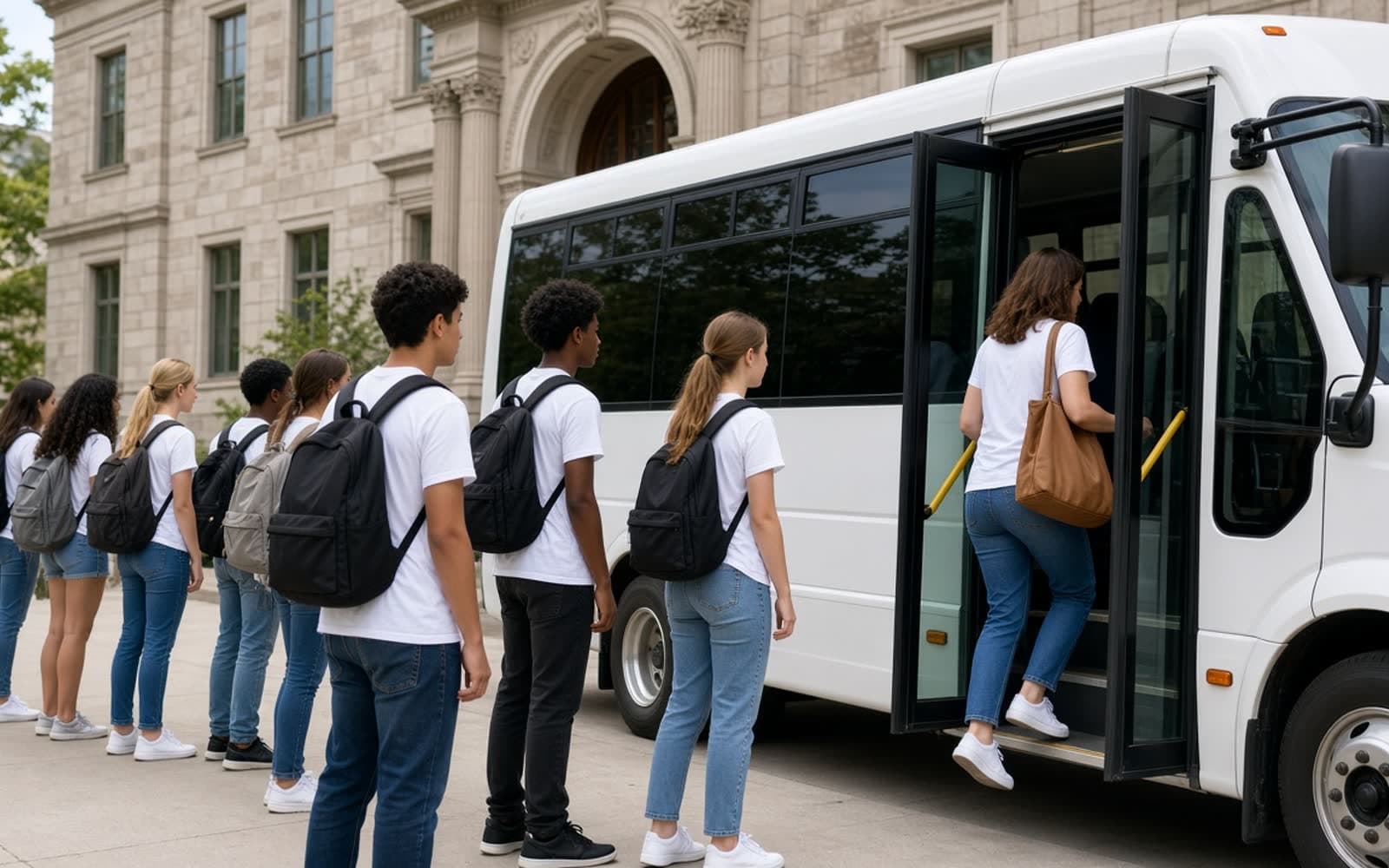
Forty-two reps land within a 90-minute window on a Sunday afternoon. One coach stages at the airport's commercial pickup area, a coordinator checks names against the manifest, and bags go under the floor. The coach leaves when the last flight's group is aboard and unloads curbside on Wacker Drive.
Read the planning guide →A 38-person management team boards in Schaumburg at 7:30 on a Tuesday, hears the agenda over the PA on I-90, and reaches the resort before the first session. The coach and driver stay overnight, run the group to a dinner in town, and return Wednesday after lunch.
Read the planning guide →A 45-person client group leaves a Michigan Avenue hotel at 6:00 for a private dining room in Fulton Market. The coach drops on a wide stretch of Randolph, waits off-site, and returns for a single 9:30 departure so nobody is hunting for rideshares in a group of strangers.
Read the planning guide →Forty engineers from a Naperville office head to a brewery tour and lakefront lunch in Milwaukee. The ride up the Tri-State takes about two hours, laptops stay in the overhead racks, and the group is back in the western suburbs by early evening.
Read the planning guide →Size the group, pick the vehicle, set the hours, and split the cost before you ask for a quote.
One size up gives you elbow room; one size down trims the hourly cost. The closest matches to the 48 Passenger Coach Bus:
Capacity: 50 passengers
“A 50 passenger coach bus is the workhorse of wedding guest transportation: one vehicle that moves 40 to 48 dressed-up…”
View Details →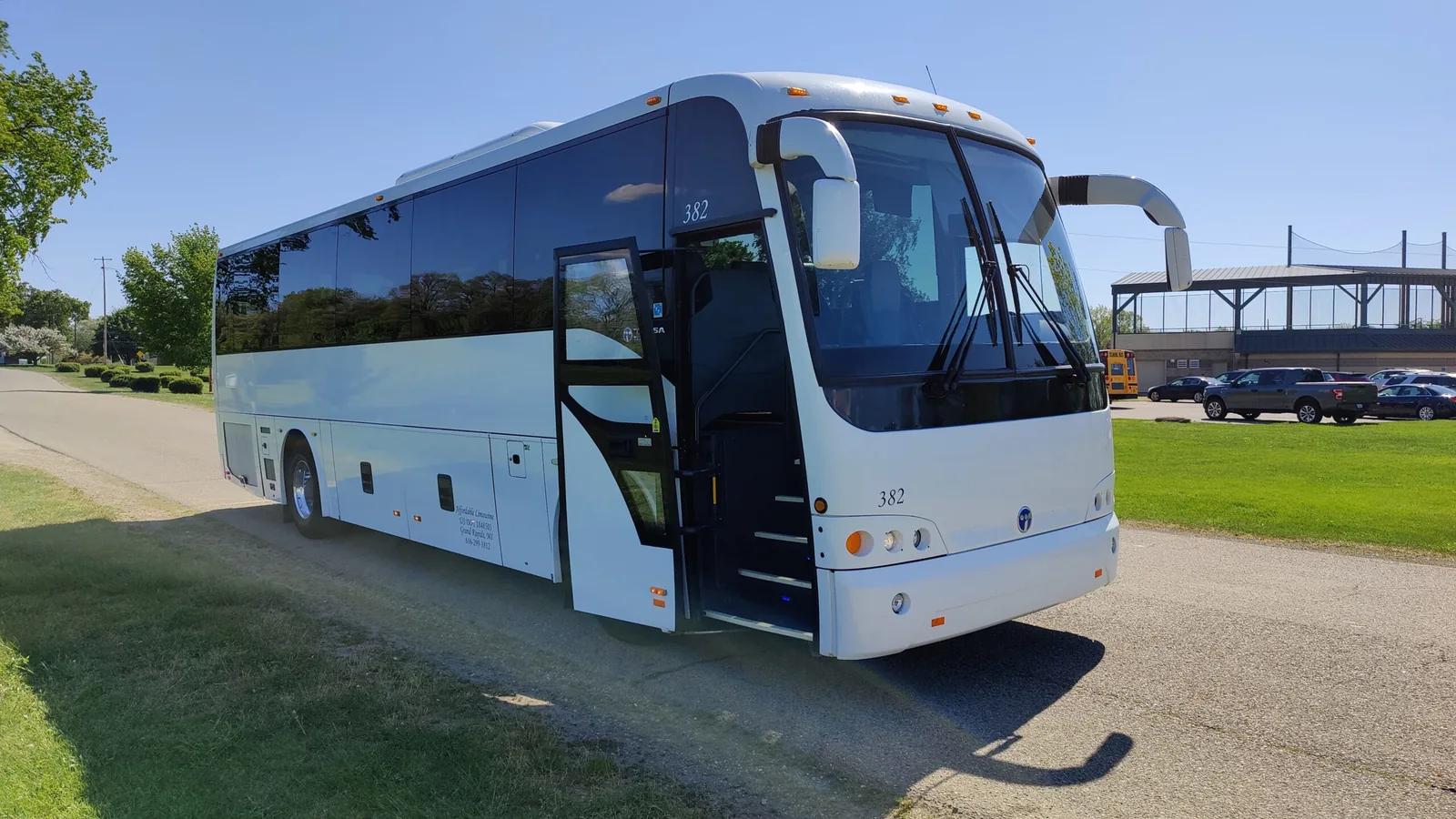
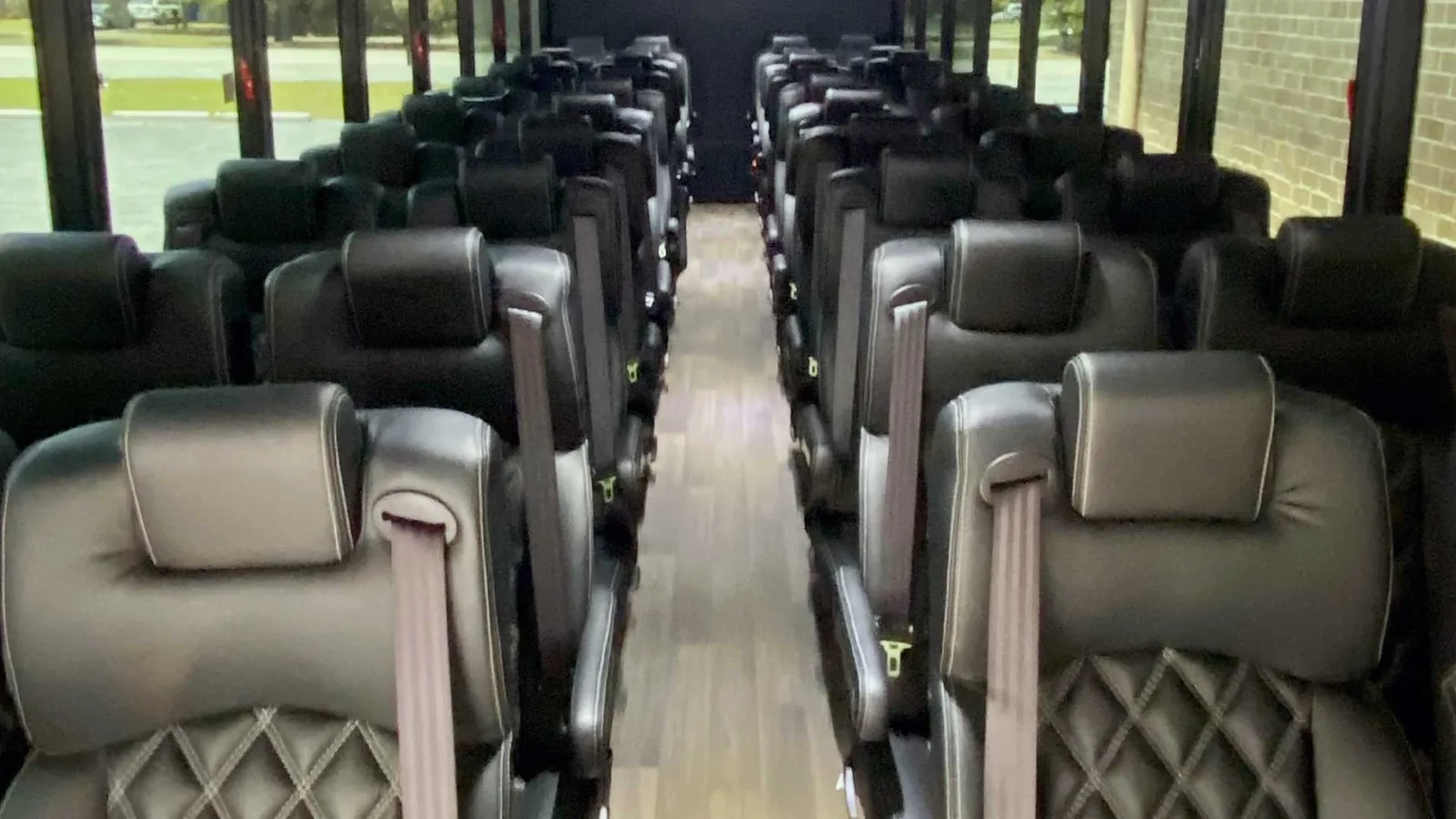
Capacity: 52 passengers
“The 52 passenger coach bus is a strong fit for school, university, and youth groups: about 44 students plus chaperones,…”
View Details →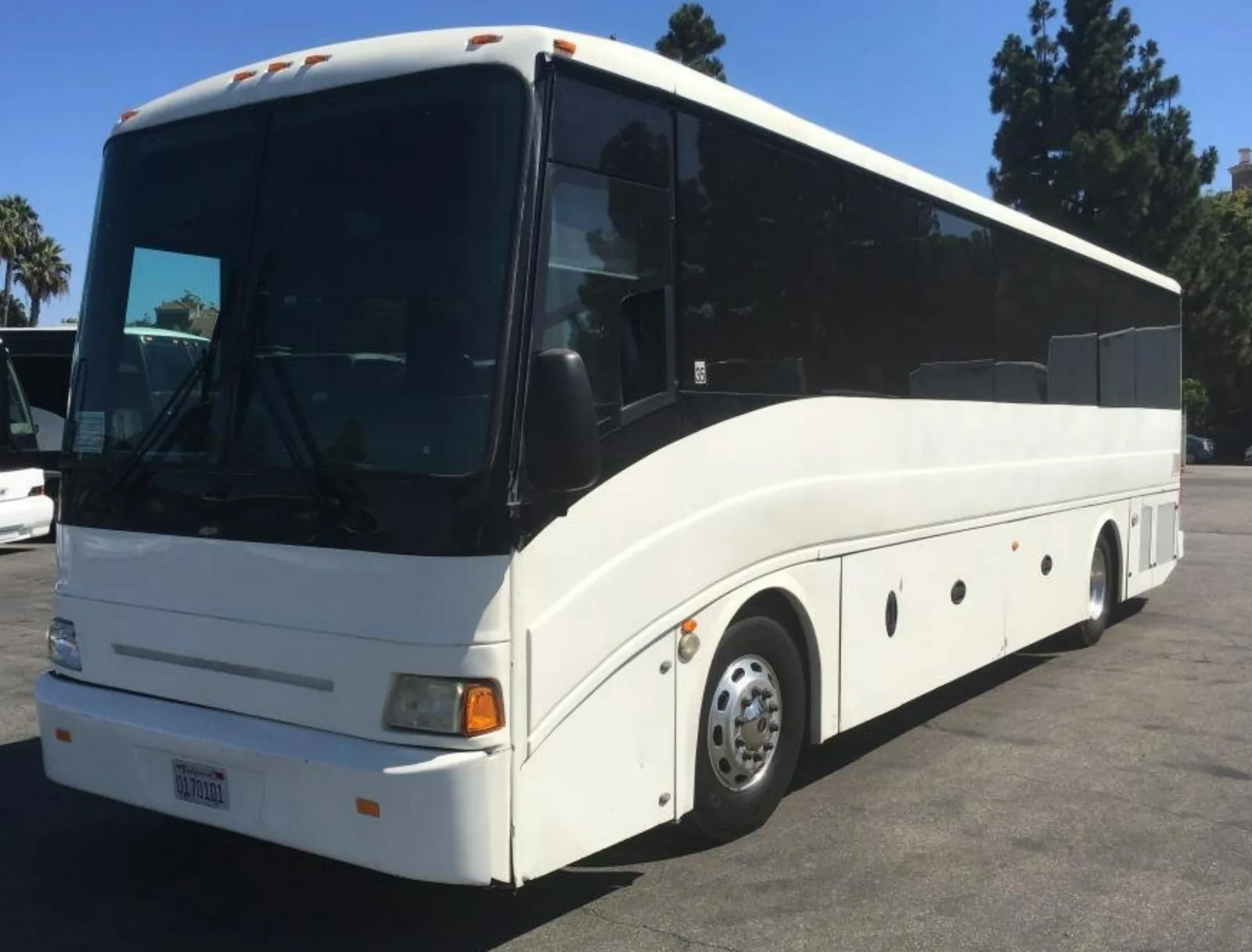
Capacity: 54 passengers
“Book the 54 passenger coach bus for a sports team with its gear or a fan group of about 45 to 52 heading to a game.”
View Details →Coach Buses polls
Vote to see how other groups answered. One vote per poll, no sign-up, and nothing personal is stored.
No votes yet — be first
No votes yet — be first
No votes yet — be first
Straight answers for planning a group trip in Chicago
Tell us about your event and ask for a written quote. If your reservation is serviced by an affiliate or sister company, confirm vehicle, operator, base rate, minimum hours, and included charges with that provider before paying a deposit.