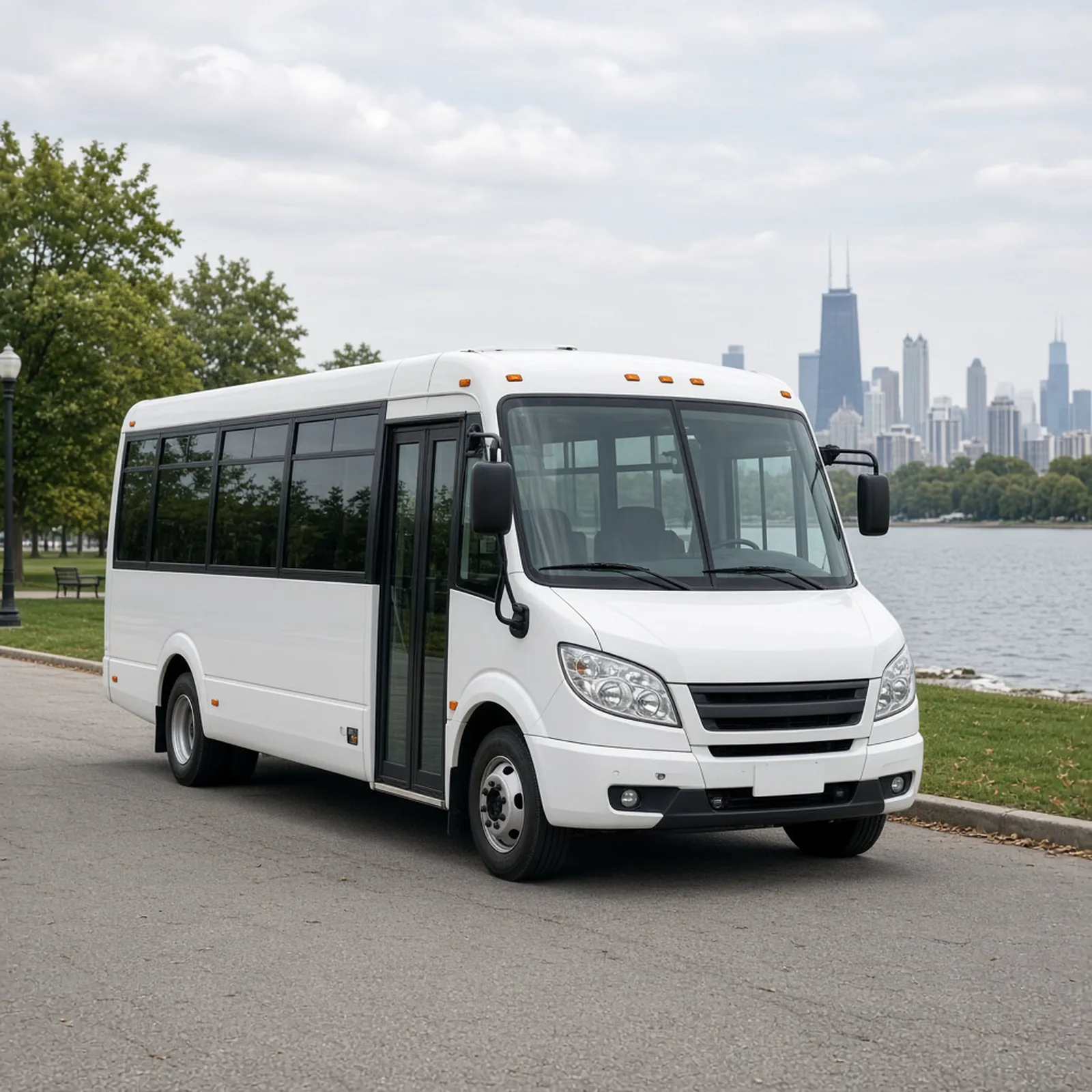


24 Passenger Shuttle Bus
Capacity: 24 passengers
“The 24 passenger shuttle bus is the pick for luggage-heavy groups of 16 to 20: a delegation flying into O'Hare, a tour…”
View Details →Seats up to 26 · shuttle bus
Plan a corporate offsite around a 26 passenger shuttle bus: return-window scheduling, midweek availability, suburban pickups, and per-head cost in Chicago.
Pickup ZIP, date, headcount, and hours get you one written total with the driver, fuel, taxes, and gratuity included.
Quick answer
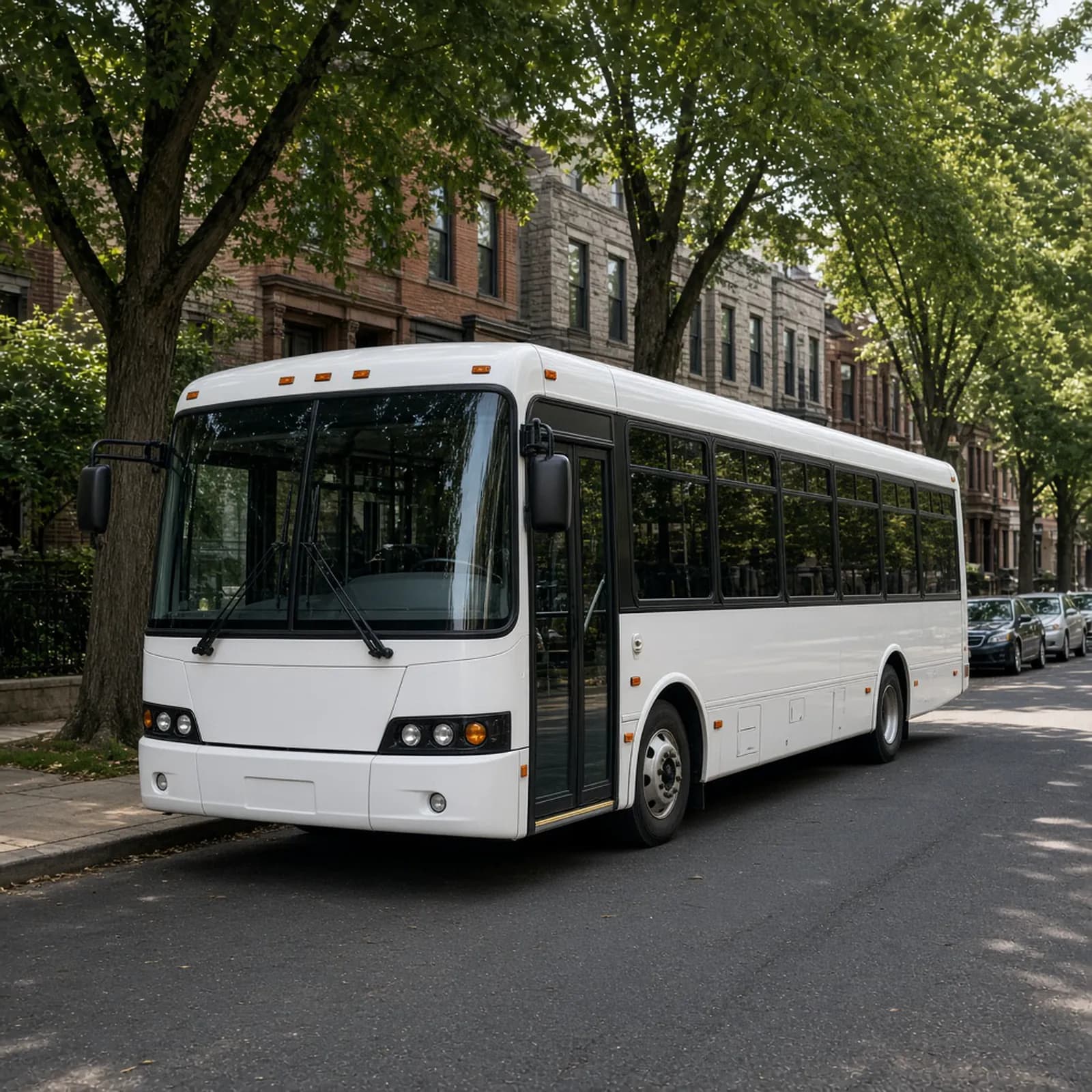
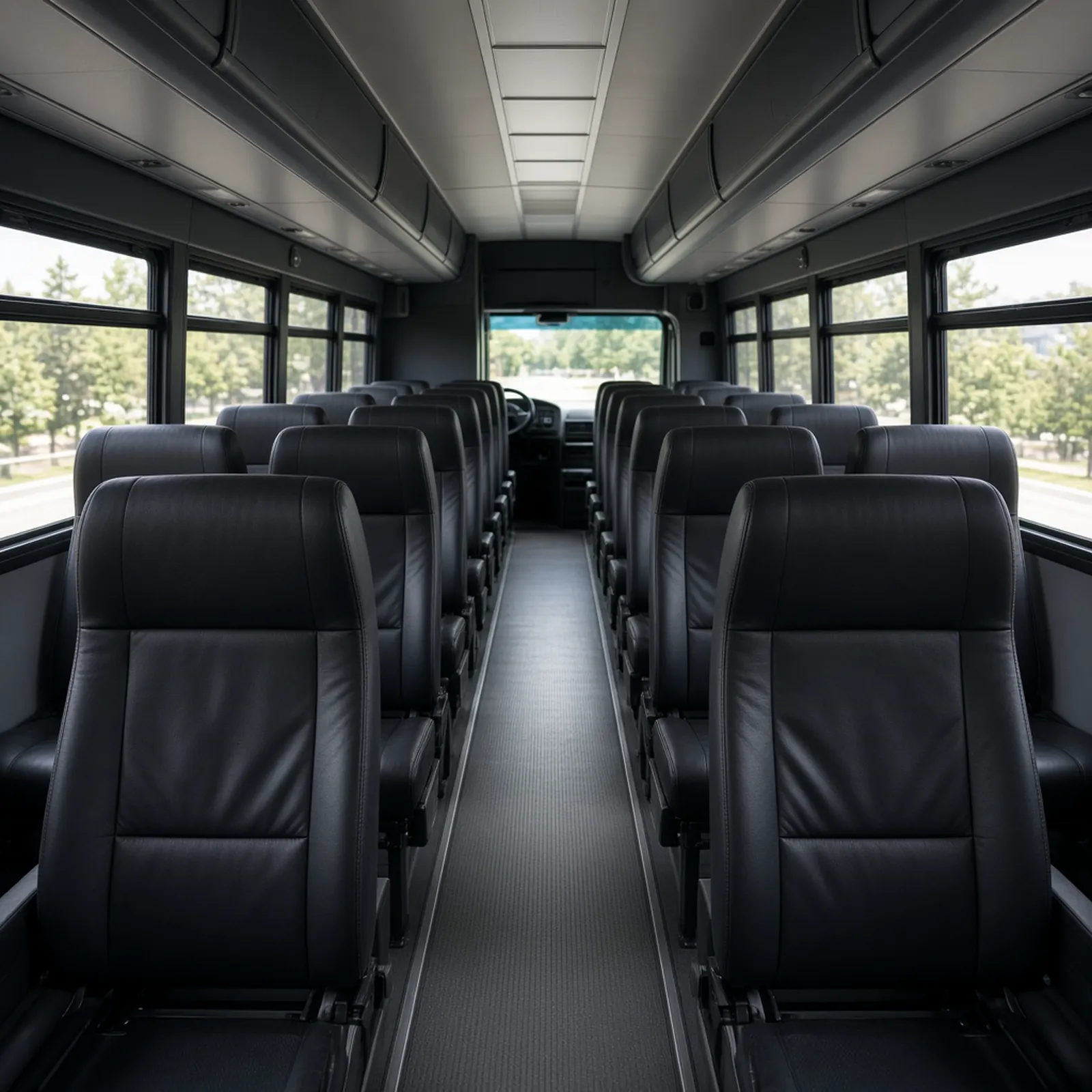
The 26 passenger shuttle bus suits a corporate offsite of 20 to 24: a department heading from a suburban office to a workshop venue, a team dinner, or a volunteer day, with a firm return window. It keeps the group on one schedule. The thing to check is how overtime is billed if the agenda runs late.
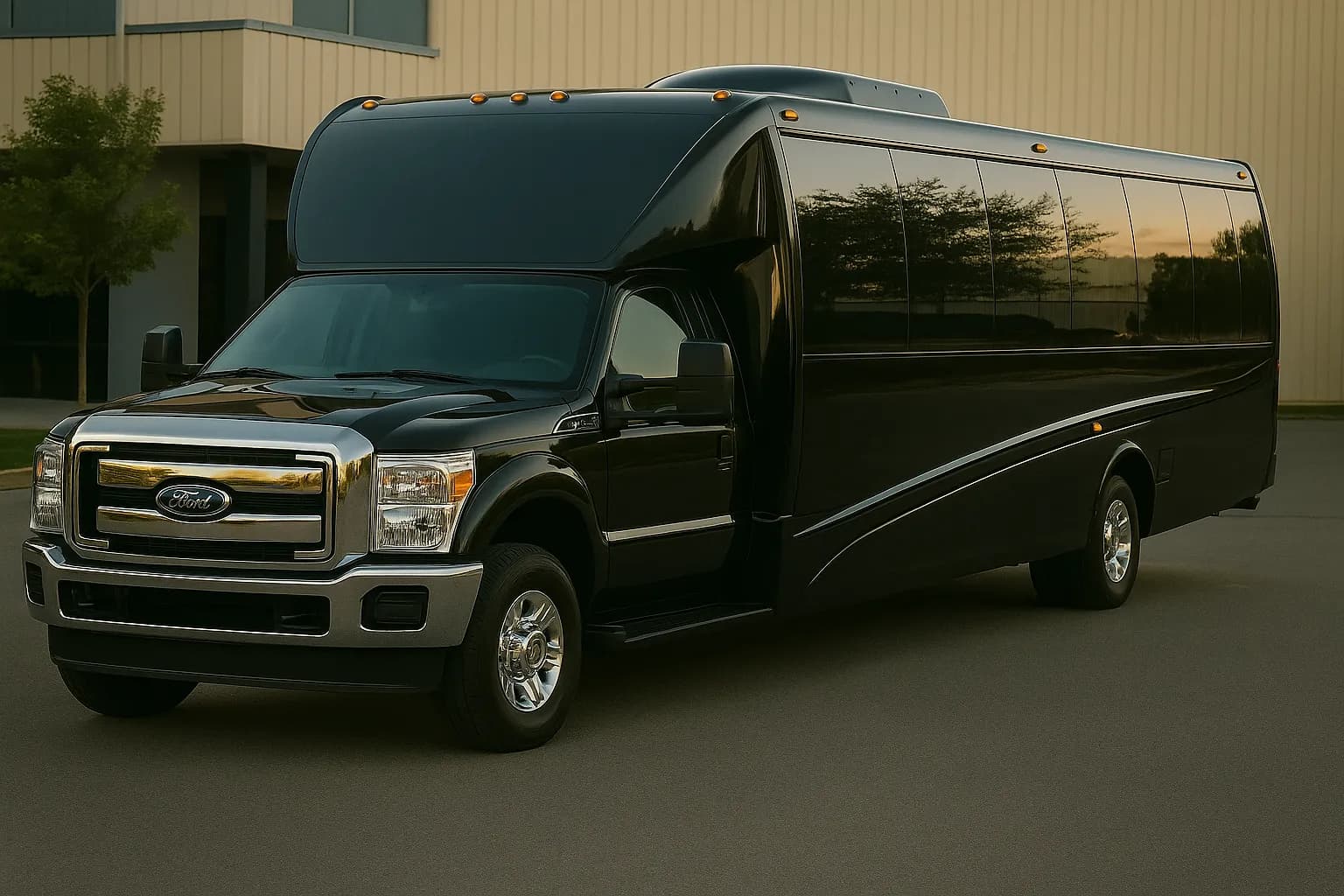
A 26 passenger shuttle bus in Chicago is the department-sized vehicle. Twenty-two people from a finance team, a product group with a few visitors from another office, a leadership cohort halfway through a training program: groups like these are too big for a pair of Sprinters to feel like one outing and too small to justify a motorcoach. One mid-size shuttle keeps everyone on the same clock, which for a work event is most of the value.
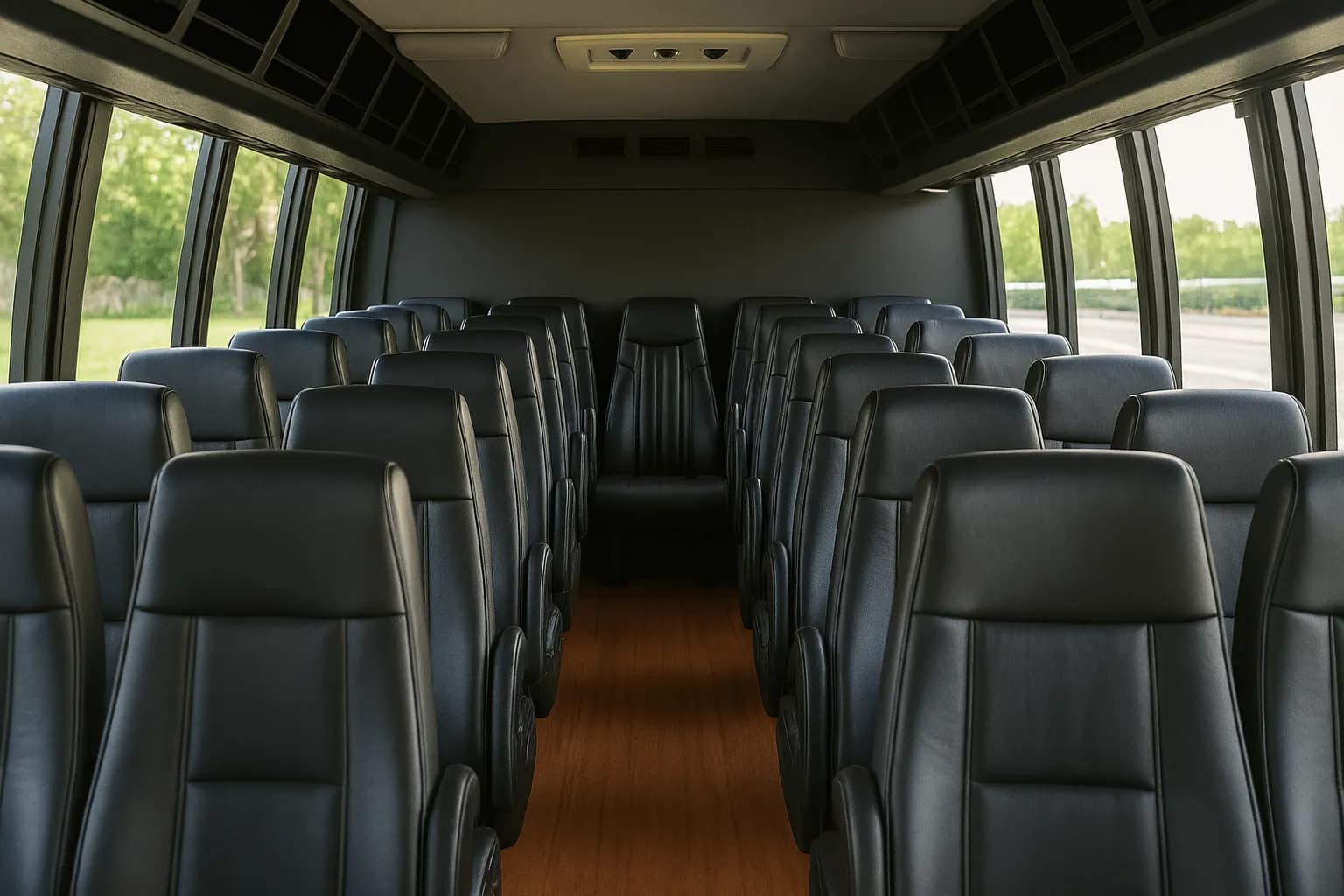
The ride is businesslike. Forward-facing seats, a center aisle, big windows, and a PA or stereo system on many vehicles that lets the organizer say a few words on the way. People answer email, talk to the colleague beside them, or look out at the skyline from the Eisenhower. Nobody has to expense a parking garage, and nobody has to decide whether a second glass of wine at the team dinner is compatible with driving home to Plainfield.
It differs from the 24 passenger shuttle bus by one row, and that row is your insurance against the three people who RSVP on the morning of the event. It differs from the 28 passenger shuttle bus mostly in availability on a given date. If the offsite is really a celebration, such as a sales kickoff that ends on a rooftop, consider whether a 26 passenger party bus for the evening leg would land better with the team.
Work events have something most charters lack: a hard stop. People have trains to catch at Ogilvie, children at daycare until six, and cars in an office lot that locks its gate. A good offsite schedule starts at the end and works backward.
Suppose the group must be back at a Naperville office by 5:30 p.m., and the venue is in Fulton Market. On a weekday, the outbound Eisenhower and I-88 can take anywhere from 50 minutes to well over an hour from mid-afternoon on. So the bus should roll by 4:00, boarding starts at 3:50, and the facilitator needs to wrap by 3:40. Write those three times into the agenda itself, not just the transportation notes, because the person running the last session is the one who will blow the schedule.
If the day ends with an optional dinner or happy hour, consider two returns: a firm early departure for those with commitments and a later one for everyone else. That can be a single bus making two trips when the distance is short, or a second smaller vehicle when it is not.
Use the trip duration estimator for total hours and the corporate event checklist to catch details such as dietary notes and accessibility needs before they become last-minute problems.
Corporate planners have an advantage that wedding couples would envy. Group transportation demand is overwhelmingly a weekend business: across our booking network's national inquiry data, 81% of requested dates fell on a Friday or Saturday, while Mondays drew about 2% and Tuesdays about 3%.
For you, that means a Tuesday, Wednesday, or Thursday offsite is competing with very little. Vehicle choice is wider, scheduling is more flexible, and minimum hours are typically lighter than on a Saturday night. If your date is movable, moving it off Friday is the single easiest way to improve both availability and cost.
Two cautions. First, weekday traffic is heavier than weekend traffic at the hours offsites tend to begin and end, so a midweek date improves the booking and worsens the drive. Pad accordingly. Second, large conventions at McCormick Place and peak holiday-party weeks in early December soak up shuttle capacity even midweek. If your event falls in either window, ask sooner.
As for lead time, groups of this size tend to plan ahead more than small ones do, but not by much: about 21% of inquiries for 21 to 30 passengers still arrived less than two weeks out. That is usually workable midweek. For more on structuring the day, see our guide to corporate event transportation in Chicago.
The suburban end is usually easy. Office parks in Schaumburg, Oak Brook, Naperville, Deerfield, and along the I-88 and I-90 corridors have wide drives and visitor lots where a mid-size bus can pull up and load without drama. Tell us which building entrance, since campuses with several identical buildings cause more missed pickups than traffic does, and let your property manager or security desk know a bus is coming.
The downtown end takes more thought. Few venues in River North, the West Loop, or the Loop have a place for a 26 seat bus to stand for long. The usual pattern is a quick curbside drop, after which the bus stages elsewhere and returns at an agreed time. Give your driver a contact who will actually answer a phone during the event.
Lower Wacker Drive and some older viaducts have restricted clearances, and drivers route around them, which can make the bus's path differ from what your phone suggests. Trust the driver on this.
For McCormick Place, shuttle and charter loading is organized by the convention center and often by the individual show, with designated gates and areas. Check your event's current transportation instructions and send them to us with your request. The team building and corporate parties pages have more examples.
A chartered shuttle is one line on one invoice, which your finance team will appreciate after a quarter of reconciling forty individual rideshare receipts and mileage claims. It also makes the per-person cost easy to defend. Take the quoted total, divide by attendees, and compare that with what the company would reimburse for mileage, tolls, and downtown parking for the same group. For a suburban team going into the city, the bus frequently comes out level or ahead before you count the value of people arriving together and on time.
Charter pricing is built on hourly rates with a minimum number of hours, and the minimum varies by day and season. The total depends on whether you hold the vehicle all day or book two separate transfers. For an eight-hour workshop with nothing in between, two transfers are usually the economical choice. For a day with several stops, such as an office, a volunteer site, lunch, and back, holding the bus is simpler and often no more expensive.
Ask what the quote includes: fuel, tolls, parking or staging fees, and gratuity are handled differently from one reservation to the next, and your written quote lists them. If your company requires a certificate of insurance or a vendor form, request it early. The budget calculator helps with the per-head figure for your approval memo.
Our booking-network data
Numbers from quote requests across our booking network that involve mid-size groups and shuttle bus requests. They are a useful reality check on timing and group size before you lock in a 26-passenger vehicle.
40%
vs 26% across all inquiries
62%
vs 17% across all inquiries
1%
vs 28% across all inquiries
21%
vs 26% across all inquiries
Source: 65,687 group-transportation inquiry records with 2024–2025 event dates, collected across the national booking network that Chicago Party Bus Fun is part of. These are quote requests — not completed trips, unique customers, or Chicago-only figures. How we measure this
Twenty-three people board at their Naperville office at 8:00, arrive at a Fulton Market workshop space by 9:15, break for lunch on Randolph, and are rolling west again at 4:00 sharp to be back in the lot by 5:30.
Read the planning guide →Twenty-one staff and clients leave a Schaumburg campus at 4:45 on a Wednesday, ride the Kennedy inbound against the worst of the rush, and are dropped at a River North steakhouse. An early return leaves at 8:30 and a second at 10:00.
Read the planning guide →A Deerfield company sends twenty-four employees to a food depository shift on the southwest side, then to a group lunch in Pilsen, and home by 3:30. The bus stays with the group all day, and boxed donations ride in the rear storage.
Read the planning guide →An exhibitor houses twenty-two booth staff in a South Loop hotel and runs a private morning and evening shuttle to the convention center for three days, following the show's posted loading instructions rather than fighting for cabs at closing time.
Read the planning guide →Size the group, pick the vehicle, set the hours, and split the cost before you ask for a quote.
One size up gives you elbow room; one size down trims the hourly cost. The closest matches to the 26 Passenger Shuttle Bus:
Capacity: 24 passengers
“The 24 passenger shuttle bus is the pick for luggage-heavy groups of 16 to 20: a delegation flying into O'Hare, a tour…”
View Details →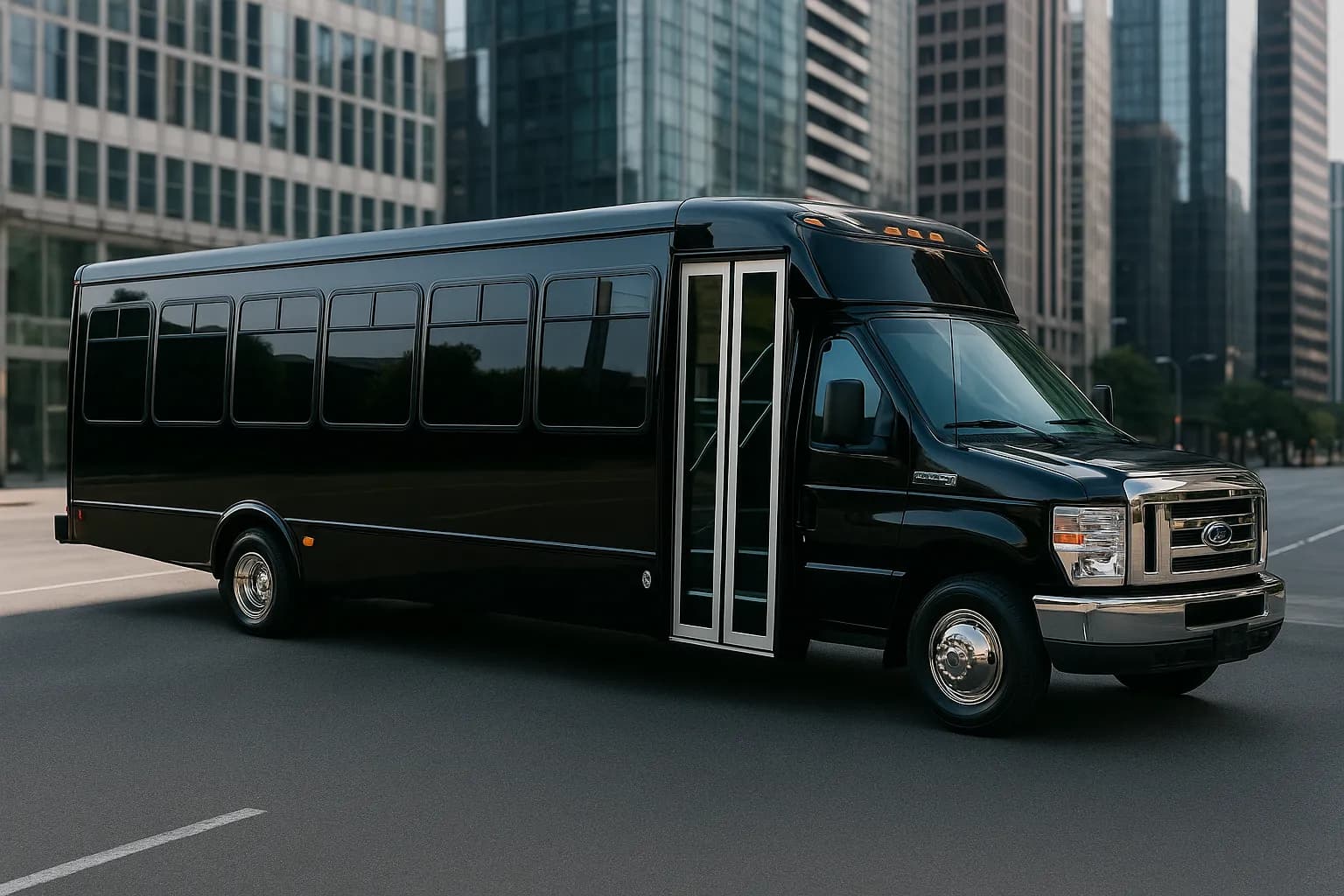
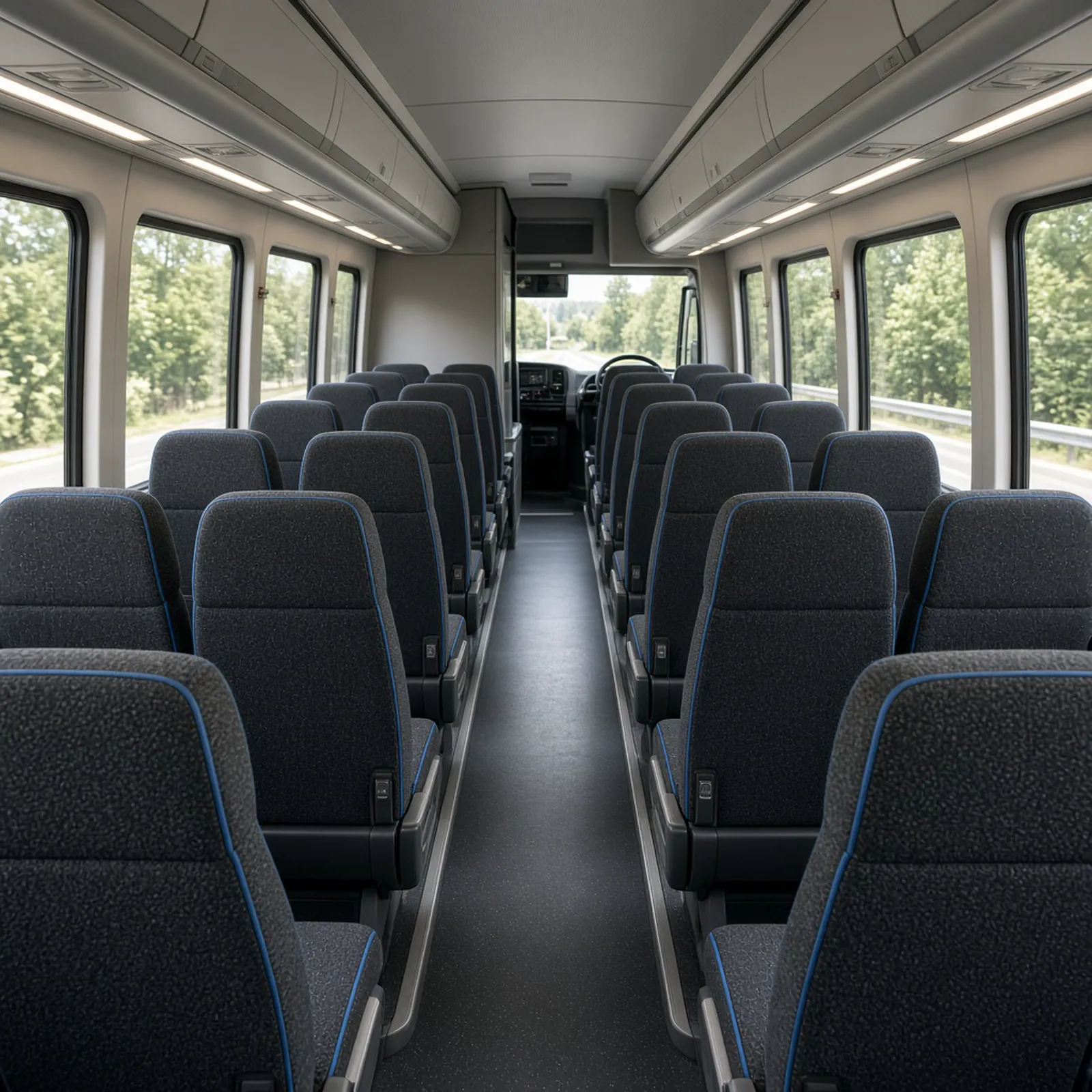
Capacity: 28 passengers
“The 28 passenger shuttle bus suits church groups, senior communities, and clubs of 20 to 25 taking a day trip: a…”
View Details →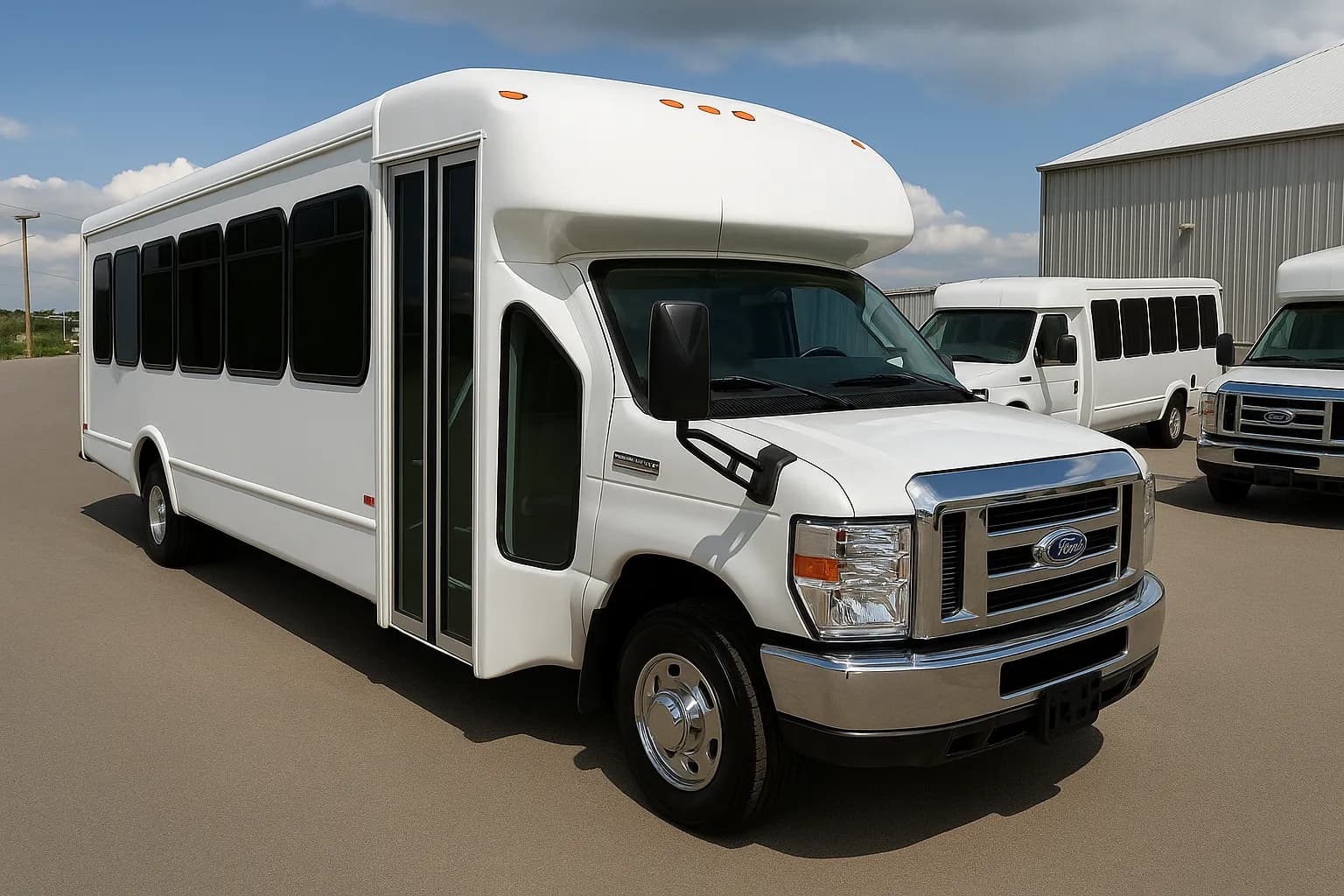
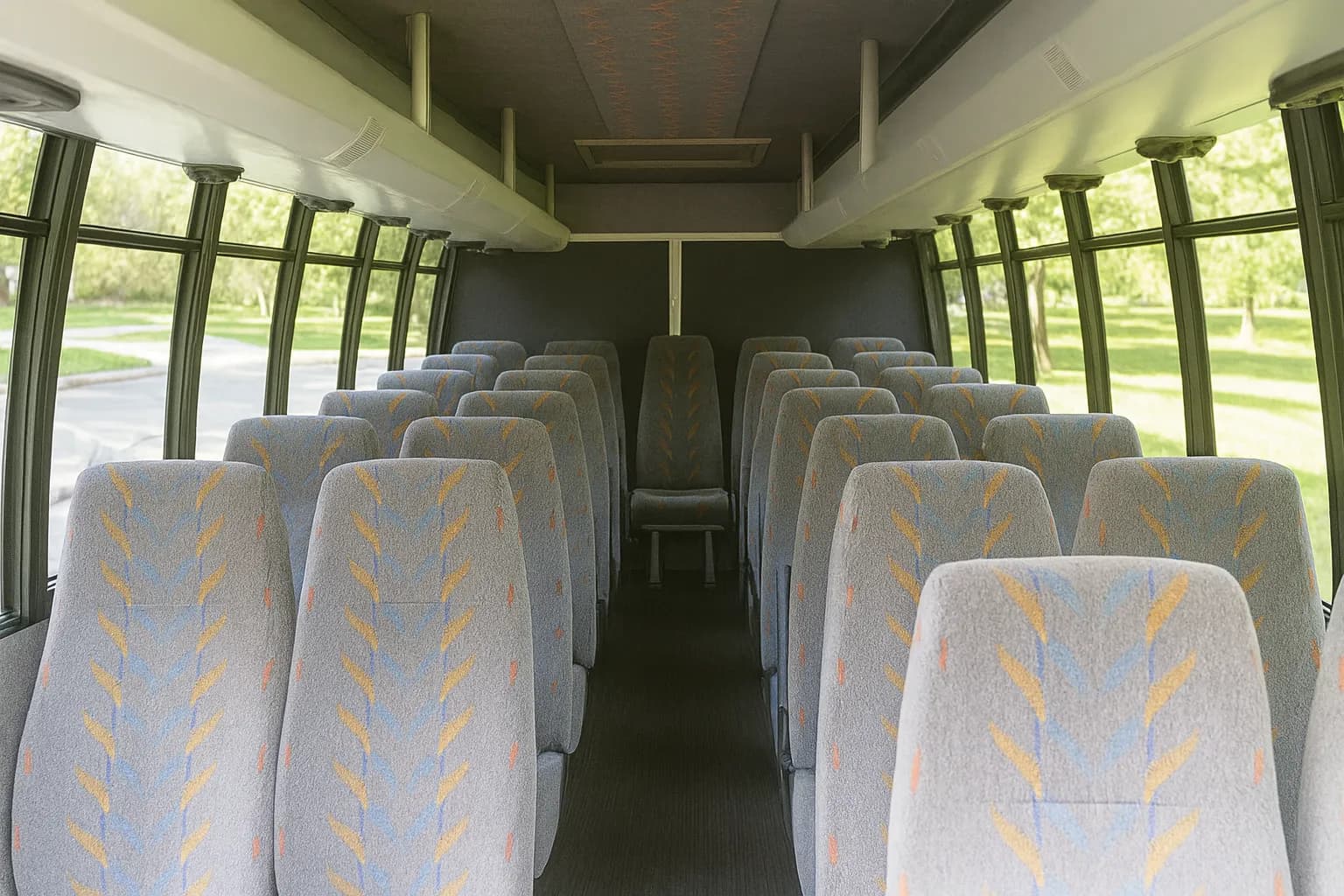
Capacity: 22 passengers
“The 22 passenger shuttle bus is a guest-loop workhorse: it runs back and forth between the hotel block and the venue,…”
View Details →Shuttle Buses polls
Vote to see how other groups answered. One vote per poll, no sign-up, and nothing personal is stored.
No votes yet — be first
No votes yet — be first
No votes yet — be first
Straight answers from the Chicago booking desk
Tell us about your event and ask for a written quote. If your reservation is serviced by an affiliate or sister company, confirm vehicle, operator, base rate, minimum hours, and included charges with that provider before paying a deposit.