How the planner builds each line of the schedule
The arithmetic is simple, which makes it easy to check. Pickup and boarding take 10 minutes, then the drive to the corridor follows. Each taproom gets the stay you set. Between stops the planner adds the corridor's hop plus 5 minutes to board, so a Ravenswood move is 10 minutes and a suburban move is 30. After the last stop it allows 5 minutes to board and then repeats your drive figure for the trip home.
One stop is longer. With three or more stops, the second taproom is labeled "with a real meal" and gets 25 extra minutes. With two stops, the meal lands on the second and last stop. The placement is intentional: food early in the tour matters much more than food at the end.
The door-to-door total is the difference between pickup and drop-off, and the quote figure rounds that up to the next half hour. A total of 4 hr 20 min becomes 4.5 hours. Operators commonly bill in set increments with a minimum, so confirm both on your written quote. If your taprooms are already chosen and the distances are known, check the legs in the route time estimator. The planner's hops are corridor averages, not measurements between your actual stops.
Five corridors and why the hop times differ
Chicago's breweries cluster, and the clusters differ. Ravenswood's "Malt Row" on the North Side is the tightest: several taprooms and a distillery sit within about a mile along the rail corridor, so the planner uses 5-minute hops, and some groups walk a leg while the vehicle repositions. Logan Square and Avondale spread along Milwaukee and Elston with food easy to find between stops, at 10 minutes a hop.
West Town, Fulton Market, and the Near West Side also plan at 10 minutes. These are industrial-loft taprooms close to downtown hotels, which suits visitors, and close to United Center, which matters on event nights when traffic near Madison and Damen thickens. Pilsen, Bridgeport, and the South Side plan at 15 minutes. Stops are farther apart and less crowded, and the corridor pairs naturally with dinner on 18th Street.
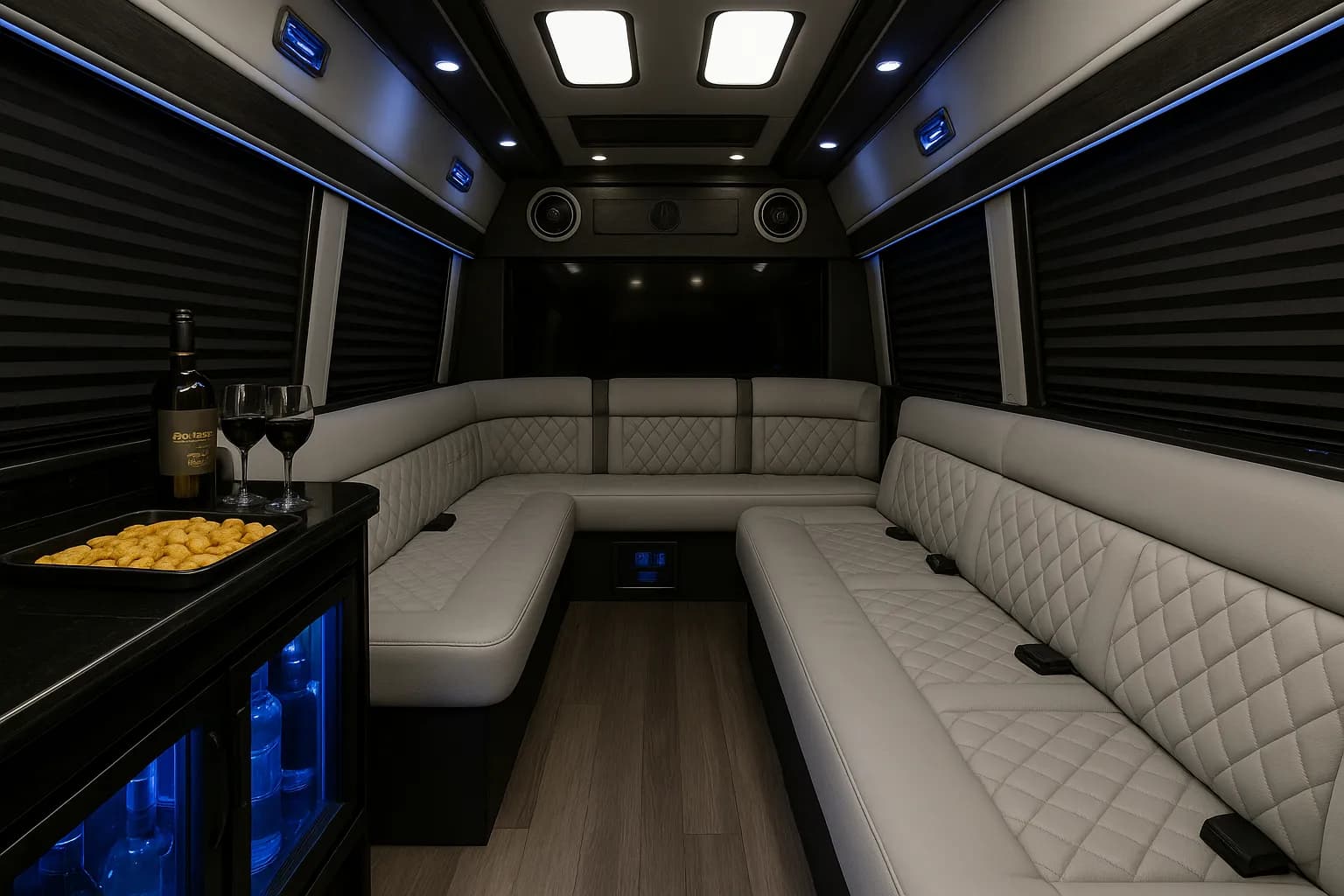
The western suburbs option, covering the Naperville, Aurora, and Lombard area, uses 25-minute hops with long legs on the Eisenhower and I-88. The planner's advice there is fewer stops and longer stays. On a route like that, people spend real time seated, so comfort counts. Look over the party bus options and confirm features such as a restroom on the assigned vehicle if that matters to your group.
Why one stop is a meal and five stops triggers a warning
A tour of three taprooms at 50 minutes each is about two and a half hours of tasting for adults 21 and over. Without food, the third stop is where the day goes wrong. The planner's 25 extra minutes at the meal stop is roughly the difference between ordering a flight and ordering lunch for a group. It only helps if the taproom you put in that slot actually serves food, and many do not. Some rely on food trucks with irregular schedules, and some allow outside food. Verify before the day.
Set the slider to five stops and a red line appears: five taprooms is a lot of beer, order tasters and not pints, or drop a stop. Take it seriously. Four shorter pours across an afternoon is a better tour than five full ones, and the last stop is rarely anyone's favorite.
Bring water for the rides between stops. If the operator's written policy permits drinks on board for a 21-and-over group, size them with the BYOB drink calculator and keep the number low, since the taprooms are the point. The brewery tours page has more on planning the day around the group and not the beer list.
Taproom hours, group rules, and picking a day
The schedule is only as good as the opening hours behind it. Many Chicago taprooms close early on Sundays and are dark on Mondays, and some open mid-afternoon on weekdays. A 1:00 PM pickup works on a Saturday and may find a locked door on a Wednesday. Check each stop's hours for your exact date before you lock the pickup time.
Group policy is the other half. A bus arriving with 20 people can overwhelm a small taproom, and some require a reservation or a minimum spend for large parties, while others turn away buses entirely. Call each one, give your head count and arrival time from the copied schedule, and ask where a large vehicle should drop. Taprooms in former industrial buildings often have an easy curb. Those on neighborhood streets do not.
Saturday afternoon is the natural choice, and an early start keeps the drive home ahead of evening traffic on the Kennedy or the Eisenhower. Summer adds patios. Winter tours work well in the tighter corridors, where short hops keep people out of the cold. Get the head count right first with the group size calculator, because seat count decides which vehicles you can be quoted on.