Why the calculator counts hours on board, not hours reserved
A five-hour reservation in Chicago rarely means five hours in the cabin. A typical route might run from a pickup in Lakeview to dinner in the West Loop, on to River North, and home again. Those legs are 15 to 30 minutes each on a Saturday evening, so the group may spend only 90 minutes to two hours actually riding. The rest of the reservation is spent inside venues, where drinks are bought from the venue and nothing from your cooler is involved.
That is why the input is labeled the way it is. If you enter the full reservation length, the list roughly doubles or triples, and you carry home most of what you bought. If you are not sure how long the legs are, run your stops through the route time estimator first and add up only the driving segments. Longer trips are the exception. A run out to a suburban concert venue, a casino trip, or a wine tour can put the group on the road for an hour or more each way, and that is when the on-board number starts to matter.
How servings become cans, bottles, and mixers
The math is simple enough to check by hand. People drinking equals adults times the drinking share, rounded to the nearest person. Total servings equals people drinking times hours on board times the pace, rounded up. The mix you choose then splits those servings. The default mix sends half to beer or seltzer, a quarter to wine, and a quarter to cocktails. "Mostly beer and seltzer" sends 80 percent to cans. "Mostly wine" sends 70 percent to wine, and "mostly cocktails" sends 70 percent to spirits.
Each share is rounded up and converted to packaging. Cans are grouped into 12-packs. Wine assumes five glasses from a 750 ml bottle. Spirits assume 16 cocktails from a 750 ml bottle, which is about a 1.5-ounce pour. Mixers are estimated at five ounces per cocktail and reported in one-liter bottles.
Because each category rounds up separately, the list runs slightly generous. A group that needs two glasses of wine still gets a full bottle on the list. Treat that as a ceiling, not a target. If the wine or spirits line shows one bottle for only a few servings, it is reasonable to drop the category and let those guests choose from what is already there. Canned cocktails are an easy substitute for spirits and mixers, and they remove the need to pour in a moving vehicle.
Water, ice, food, and the no-glass question
The water line is not optional padding. The tool lists one bottle or can of water per adult for every two hours on board, with a minimum of one each, and it counts all adults, not only the drinkers. Ice is estimated at a pound and a half per adult, enough to chill cans in a cooler and leave some for cups. In July that ice melts fast while the vehicle sits at a curb with the door open. In January, drinks left in a trunk before pickup may already be cold.
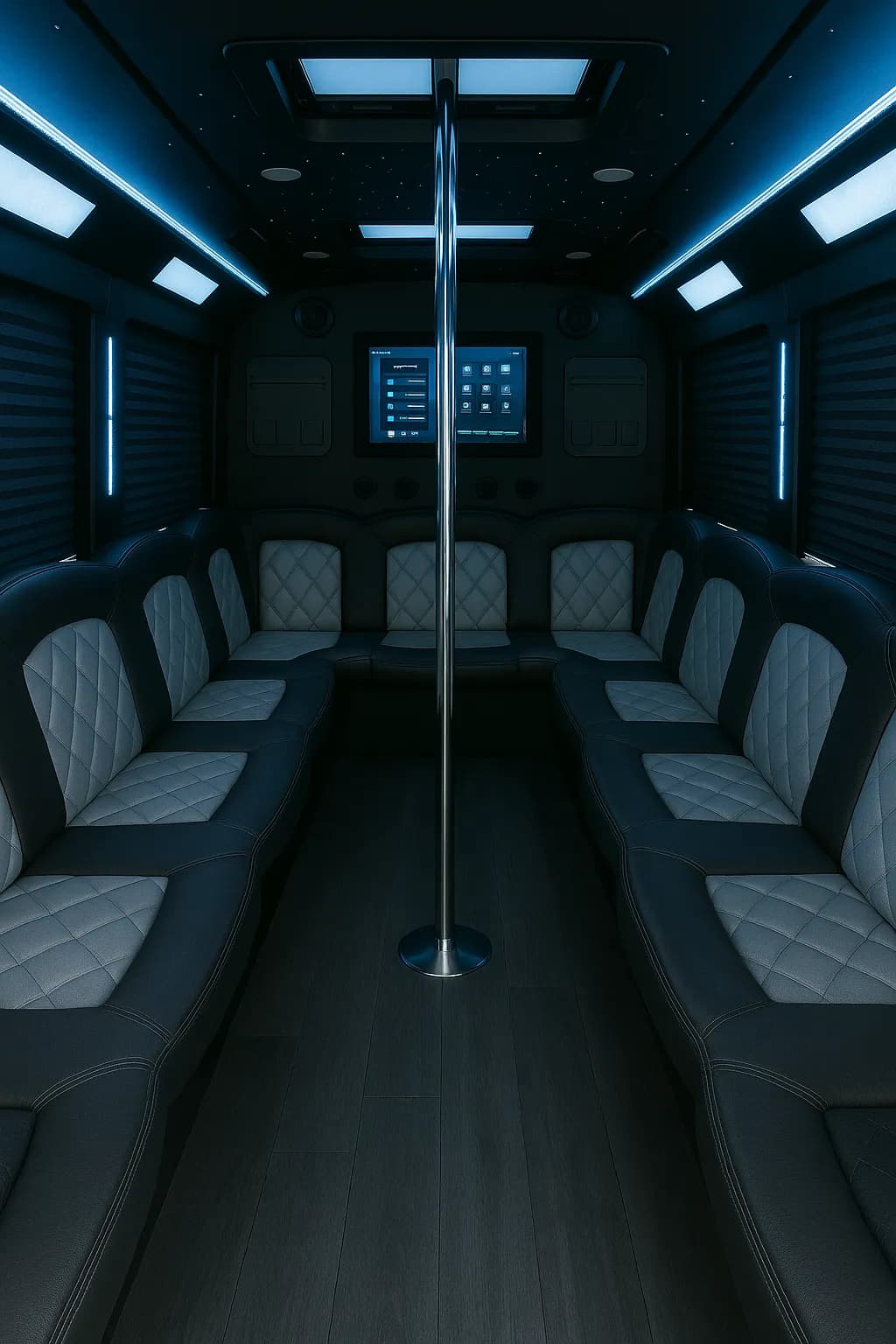
Glass is the rule that catches groups off guard. Many operators prohibit glass bottles on board because a broken bottle on a dance floor or bench seat ends the fun and can lead to a cleaning or damage charge. If glass is not allowed, buy cans, boxed wine, or plastic bottles, and pour spirits into a plastic container before pickup only if the written policy permits it. Ask whether the assigned vehicle has a built-in cooler or bar area, and whether you should bring your own cooler, cups, and a trash bag. Features differ from one vehicle to the next, so confirm on the assigned vehicle.
Plan food alongside the drinks. Schedule a real dinner stop early in the route, and bring simple snacks if food is allowed on board. Nobody should be pressured to drink, and anyone who has had enough should be handed water instead.
Trips where the right amount is zero
Some trips should leave this calculator alone. Prom, homecoming, sweet 16, quinceanera, and any ride with passengers under 21 carry no alcohol at all, and operators commonly inspect bags and can end the trip if they find it. For those events, plan sparkling cider or soda only if the operator permits drinks, and use the prom checklist to cover the rest.
Mixed-age groups need the same care. A birthday party with a few 19- and 20-year-old cousins is, for alcohol purposes, an under-21 trip. Tell the operator the ages of everyone riding before you buy anything.
Even for an all-adult group, BYOB is a permission, not a default. Read the policy on your written quote: whether alcohol is allowed, whether glass is allowed, whether there is a cooler limit, and what cleaning or damage charges apply for spills. Corporate outings often skip on-board alcohol for liability reasons and let the venue handle service. For a bachelor party or a River North night out, set the pace input to match the quietest reasonable version of the night. The driver can end a trip for unsafe behavior, and the bars on your list can refuse entry to anyone visibly intoxicated, which costs the whole group its reservation.